Russia could change its military doctrine by introducing the possibility of a pre-emptive nuclear strike to disarm an enemy
For the second time this week, Vladimir Putin has mentioned the nuclear threat, suggesting that Moscow could revise its military doctrine, which currently states that Russia will not launch a nuclear attack first, but only respond to such an attack, CNN and AFP report.
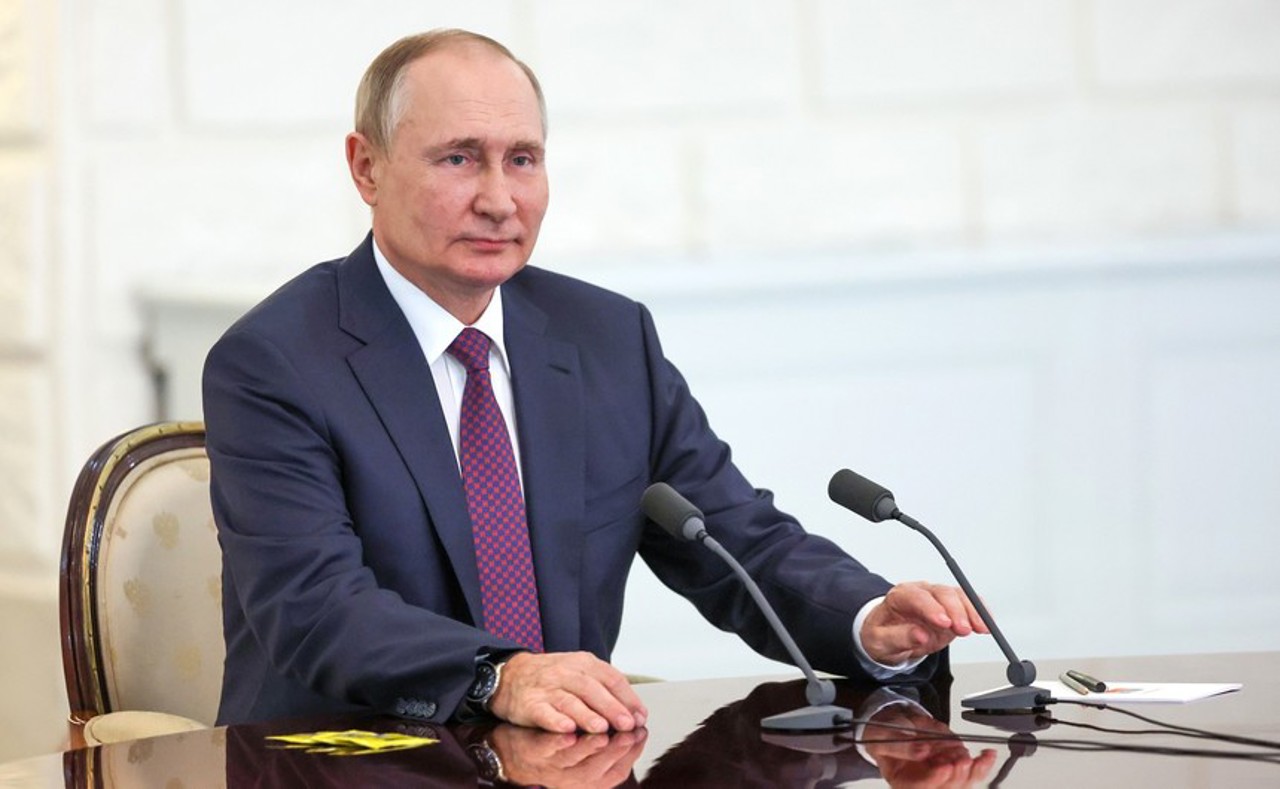
In Bishkek, Kyrgyzstan, Vladimir Putin answered a question from a journalist who asked him to clarify his statement from earlier this week regarding the use of nuclear weapons. The Russian leader had warned that the risk of nuclear war was growing, but that Russia would not strike first. Now Vladimir Putin has said that Moscow was considering adopting what he called Washington's concept of pre-emptive strike.
"First of all, the United States developed the concept of a pre-emptive strike. Second, they are developing an attack system designed to disarm (the enemy). We, on the other hand, have formulated in our strategy a retaliatory strike. But if Russia were to retaliate immediately after seeing the launch of a nuclear missile towards its territory, that would mean that the fall of enemy warheads on the territory of the Russian Federation is inevitable anyway, so they will fall anyway," Vladimir Putin said. "So - he continued - if we are talking about this disarmament strike, then maybe we should think about adopting the best practices of our American partners and their ideas to ensure their security. We are just thinking about that," Putin specified. "But if a potential adversary believes that it is possible to use the theory of pre-emptive strike, and we do not, then this still makes us think about these threats to us," he added.
The Russian leader also said his country's cruise missiles and hypersonic systems were "more modern and even more effective" than those of the United States.
Biden administration officials said Moscow had been warned at the highest level about the consequences of using nuclear weapons in war.
The US State Department condemned Moscow's statements, saying that "any talk, no matter how vague, about nuclear weapons is absolutely irresponsible."