Press Review // MEP: The accession of the Republic of Moldova and other eligible states will strengthen the EU as a geopolitical power amid new security challenges

Hundreds of millions of dollars invested by Moscow in disinformation campaigns in the Republic of Moldova; why people fall for fake news, and how Brussels views the scandals in Moldova’s justice system – these are just a few of the main headlines covered in the press review.
The Russian Federation has already invested 200 million euros in disinformation campaigns operated by the “Matrioshka” and “Pravda” networks in the Republic of Moldova, headlines newsmaker.md. Government spokesman Daniel Vodă says that these actions aim to influence the parliamentary elections that will take place this fall. Vodă says that these networks use clone sites, fake pages, and shocking headlines to weaken people's trust in the state, in institutions, and in the idea that we can move forward and succeed. We recall that The Insider recently wrote that the Russian disinformation network Matrioshka is conducting a campaign against the Republic of Moldova for the first time.
TV8 proposes the opinion of journalist Mihail Sirkeli, who says that, at the moment, electoral corruption has reached maximum levels on the one hand, because of people's greed, and on the other hand, because of the confidence that their deed will remain unpunished. He says that the citizens of the Gagauz Autonomous Region are more vulnerable to disinformation. Still, at the same time, Sirkeli is confident that we should not believe that people do not understand what they are doing. People do believe in the Kremlin's narratives, he says. The most recent of the fakes distributed in the public space refers to an 82-year-old woman who allegedly died after the police imposed a fine of 25 thousand lei on her. The police say that the information is fake, and the woman who made the accusation was given a report.
An imposed peace that legitimises the annexation of Crimea also endangers the security of the Republic of Moldova, headlines Moldova 1, which discussed with the expert on the Black Sea region, Mihai Isac. He explained that the imposition of a peace by the great powers would represent a dangerous precedent for the revision of borders by force, with a regional impact, including on the Republic of Moldova. Isac recalls that "the war did not begin in 2022, but in 2014, with the illegal annexation of Crimea," and warns that the formal acceptance of this annexation would generate a domino effect at a global level. Likewise, he believes that the Ukrainian army and the Ukrainian people "have lost far too much for Kiev to accept these territorial cessions so easily."
The “scandals” in the Moldovan justice system “look bad from Brussels,” says the director of the National Institute of Justice in Chisinau, Ramona Strugariu. Radio Free Europe/Radio Liberty spoke with the former MEP, who noted that “the endless debate and all the letters” are affecting the image of the justice reform in the eyes of European partners. In this context, she also refers to a letter made public by the former head of the anti-corruption prosecutor’s office, Veronica Dragalin, who accused interference in the justice system. Strugariu also believes that these scandals are being orchestrated by people or entities who do not want the European direction for our country as much.
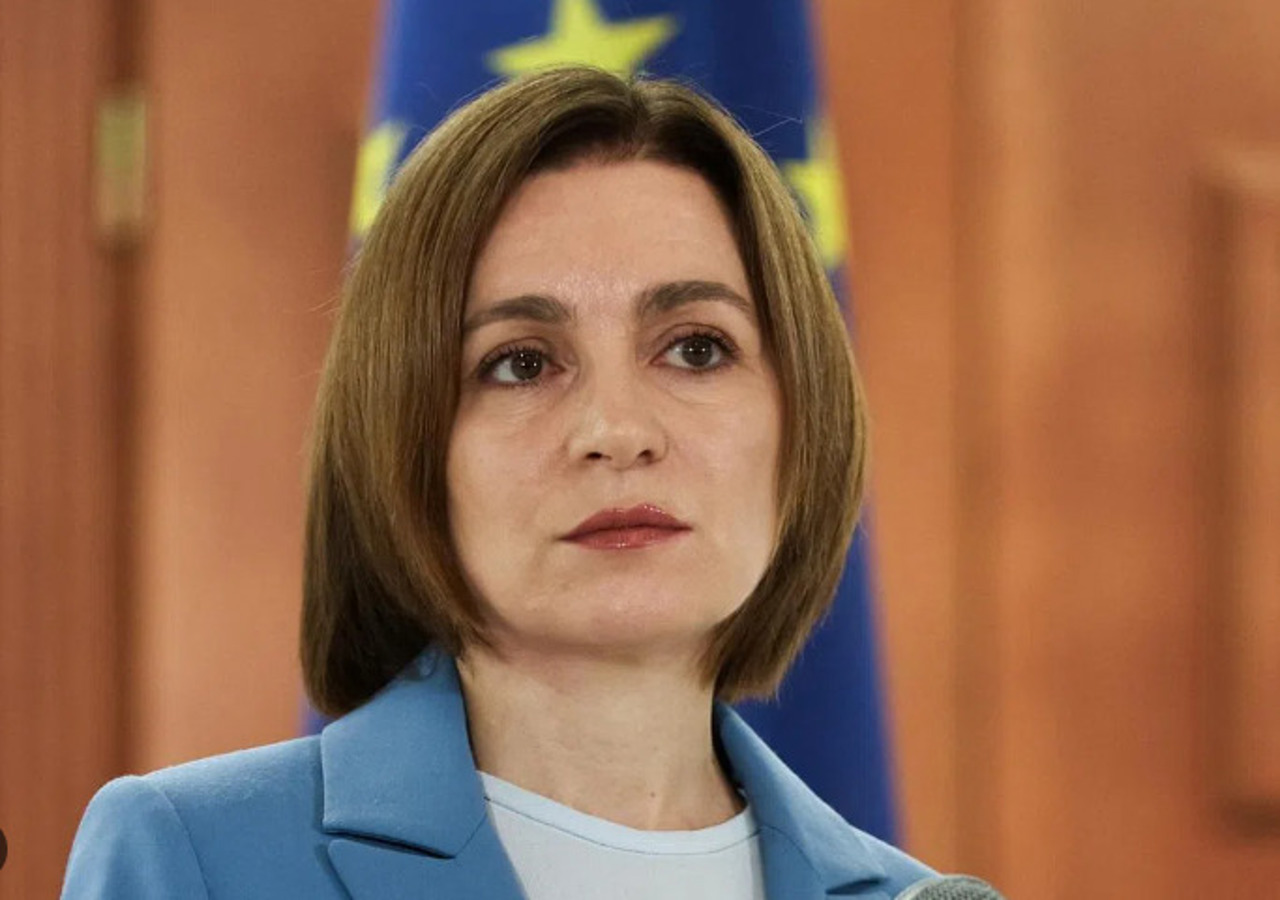
“The Republic of Moldova will be a priority in the European Union budget for the next seven years,” says the chairman of the European Parliament Delegation for relations with the Republic of Moldova, Siegfried Mureșan. Ziarul de Gardă quotes the statement of the Romanian MEP, who said that our country, along with Ukraine, was included in the budgetary priorities of the European Union for the period 2028–2034 to benefit from adequate financial and political support in the EU accession process. Through the accession of the Republic of Moldova, Ukraine, and the other states that will meet the conditions, the European Union will strengthen itself as a geopolitical power in the face of the new security challenges, Mureșan said.
The economy of the Republic of Moldova will register a growth of only 0.6% this year, headlines mold-street.com. It is the lowest growth among the emerging states in the region, according to a report by the International Monetary Fund. According to the IMF's new forecasts, after a growth of 0.5% last year, the Republic of Moldova's GDP will register an advance of 0.6% this year, accelerating to 2.5% in 2026 and reaching the 5% level promised by the Government only in 2030. Regarding inflation, the IMF forecasts that this year, the Republic of Moldova will register an average price increase of 8%.
Moldova 1 TV writes that fewer and fewer farmers insure their agricultural businesses. Currently, although the state contributes up to 70% of the insurance premium, only 1% of the agricultural area is insured annually. Farmers justify their lack of interest by the lack of financial means, as well as by the bureaucratic procedures in the compensation process. They say that when they should receive compensation, insurance companies delay payments or invoke various reasons for not paying the promised amounts. Another major problem is the difficult access to financing. In the absence of money in the account at the time of concluding the insurance, farmers have to take out loans, and banks are increasingly cautious. Thus, those with unstable incomes are not considered eligible for credit.