The first two tomosynthesis mammography machines, put into operation at hospitals in Chisinau and Balti
The first two tomosynthesis mammography machines have been put into operation at the Clinical Hospital in Balti and at the Oncological Institute in Chisinau. The machines will allow more advanced investigations to be carried out to detect breast cancer, compared to simple mammography, which allows a superficial view. The results obtained at the hospital in Balti will be transmitted online to the Oncological Institute in Chisinau, where patients will be treated.
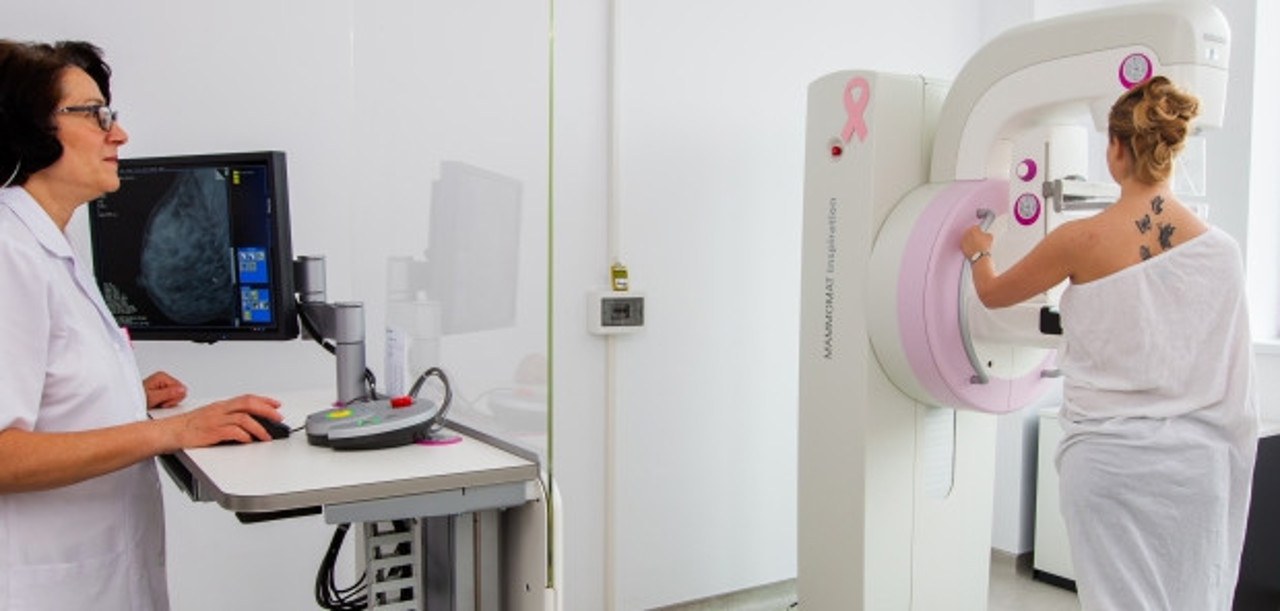
Women with suspected breast cancer will be able to have more advanced investigations with tomosynthesis mammograms. 2 such machines were put into operation today: one at the Oncological Institute in the capital and another at the Municipal Clinical Hospital in Balti. The results of the investigations carried out in Balti will be transmitted via an online platform to the Oncological Institute in Chisinau, so that doctors from the two institutions will be able to consult each other on treatment, says the Secretary of State at the Ministry of Health, Ion Prisăcaru.
"This will allow investigations to be carried out both when the doctor identifies the slightest suspicion of the presence of a mammary gland formation, but will also be used in screening examinations of the population. At the same time, in collaboration with the e-Government Agency, an online platform for the transmission of medical data is being launched, which is essential for the efficient collaboration of specialists from different medical institutions in order to quickly take the best decisions for the benefit of each patient.
In the event of the onset of breast disease, progress can be halted by early medical intervention, says Oncology Institute Director Ruslan Baltaga.
Mammography requires, according to national and international protocols, that the images be described by two independent specialists. In this way, in Balti, the investigation is described by the first specialist, and then, through the governmental system, the second description is made at the Oncological Institute".
The two digital mammograms are based on tomosynthesis, a programme that can visualise the cancerous formation in the mammary gland, analysing the tissue in detail, unlike the mammograms that have been used until now and allow a general view. In the context of World Cancer Day, which is marked annually on 4 February, the Secretary of State at the Ministry of Health, Ion Prisăcaru, announced that the Institute of Oncology will purchase another linear accelerator for radiotherapy treatment by the end of this year, in addition to the 2 already in existence.
According to the Oncological Institute, 11,000 women with breast cancer are on the institution's register. More than three thousand of them need radiotherapy, the others are treated with chemotherapy and surgery.