Moldova EU integration: How Romania became the 'gateway capital’
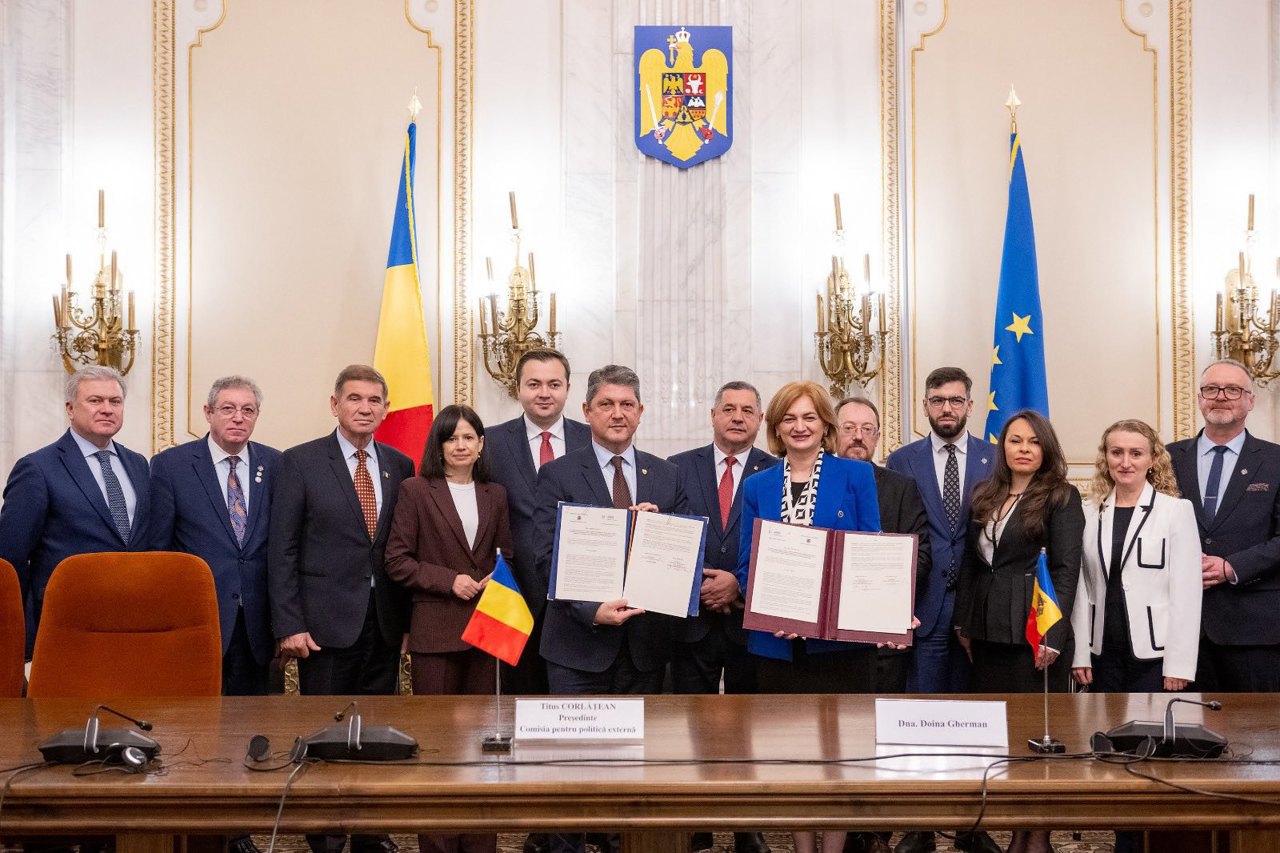
Romania acts not just as a public supporter but as a "second ambassador" for the Republic of Moldova in all world chancelleries, according to Black Sea expert, Mihai Isac.
Speaking on the ÎN CONTEXT show on Moldova 1, the analyst stressed that Bucharest is "the gateway capital for the Moldova EU integration process," offering a clear, public example of the support and facilitation of Chișinău's path toward the European Union (EU).
Mr. Isac analysed the joint declaration adopted on November 19 by the foreign policy commissions of the Parliaments in Chișinău and Bucharest, which calls for the opening of EU accession negotiations for the Republic of Moldova by the end of the current year. He emphasized that the document goes beyond mere symbolism; it is proof of Romania's firm political will—a consistent strategic asset that other EU member states will inevitably adopt.
"Practically, in any state where the Republic of Moldova has an embassy, it actually has two embassies, because its interests are actively supported by both Chișinău's and Bucharest's diplomacy," Mr. Isac stated.
He added that at high-level meetings in Bucharest, the issues facing the Republic of Moldova are presented as if they were Romania's own. "We must understand: the Republic of Moldova and Romania stand shoulder to shoulder in this process of Moldova EU integration, and this declaration will certainly be followed by other actions."
The expert highlighted the unified Romanian parliamentary support as a strategic asset for Chișinău. "The fact that a broad coalition currently exists in the Bucharest Parliament for supporting the European future of the Republic of Moldova is a significant advantage... it's an opportunity we must not overlook or lose."
Mr. Isaac linked Ukraine's battlefield resistance and Romania's diplomatic support directly to a crucial window of opportunity for internal reforms in the Republic of Moldova.
"Every day gained on the front by Ukraine, every day we are supported by Romania on the diplomatic front of European integration, is a day the Republic of Moldova earns to enact reforms," he explained. "These reforms are vital for our future... it is not only an obligation but a necessity. We need to win the war for reform—be it in justice, the economic domain, energy security, or even physical security."
Mihai Isac further affirmed that the state is currently benefiting from an unprecedented diplomatic and security umbrella, positioning it as an active contributor to European continental stability.
"At this moment, the Republic of Moldova is at an extremely favorable juncture from all points of view," he concluded. "It is considered an equal partner state with equal rights and obligations by all European community states, as well as by the UK, the United States, Canada, and other major Western powers. Right now, the Republic of Moldova is part of the European security and diplomatic architecture—a security-exporting state."
The EU accession process for the Republic of Moldova is unfolding within a tense regional context, complicated by multiple political blockages.
The broad consensus regarding the opening of EU accession negotiations for the Republic of Moldova is complicated by the situation in Ukraine, specifically the blockage from Hungary. Titus Corlățean, President of the Foreign Policy Commission of the Romanian Senate, warned during the joint parliamentary commission meeting in Bucharest on November 19, that Chișinău risks becoming "a prisoner in the process."
Given these challenges, the parliamentary foreign policy commissions from Romania and the Republic of Moldova adopted a joint declaration requesting the opening of accession negotiations for Chișinău by the end of 2025.
The issue is expected to be discussed at the European Council meeting on December 18.
Translation by Iurie Tataru