Opening of EU negotiation clusters for Moldova requested by PAC
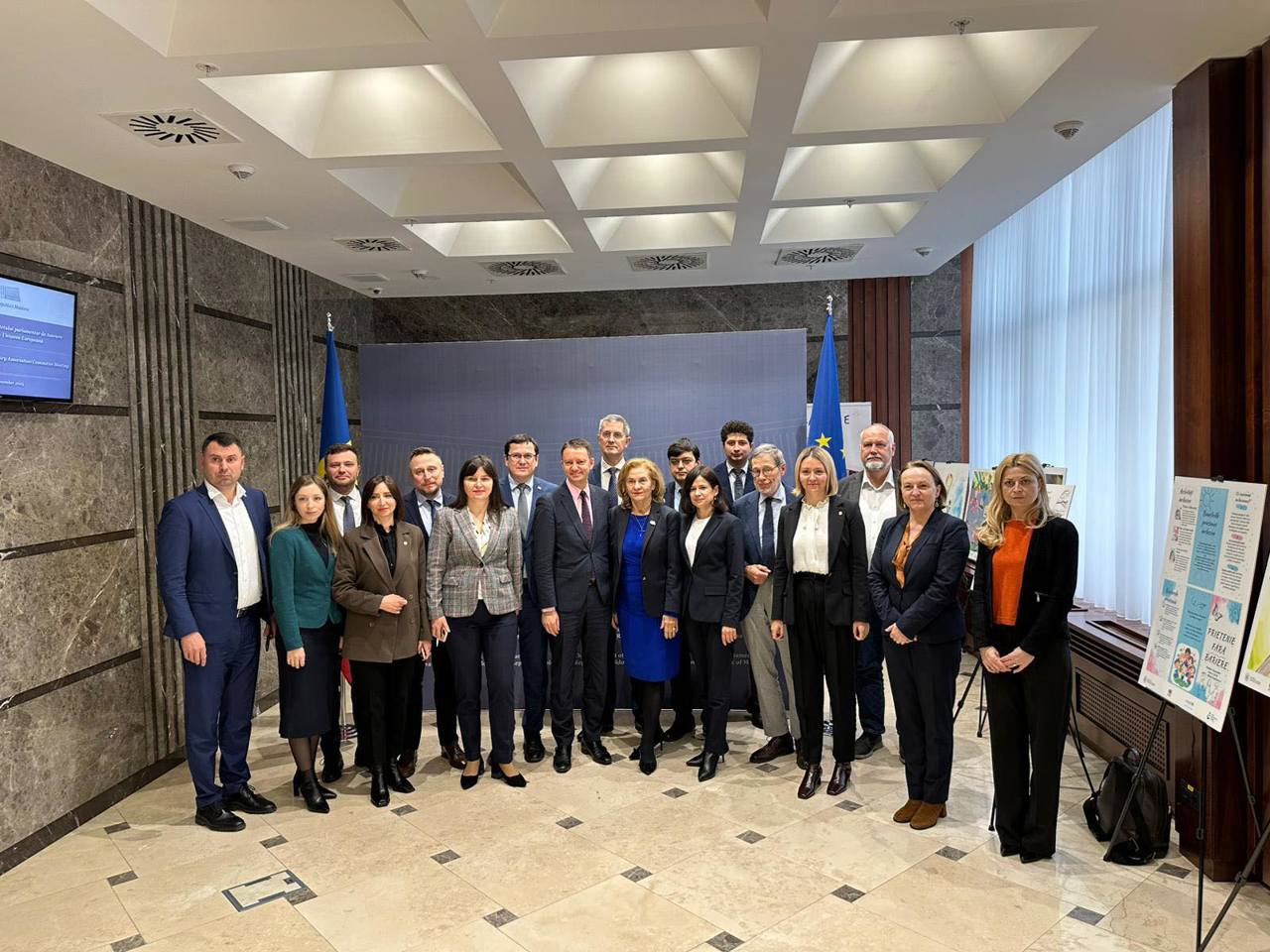
The Parliamentary Association Committee Republic of Moldova – European Union (PAC RM–EU) urged the European Union to open Moldova EU accession negotiations on three clusters by the end of this year.
The request is outlined in the Declaration adopted on Friday, December 5, in Chișinău, during the Committee's 16th meeting. Co-Chairs MEP Siegfried Mureșan and Deputy Marcel Spatari delivered the announcement at a subsequent press conference.
MEP Siegfried Mureșan clarified that the Committee's joint position targets the launch of talks on three of the six negotiation clusters: fundamental values, the internal market, and external relations. These areas are deemed the most advanced in their preparatory stage.
"The Parliamentary Association Committee is requesting the start of negotiations on three of the six clusters before the year's end," he stated. Mureșan emphasized that European assessments confirm the rapid pace of progress in these key areas, adding: "The Republic of Moldova is ready and deserves this step."
He stressed that political backing from the European Legislature remains robust, highlighting that R. Moldova has made substantial headway across all analyzed chapters.
Final Decision on EU Negotiation Clusters Expected at European Council
The official launch of EU negotiation clusters depends on the EU Heads of State and Government. The decision to open talks on the three clusters is scheduled for examination this month by the European Council, which convenes on December 18-19.
Deputy Marcel Spatari noted that the meeting marks the formal resumption of PAC activity in the new legislature. He expressed confidence that the implementation of reforms will continue, particularly in the areas of the Rule of Law, the economy, and security.
Spatari underscored the necessity to accelerate the pace: "The Republica Moldova has made important progress in the European integration process, and the speed of transposing European standards must be accelerated to achieve the goal of accession as soon as possible."
"It is vital to continue transposing directives, but also to develop the economy, ensure a functioning Rule of Law, uphold transparent institutions, and guarantee that justice is paramount in the Republic of Moldova," he added.
Furthermore, Spatari mentioned the strengthening collaboration between Chișinău authorities and European institutions in combating hybrid threats. "The Republic of Moldova and the European Union are coordinating their actions better today in combating disinformation, cyber, and hybrid attacks," the deputy affirmed.
Moldova's Experience Valuable to Entire EU Bloc
European Co-Chair Siegfried Mureșan noted that Moldova's experience is valuable for the entire EU bloc. He suggested that the tactics used by the Russian Federation against Chișinău serve as an anticipation of similar attempts in other EU member states.
"We are aware that what the Russian Federation tried unsuccessfully in the Republic of Moldova, it will also attempt in other European Union member states. That is why it is essential to correctly evaluate the situation and learn from the experience of the Republic of Moldova," Mureșan stated.
Spatari reiterated that the decision on opening negotiations will be examined this month by the European Council.
"The decision regarding the opening of negotiations on clusters is taken by the Heads of State and Government within the European Council," he explained. He confirmed that both the European Commission and the European Parliament validate Chișinău's readiness to advance on the first three clusters: fundamental values, the internal market, and external relations.
Extended Cooperation and Working Groups
In addition to the formal request, the PAC RM–EU resolved to create dedicated parliamentary working groups for the six negotiation clusters. This move is designed to provide technical and political support for the legislative harmonization process.
"Through parliamentary dialogue and cooperation, we can speed up the process of adopting the necessary legislation," Siegfried Mureșan declared.
The meeting of the Parliamentary Association Committee Republic of Moldova – European Union took place in Chișinău, with the participation of Moldovan deputies from all factions and a delegation of six MEPs from four European Union member states.
The Republic of Moldova's progress in the European integration process over the past year was formally recognized in the Report on the Enlargement of the European Union, approved by the European Commission on November 4.
Translation by Iurie Tataru