Bureaucracy is destroying Moldova's historic mansions, expert warns
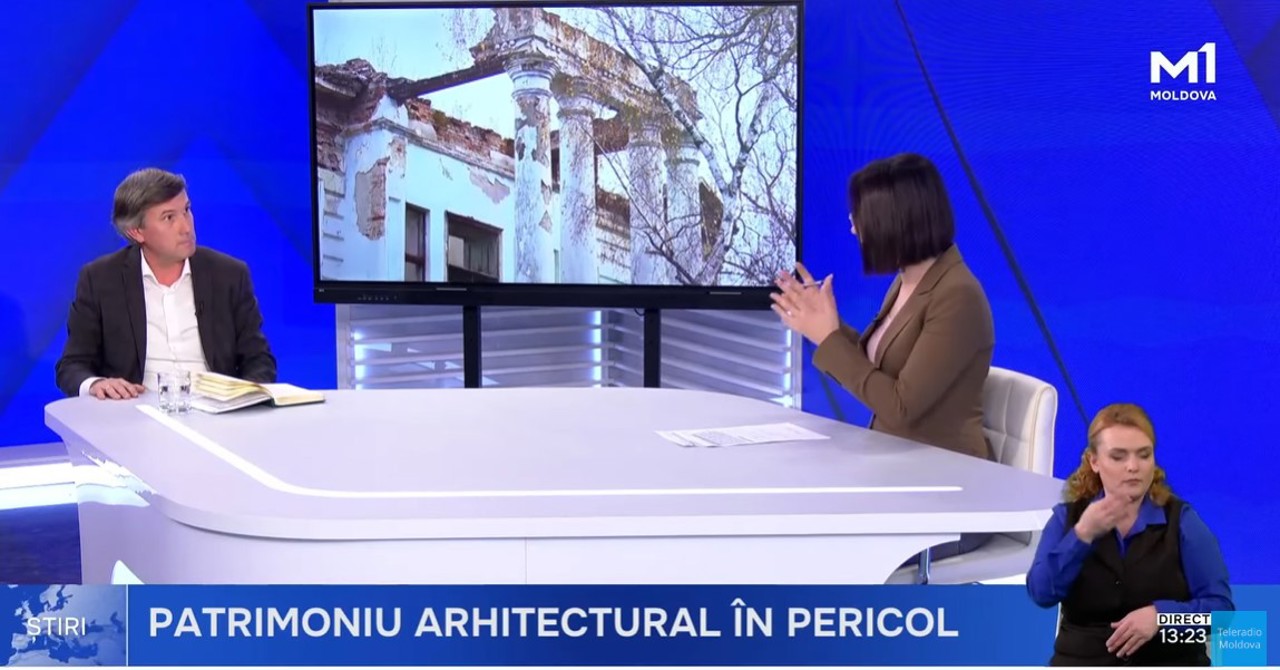
The Republic of Moldova risks losing some of its most valuable historical monuments, including a significant number of its 64 historic manor houses, almost half of which are in a critical stage of degradation.
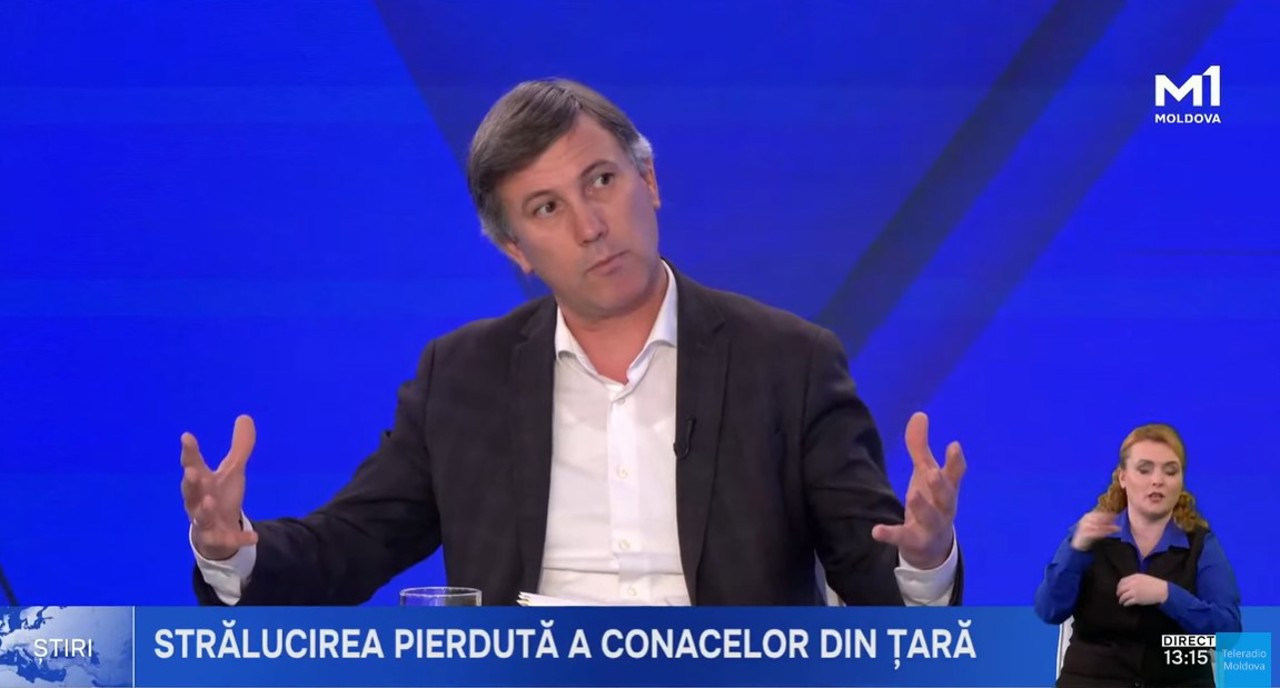
This warning was issued by cultural heritage management expert Ion Ștefăniță, who praised the national public television station's initiative to launch the public awareness effort, the "Save the Manor Houses in Ruin" campaign.
Highlighting the need for public awareness regarding heritage conservation, Ștefăniță stressed that indifference leads to irreparable losses, noting that such media campaigns play an essential role in mobilization.
"I greatly appreciate your initiative launched last week to inform and raise public awareness regarding the real situation of what remains of the civil architecture of the historic region of Bessarabia—the boyar mansions. This focus is long overdue, and it is crucial that we adopt a responsible attitude towards the heritage we inherited. We are losing this cultural heritage day by day due to indifference and inaction. It all starts with the level of education and public awareness, and what you are doing is essentially education. I hope this message reaches the decision-makers," the expert stated on the Moldova 1 public broadcaster set.
Dysfunctional Legislation and Bureaucracy Undermine Heritage Protection
According to Ion Ștefăniță, a former head of the Agency for Monument Protection until 2021, unimplemented laws and strategies perpetuate the degradation of monuments.
"Everything is stipulated in the Law on Monument Protection, which has been in force since 1993. Regrettably, I must say that the law essentially remains only on paper. The 'Culture 2020' Strategy for Cultural Development also remained on paper. We are currently holding a public consultation for the new 'Strategy 2035,' and my hope is that this one won't suffer the same fate. The annex to the former Strategy allocated millions of lei (Moldovan currency) for manor house restoration, yet little was achieved," the expert specified.
Ștefăniță also emphasized the crippling bureaucracy that routinely delays interventions. The financing mechanism is detailed in Article 42 of the Law on Monument Protection, requiring local administrative units to set aside necessary funds based on proposals from the Ministry of Culture.
"Before a financing project can even begin, every site needs complete project documentation, including sketches and execution plans. This is where the bureaucratic process of coordination and endorsement steps in, and we need to move much faster. When coordination and approvals take years, the landmark degrades to ruin, risking its survival as anything more than an archived image," he pointed out.
Public-Private Partnership (PPP): The Urgent Need for Investment
In this context, Ștefăniță called for the acceleration of approval processes and a reduction in red tape for historic restoration projects.
"My number one recommendation is to adopt a responsible attitude, establish a functional financing mechanism, and cut down on bureaucracy. Another suggestion, which I heard from the new Minister of Culture, Cristian Jardan, is to either sell these assets or implement public-private partnerships (PPP), as the state openly declares itself incapable of funding these costly restoration works," the expert added.
Minister of Culture, Cristian Jardan, visits the Ciolac-Malski manor house: "With every passing year, it is destroyed"
The Scarcity of Restoration Specialists
Detailing the professional requirements for restoration, the expert stressed the urgent need for specialized architects and contractors. He cited the restoration of the Soroca Fortress between 2013 and 2015, which required hiring specialists from neighboring Romania.
"Not all architects are qualified to develop project documentation for these historic and architectural sites; only those with specific high-level certification can participate. Secondly, a funding mechanism must be established, and sources must be identified. Then comes the execution of works, which must be handled by licensed restoration firms that meet all standards. Unfortunately, while we may have everything correct on paper, in reality, we often face a sad outcome: modern, inappropriate materials are applied to historical monuments—be it the roof covering, joinery, or masonry. This use of modern materials causes us to compromise the historical integrity of the asset. It's like a piece of jewelry that the jeweler fails to bring back to life properly," the expert explained.
Heritage – An Ignored Economic Resource and Cultural Tourism Loss
In his interview with Moldova 1, Ștefăniță pointed to examples like France and Italy, where monuments generate significant income through cultural tourism and act as sources of regional development.
"I have consistently discussed the economic value of cultural heritage. Today, our monuments are 'dead spots' that generate nothing for the economic development of a region, a village, a city, or the country as a whole. And we, Moldovans, are failing this crucial lesson on the economic value of heritage. I often draw a parallel with what the French, the Italians, and our colleagues in other countries do with these assets, which bring in millions and contribute significantly to tourism development. That means economy; that means revenue through accommodation and the entire economic circuit surrounding these sites. Consequently, by failing to act, we are losing out on millions of dollars and countless tourists," the expert noted.
To demonstrate the enormous potential of cultural tourism, Ștefăniță mentioned Mont Saint-Michel, which attracts 3.4 million visitors annually and contributes billions of euros to France's budget. He also noted that in 2017, each tourist in Paris spent between 120 and 500 euros.
The Solution: Budgetary Funds or Private Investment (PPP)
Ion Ștefăniță proposes that the 29 historical sites in the Republic of Moldova that are in an "advanced state of degradation" be saved either through government budgetary allocations or through public-private partnerships (PPP) that facilitate investment.
"These 29 assets, which are in an advanced state of degradation, could actually generate revenue for the country's budget. One solution is to identify sources from the state budget, especially since the Culture 2035 Strategy envisions millions of lei, and truly make an effort to implement the strategy according to the financing mechanism. However, if we deem ourselves incapable of initiating the financing mechanism, I reiterate: public-private partnership (PPP). There are business entities with viable business plans and capital who are motivated to invest in these assets. The state would resolve the issue and save these assets through the private sector, while the private sector achieves state-set objectives—creating jobs, paying taxes, and starting the economic cycle," Ion Ștefăniță concluded.
Moldova 1 is conducting a campaign dedicated to saving the manor houses in the Republic of Moldova to refocus public attention on their historical and cultural value.
Through our reports and interviews, we aim to show not only the current condition of these buildings but also their potential to become tourist resources.
We also aim to mobilize authorities to prevent the irrevocable loss of a heritage that, once disappeared, cannot be recovered.
Translation by Iurie Tataru