Architects of unity: how science is erasing borders between Romania and Moldova
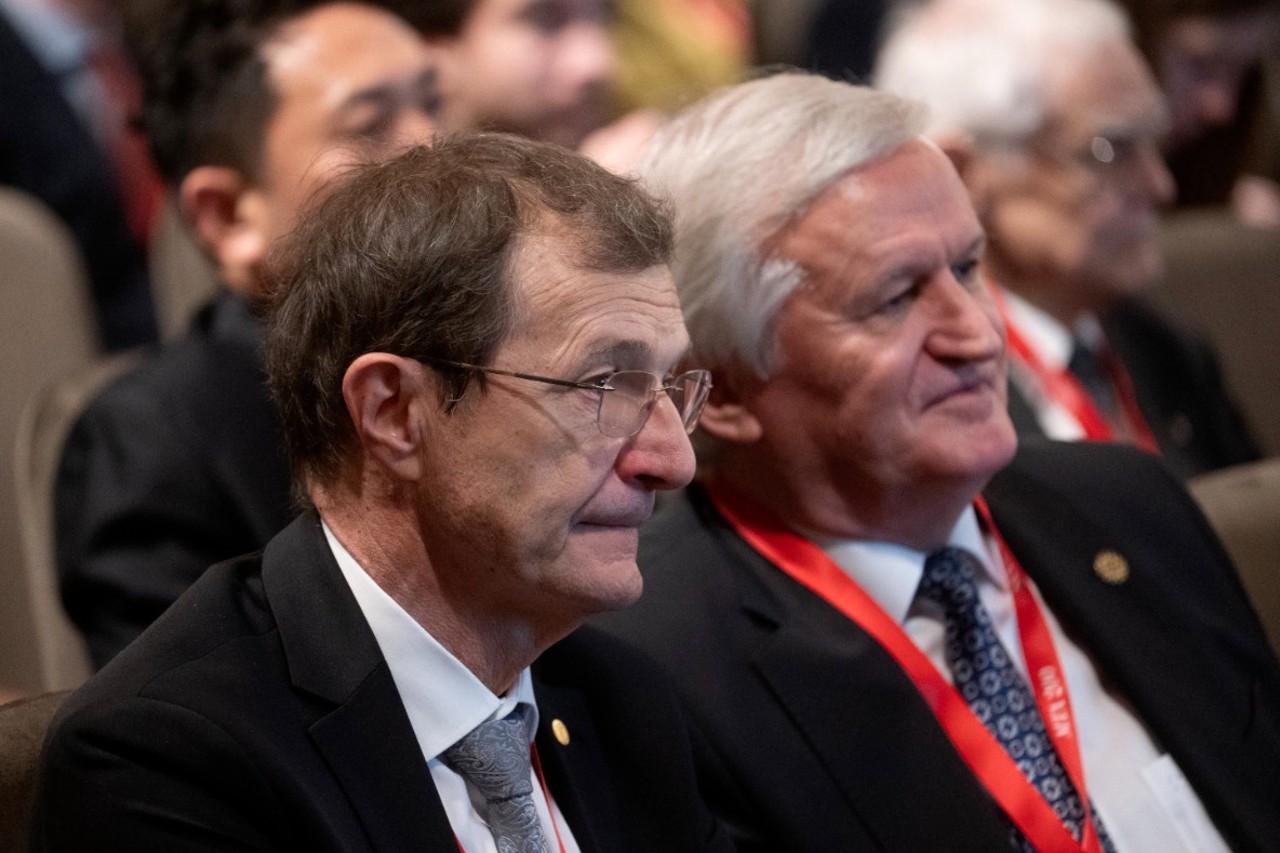
The identity of the people on both banks of the Prut River is Romanian, and their culture is identical.
The de facto disappearance of the artificial border along the Prut is not merely a political goal, but the result of a long process of spiritual and scientific reunification.
This message forms the core of a joint declaration titled "The Academy – The Spiritual Force of Romanian Unity and Identity." The document was signed by the Romanian Academy and the Academy of Sciences of Moldova (ASM), which describe themselves as "sister institutions."
A natural path toward Europe
Science and culture know no borders in Romanian space. The ongoing convergence of the two academies is viewed as a natural necessity of the modern era, aligning with the Republic of Moldova’s European integration process.
The academies aim to harmonize institutions and reconnect historical spaces that were artificially fragmented. The presidents of the two institutions, Ioan-Aurel Pop and Ion Tighineanu, stated that the academies act as "architects of lasting unity."
Historical roots of academic unity
In 2026, the Romanian Academy will celebrate 160 years since its founding. Notably, three of its founding members in 1866 were from Bessarabia, demonstrating that a unified cultural Romania existed long before the political union of 1918.
The Academy of Sciences of Moldova, established in 1961 during the Soviet era, faced a difficult mission. Despite the ideological constraints of the time, the institution managed to preserve the scientific and cultural traditions of the eastern half of the historical Moldavian territory.
Defending national values
Today, the academies work together to counter misinformation regarding national identity. They remain committed to defending the Romanian language, objective history, and a shared future within the European community.
The joint strategy focuses on building a common scientific space. In this space, administrative boundaries are considered secondary to the shared values and truth of the two nations.
Translation by Iurie Tataru