Experts on unification: first move should come from Moldova
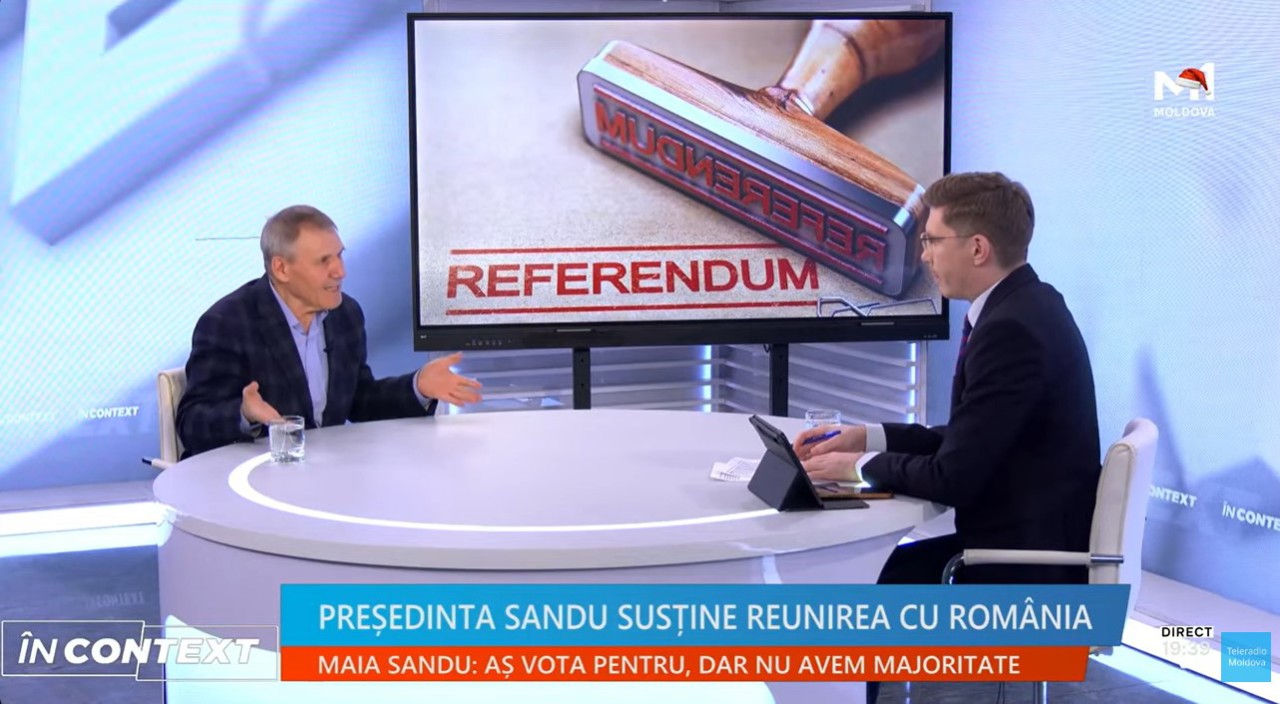
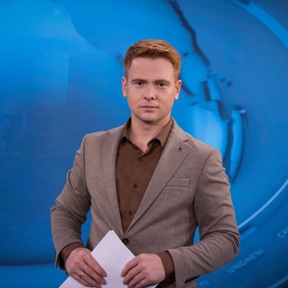
The topic of reunifying the Republic of Moldova with Romania was brought back into the spotlight by President Maia Sandu during a recent interview with British journalists. Journalist Robert Lupițu noted that this issue is being addressed with openness in Bucharest. Additionally, analyst Nicolae Negru mentioned on the ÎN CONTEXT show on Moldova 1 during the January 13 edition that the Russian threat could be a significant reason for a historic decision to reunify the two Romanian states.
The subject of reunification: Emerging on the European agenda
According to analyst Nicolae Negru, although the head of state framed her support for unification in a potential referendum as a personal stance, the ongoing war has brought this issue to the forefront of both the domestic and European public agendas for the first time.
"This personal opinion resonated strongly—not just within Romania but also in the European press. This may be the first time this topic is being discussed at a European level. While it was mentioned in 2016, it is now being addressed from the standpoint of the president," the analyst stated on Moldova 1 TV.
Negru drew a historical parallel to 1918, emphasizing that the legitimacy of significant decisions rests with representative bodies in times of crisis: "The Romanian state did not opt for a referendum, as it was the decision of the Country Council, the representative body of Bassarabia."
The lesson of 1918 and Article 142: Legal mechanisms
Negru noted that the current legal framework provides clear mechanisms for reviewing the state's sovereign nature, contingent upon a majority of voters expressing their will.
"The Declaration of Independence does not explicitly mention this, but it implies that independence is a step toward unification. The Constitution, in Article 142, paragraph one, states that the provisions concerning the sovereignty, independence, and territorial integrity can be amended if a majority of voters agree. This is where we must begin—no one will do this for us," the analyst explained.
Reunification as a defense against Russian expansion
Negru also indicated that unification is perceived not just as a lofty ideal but as a necessary response to Moscow's ambition to rebuild the Soviet empire.
"This situation reflects a changing geopolitical context and a threat to the security of the Republic of Moldova, which aligns with Romania's interests. At least, that's how outsiders interpret it. We cannot overlook how the European Union and other nations will react; we are not operating in a vacuum, and effective diplomacy is essential. There was a significant response when it was stated that the Republic of Moldova, as a small nation, cannot withstand this hybrid war. The real threat is Russia, which is open about its desire to restore the Soviet Union," concluded Nicolae Negru.
"The first move belongs to Chisinau"
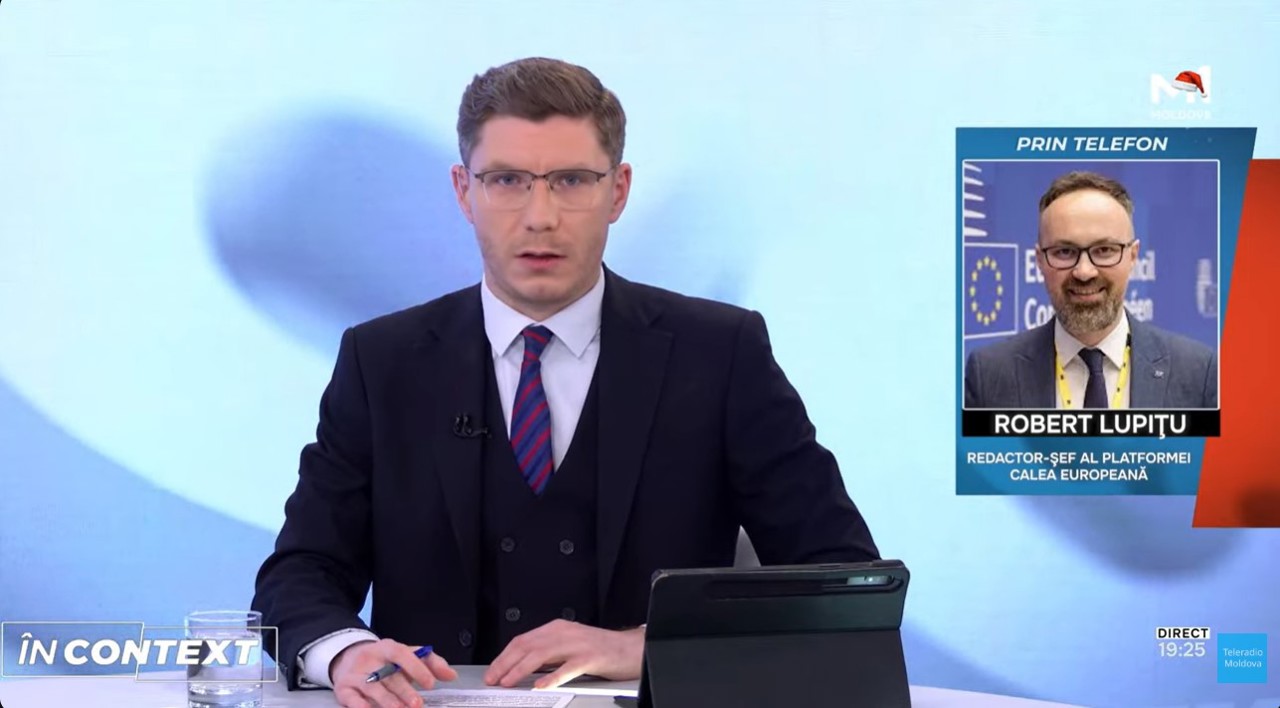
During the same show, Robert Lupițu, editor-in-chief of the CaleaEuropeana.ro portal, stated that the issue is approached with an openness towards the self-determination of the Republic of Moldova. He emphasized that the initiative and final decision belong exclusively to the citizens on the left bank of the Prut.
"Although the declaration is viewed pragmatically in Romania by some decision-makers in Bucharest, we understand the established position: Romania is ready to discuss the scenario of unification only if the Republic of Moldova considers it an option. The Republic of Moldova has the right to decide its future," declared Robert Lupițu during the public television broadcast.
The international relations expert also highlighted that such a process cannot be initiated unilaterally. Chisinau must express its desire for unification before Bucharest can activate the necessary institutional mechanisms.
"It remains to be seen what will happen next. Last year, President Nicușor Dan mentioned in an interview with the Frankfurter Allgemeine Zeitung that he personally supports union with the Republic of Moldova. Therefore, the first move should come from the Republic of Moldova, and then Romania should respond accordingly," the journalist noted.
Objective: Uniting the Republic of Moldova and Romania in the "European family."
Lupițu also pointed out that the current geopolitical climate is crucial, especially in a world where major powers are attempting to redraw borders by force. Maintaining a "rules-based order" remains a priority.
"Officially, both Chisinau and Bucharest have the goal of integrating the Republic of Moldova into the European Union. In practice, both Romania and the Republic of Moldova, on either side of the Prut, should find themselves united in the larger European family," concluded Robert Lupițu on Moldova 1.
In a recent interview with prominent British journalists Rory Stewart and Alastair Campbell, President Maia Sandu candidly stated that she would vote in favor of unifying the Republic of Moldova with Romania if a plebiscite were to be held. However, she also emphasized her responsibility, as head of state, to consider the current realities in the Republic of Moldova.
Eugen Tomac, an honorary advisor to the President of Romania, pointed out that "the official position of the Romanian state has not changed." He noted that Romania reaffirmed its commitment to this stance on March 27, 2018, through a parliamentary declaration adopted unanimously. Tomac, a Member of the European Parliament, expressed in an interview with caleaeuropeană.ro on January 13 that any Romanian of good faith, regardless of which side of the Prut they reside on, views the unification of the Republic of Moldova with Romania as a natural process.