Traditional Transnistria reintegration is dead: Chiveri outlines new 'quiet' alignment path
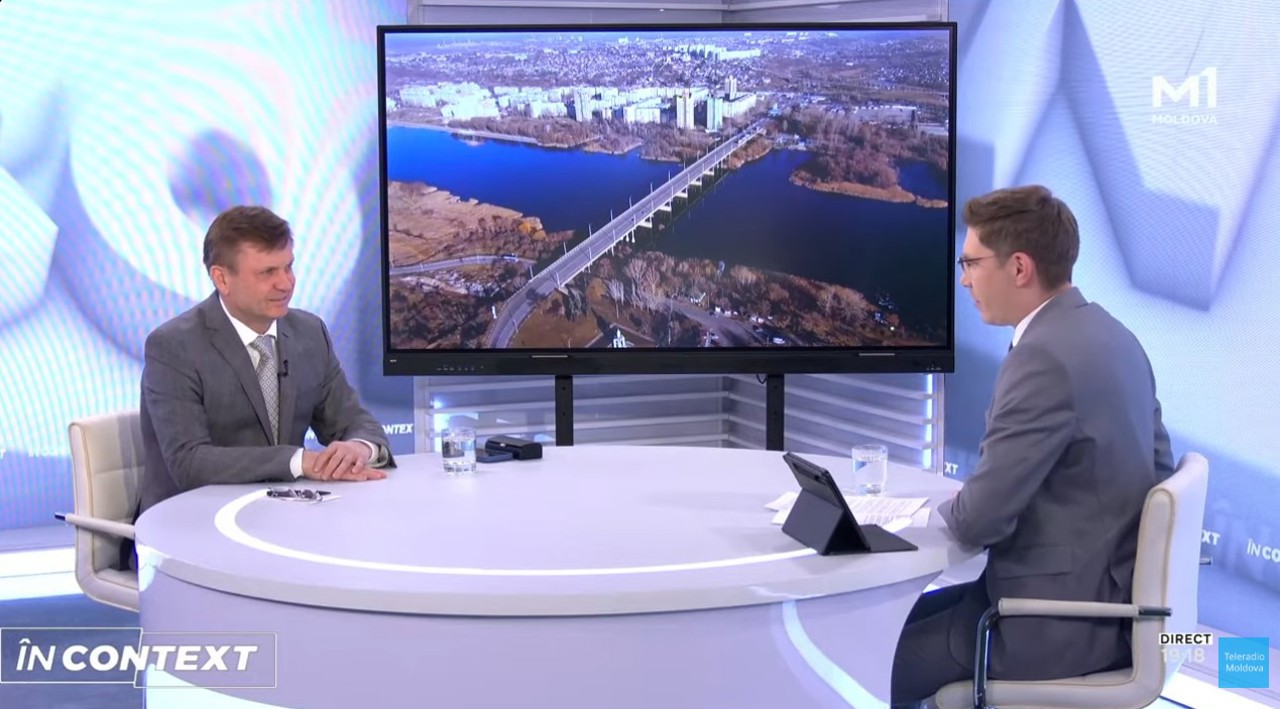
Moldovan Vice Prime Minister for Reintegration, Valeriu Chiveri, announced a major shift in the country's approach to the Transnistrian conflict. During a broadcast on Moldova 1 on January 21, Chiveri stated that traditional reintegration plans are no longer feasible due to Tiraspol’s refusal to engage in dialogue and the volatile regional geopolitical landscape.
Instead of a rigid roadmap, the government is adopting a flexible strategy centered on a "convergence fund" to bring the two banks of the Dniester closer. This mechanism, estimated to require over €1 billion (approx. 19.6 billion MDL), aims to integrate the breakaway region into Moldova's legal and economic framework, supported by international partners.
The end of the traditional roadmap
Chiveri explained that a "plan" with strict deadlines and responsible institutions is currently impossible to implement with an uncontrolled territory. He noted that thirty years of experience show that Tiraspol has consistently rejected negotiated reintegration elements.
"We are now focused on a strategic vision that allows for prompt reactions," Chiveri said. He cited the energy crisis in the Transnistrian region last year as an example where Moldova and its partners successfully deployed immediate solutions despite a lack of cooperation from the separatist regime.
Quiet diplomacy and legislative inventory
The Vice Prime Minister revealed that Chisinau is currently conducting a "quiet" technical audit of national legislation. Each state institution is analyzing how Moldovan laws can be applied to the left bank of the Dniester without escalating tensions.
This "diplomacy of discretion" is intended to prepare the ground for the convergence fund. Chiveri emphasized that the ultimate goal is to bring the Transnistrian business environment into Moldova's constitutional field, particularly in the economic sector, as a precursor to broader reintegration.
Stalled dialogue and the EU path
Official communication remains limited to message exchanges, with no direct contact between Chiveri and Tiraspol's chief negotiator, Vitali Ignatiev. The "5+2" negotiation format—comprising Moldova, Tiraspol, Russia, Ukraine, and the OSCE—remains officially suspended following Russia's invasion of Ukraine.
To maintain momentum, Chisinau has proposed decoupling the Transnistrian settlement from Moldova’s EU integration process. The authorities are counting on the European Union to facilitate a transition toward an international civilian mission, which would eventually replace the current, outdated mediation mechanisms.
Translation by Iurie Tataru