Ukraine, in its fifth year of war: losses equal to the population of three Republics of Moldova
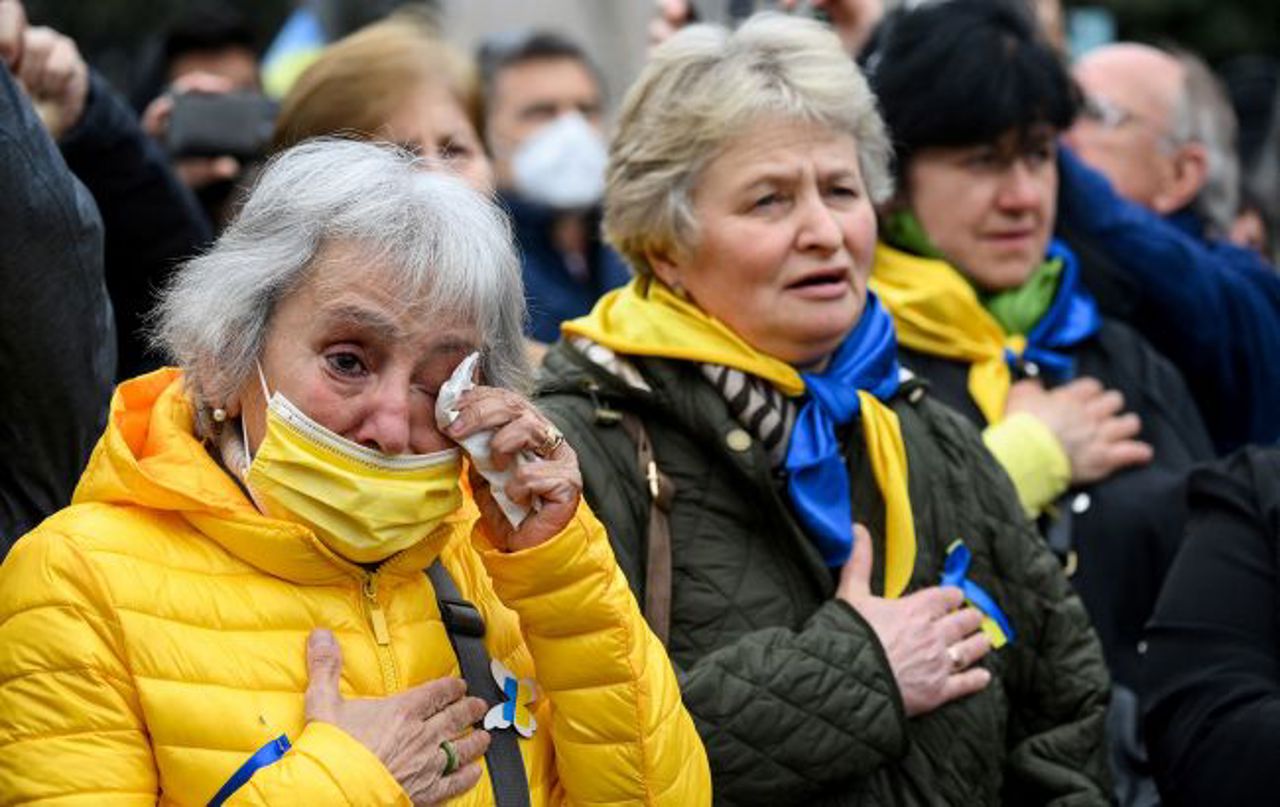
The war sparked by Russia has led to an unprecedented exodus, with the number of Ukrainians leaving the country resembling the population of three Republics of Moldova. This significant demographic loss is having a profound impact on Ukraine's economy and future, as noted by experts.
Russia’s attack on Ukraine has caused the largest migration crisis that neither Ukraine nor Europe has faced since World War II. During this time, millions of people have crossed the borders of Ukraine and Europe, and for many of them, the journey “for a few weeks” has turned into a new beginning “from scratch”, thousands of kilometers from home.
Millions lost: unprecedented migration
From the first days of the Russian invasion, border crossings have become true humanitarian hubs. At the train station in Przemyśl, Poland, refugees saw posters with the message “You are safe here”.
Governments, volunteer organizations and citizens have offered shelter, food and support. A crucial role was also played by the Ukrainian railway, which organized free evacuation trains: in the first three weeks, approximately 2.5 million passengers were transported.
The European Union has activated the Temporary Protection Directive for the first time, granting Ukrainians the right to reside, work, access to healthcare and education. Similar measures have been applied in non-EU states such as Switzerland, Liechtenstein and Norway, and the United Kingdom has launched its own special visa programs.
Temporary protection in the EU has been extended until 2027. According to Eurostat, approximately 4.35 million Ukrainians held this status in the EU in November 2025. Globally, the number of Ukrainian refugees reaches about 7 million.
Demographers, however, speak of total losses of up to 10 million people, including emigrants, war victims and a decline in the birth rate.
Where are most Ukrainians in Europe
Most beneficiaries of temporary protection are women and children. The top three EU countries by the number of Ukrainians hosted are:
- Germany: 1,250,620 people (28.7%)
- Poland: 969,240 people (22.3%)
- Czech Republic: 393,055 people (9%)
In 2025, EU countries issued over 683,000 new decisions granting temporary protection: 16.3% less than in 2024. More and more refugees choose to return to Ukraine, but the flow of departures continues.
Reduction of support and stricter conditions
The current trend in the EU is to reduce social benefits and make them conditional on integration: learning the language, looking for a job, sending children to school.
In Germany, newcomers after April 2025 receive lower benefits, and family reunification has been restricted. In Norway, support has been reduced and limited to those in state-run centres. In Ireland, weekly support for those in state-run housing has fallen to €38.80.
In Poland, child support is conditional on the parents' legal employment. At the same time, surveys show a decline in public support for refugees.
But the war continues. The scale of departures during the war years is huge. In January, Eurostat announced that 4.35 million people from Ukraine were benefiting from temporary protection in the European Union (data valid for November 2025).
These figures refer only to the EU: although most Ukrainians are here, they have also dispersed to other countries. Almost 200 thousand have left for the United States of America through a special program, and almost a quarter of a million have been received by Canada.
According to Ukrainian government estimates, about 7.5 million people have left the country. This is more than the population of all of Denmark or the equivalent of three Republics of Moldova.
Demographers talk about even greater losses, because they take into account not only migrants, but also those who died because of the war, ended up in occupation, or will never be born again because of the conflict.
“When I try to assess Ukraine’s losses as a result of the war, I come to a frightening figure - 10 million people. This is the ‘demographic gap.’ In this estimate, I include not only irreversible losses but also the number of emigrants. Could it be otherwise? Probably yes. But for now I don’t see any other scenarios,” Ella Libanova, director of the Institute of Demography and Social Research, told RBC-Ukraine.
The massive departure of the population has led to a labor shortage in Ukraine, fewer shoppers in stores, and fewer customers in restaurants and cafes, which supported the economy. At the same time, the birth rate has fallen so much that last year, even in Kiev, there were no waiting lists for kindergartens.
Currently, people are leaving Ukraine much less often than in 2022. A significant part of the refugees have already returned home.
“I follow my acquaintances and see that those who really wanted to return have already done so. And in reality, a lot of people have already returned,” Doctor of Economic Sciences Lyudmila Cherenko told RBC-Ukraine.
According to Eurostat data, in 2025 EU countries issued 683,395 new decisions on granting temporary protection, 16.3% less than in 2024.
“The most interested in the return of refugees is Ukraine, because for us the loss of a large part of the working and well-educated population is a major problem for the economy and demography,” says Cherenko.
With the departure of refugees, Ukraine is losing significant potential: 70% of women who left the country have higher education, says Ella Libanova.
During the most critical period, in the spring of 2022, mainly residents of Kiev and Kharkiv, with a high level of qualification, left. In general, up to 90% of those who fled the war are city dwellers.
On the other hand, it is precisely among these people that it places its greatest hopes: according to demographer Ella Libanova, educated and qualified professionals are more likely to return to Ukraine because they have certain requirements related to their social environment and status.
“No one can say for sure who will return. But conversations with migrants give me reason to believe that they will return. There are people who left to earn money. But war migrants are something else. They left to save their children. And when they feel safe in Ukraine, when they feel that they are wanted on the labor market, and if they feel this, then they will return,” emphasizes Ella Libanova.