Education as a bridge: The students returning to the Transnistrian region to transform local schooling

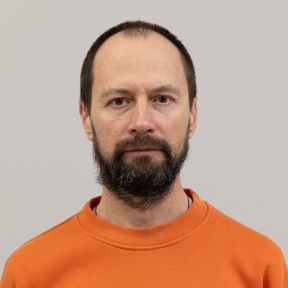
More than 850 students from the Transnistrian region are currently pursuing higher education in Chisinau and other right-bank cities, supported by state scholarships. Among them is Arina Brigalda, a graduate from Grigoriopol who moved to the capital to study at the "Ion Creangă" State Pedagogical University.
Arina is currently completing a Master’s degree in Physics, Mathematics, and IT. Despite the significant wage gap between the two banks of the Dniester, she intends to return to her hometown to teach, driven by a mission to modernize the local educational landscape.
A vocation beyond borders
Born and raised in the Transnistrian region, Arina attended a Romanian-language high school for 12 years. She notes that language was never a barrier, as her family and community maintained their linguistic roots despite the regional political context.
"After high school, I chose Chisinau because I wanted to be a motivation for children," Arina stated during a Radio Moldova interview. She views teaching not merely as a job, but as a vocation capable of sparking systemic social change.
State incentives for young specialists
To encourage graduates to work in rural or underserved areas, the Moldovan government offers substantial financial packages. Young teachers receive an allowance of €10,250 (approx. 200,000 MDL) for university graduates and €8,200 (approx. 160,000 MDL) for college graduates.
Beyond these one-time payments, the Ministry of Education and Research provides additional support during the first five years of service. This includes subsidies for housing rentals as well as coverage for electricity and heating costs.
Diplomatic and educational integration
The academic integration of Transnistrian youth is a key pillar of Chisinau’s reintegration strategy. Over the past eight years, Moldovan authorities have apostilled more than 650 "neutral-model" diplomas, allowing students from the region to access international labor markets and further studies.
For students like Arina, the choice to study on the right bank is a step toward closing the historical divide. "History is history," she remarked, "but we are closer now and must view our future through a different lens."
Translation by Iurie Tataru