Maia Sandu: EU integration key to Moldova’s security and development
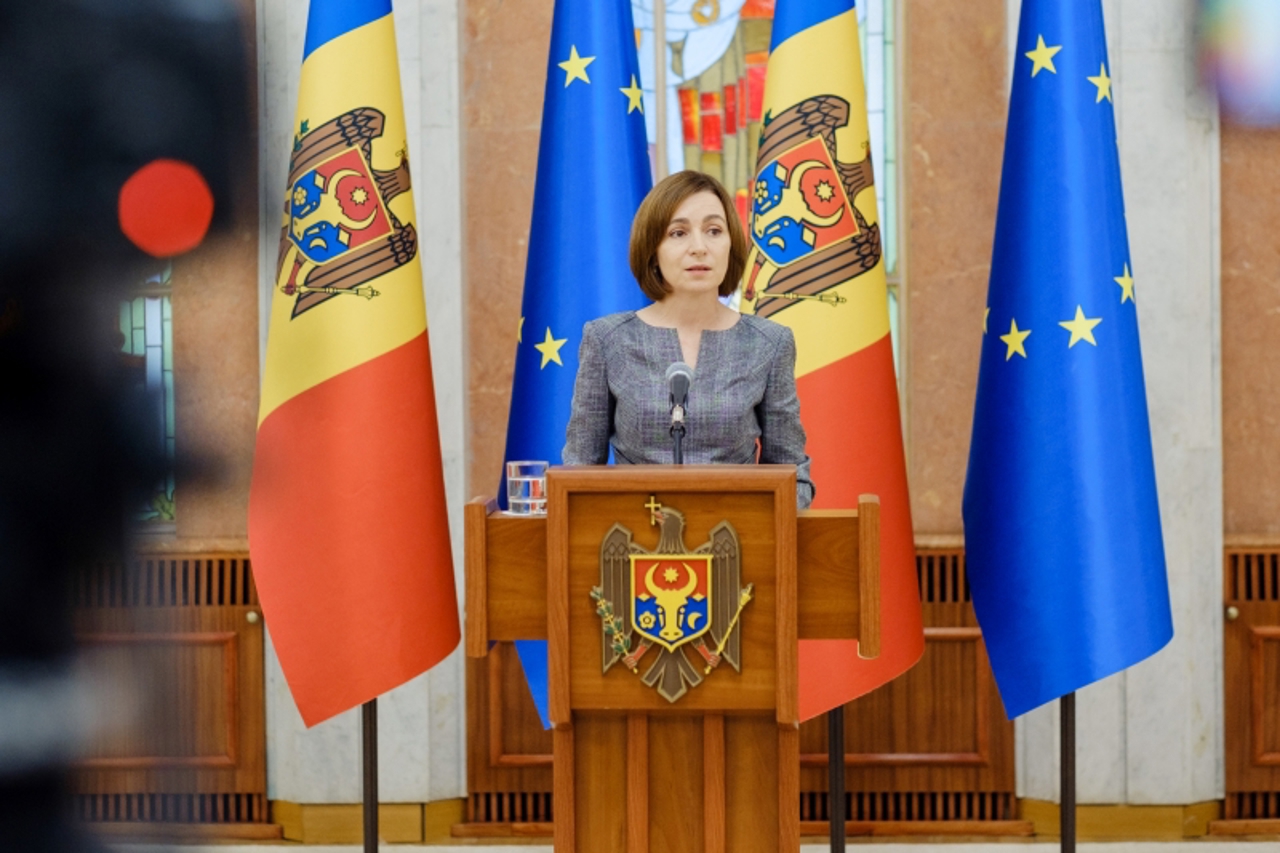
Accession to the European Union is the Republic of Moldova's primary objective, and the authorities aim to complete this process as swiftly as possible, President Maia Sandu stated during a program on Jurnal TV. She highlighted that European integration is crucial for the country's security, economic development, and improvement of living conditions for its citizens.
Maia Sandu, the President of the Republic of Moldova, stated, "Our primary objective is to join the European Union with full rights. We are seeking security through EU membership, which will help us feel protected. We are also interested in aspects of development, the market, economic growth, and participating in infrastructure projects—all of which will improve living conditions."
She acknowledged that it is natural for EU member states to have concerns about the enlargement process. Specifically, there are questions about whether the Republic of Moldova could become vulnerable to Russian influence and how this might affect decision-making within the Union. However, Maia Sandu emphasized that despite these discussions, the most important goal for Moldova remains to join the European Union.
"The best scenario is to be full members, but we also need to be open to other options because what matters most is our membership in the EU," she asserted.
The President recognized that the necessary reforms for EU accession cannot be completed quickly, particularly in the justice sector. "We will work towards these reforms, but it is unrealistic to expect that within three years our justice system will be equivalent to Germany's, even with an ideal government," she noted.
The Republic of Moldova aims to be prepared for EU accession by 2030. The country's foreign policy is directed towards securing support from EU member states to achieve this goal. Maia Sandu also highlighted that the enlargement of the Union, which includes the accession of the Republic of Moldova, Ukraine, and other candidate states, is vital for the security of the EU community, especially given the security challenges in the region.
Maia Sandu: Presence of the Russian Army hinders reintegration efforts
In a statement regarding the Transnistrian region, President Maia Sandu emphasized that the illegal presence of the Russian army in the Republic of Moldova is the primary obstacle to the country's reintegration process.
"As long as the Russian army is stationed there, the Republic of Moldova cannot provide substantial assistance to the people on the left bank of the Nistru. It is illogical for the Russian Federation to control the region with its military while we bear the costs," Sandu declared.
The President noted that Chisinau is actively pursuing reintegration, but those efforts are constrained by the current security situation. In the energy sector, the government has sought financial support from the European Union to avert crises; however, some proposed solutions have been rejected by the Tiraspol regime.
Chisinau's primary goal remains the country's reintegration, and the authorities are working on economic mechanisms to bridge the gap between the two banks of the Nistru. One such initiative is the government's convergence fund, which aims to support development in localities on the left bank.
"We also want to invest in schools, kindergartens, and possibly even roads in that area. Projects like the European village on the right bank can also enhance the villages on the left bank and make them more European. We are working on various initiatives that we will develop in the near future, but, of course, these efforts are restricted by the ongoing issue of the illegal presence of Russian troops," the head of state emphasized.
On March 3, 2022, shortly after the outbreak of war in a neighboring state, the Republic of Moldova submitted an application for EU membership. This application was made on the same day as Georgia's and a few days later than Ukraine's.
Today, Moldova enjoys the support of all 27 EU member states and the European institutions. The country has established itself as a capable partner, implementing necessary reforms and fulfilling its commitments.
Moldova's European path has now advanced to the stage of technical negotiations on the first three clusters, and the national legislation is gradually being aligned with European standards..