CNED launches a new funding call under the “Green House 2026” program: 200,000 lei per beneficiary
Another thousand households in the Republic of Moldova will be made more energy-efficient through the “Green House” Program. It offers grants covering up to 50% of the cost of works, with a maximum limit of 200,000 lei. Applications can be submitted starting March 18, and applicants must be citizens of the Republic of Moldova with homes registered in the cadastre.
Energy efficiency improvements will allow homeowners to significantly reduce their utility bills.
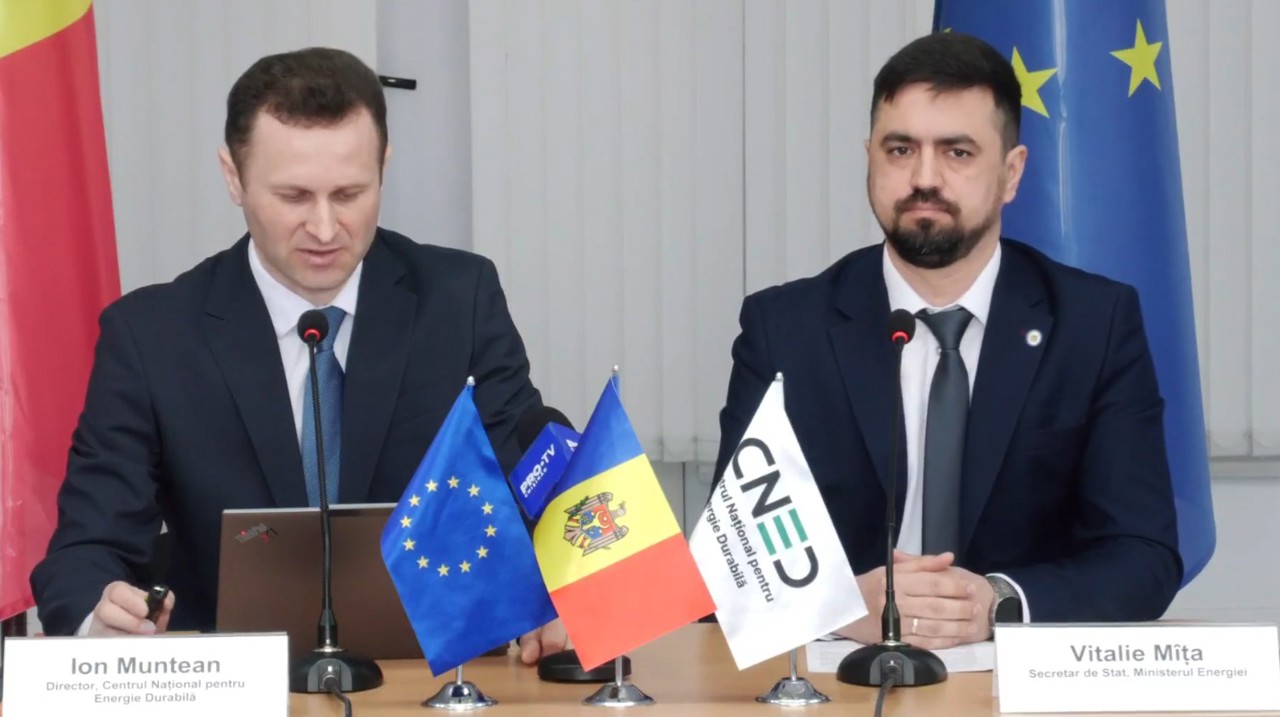
According to Ion Munteanu, Director of the National Center for Sustainable Energy (CNED), the residential sector in the Republic of Moldova consumes nearly half of the country’s total energy.
“About 70% of homes in the Republic of Moldova were built before 1960 and are 60–70 years old. As a result, the residential sector accounts for 48% of national energy consumption. Of this, roughly 70% is used for space heating, 15% for domestic hot water, and another 15% for cooking, lighting, and household appliances,” Munteanu stated at a press conference announcing the new funding call.
CNED analyses highlight strong potential for reducing energy consumption through efficiency measures.
“For 64 apartment buildings, results show energy savings of 58%. In the case of individual houses, energy audits for 239 homes indicate a reduction potential of around 55%,” the CNED director added.
The “Green House” Program was launched in July 2025, and its first call received 745 applications. Of these, 525 were approved, and many beneficiaries have already signed contracts for efficiency works.
“As for the second call, the same requirements and approach will apply, with minor changes. The funding principle remains ‘first come, first served.’ Applications will be submitted via the feerm.md platform,” Munteanu emphasized.
All households in the Republic of Moldova are eligible, regardless of whether they are in urban or rural areas.
“Eligible properties include individual homes that are completed and registered in the cadastre, as well as houses under construction with a valid permit. The program offers a 50% grant, up to 200,000 lei per beneficiary, with the remaining contribution covered by the homeowner,” Munteanu added.
This call provides 200 million lei for approximately 1,000 homes, with a clear regional allocation: 30% for beneficiaries in Chișinău and its suburbs, and 70% for other localities.
“Accordingly, around 300 beneficiaries are expected from Chișinău and 700 from other areas,” he noted.
Eligibility criteria have been updated to remove the requirement for a minor child in the household. Applicants must also have no outstanding debts to the public budget, own a home in good condition without disputes or ongoing legal proceedings, and must not have previously received funding under the program.
Applications are submitted via the feerm.md platform using an electronic signature. CNED reviews the files, after which beneficiaries can choose a specialist from an approved list to assess efficiency measures and estimate costs. The final application includes these measures, and CNED then issues an approval or rejection decision.
“After the works are completed, a team of specialists will inspect the site to verify the quality of the works and materials. Funds are disbursed afterward, covering 50% of eligible costs, up to 200,000 lei,” Munteanu explained.
The main reasons for rejection include homes not registered in the cadastre, expired construction permits, or incomplete applications.
“In the Republic of Moldova, 80% of the population lives in individual houses, which generally require higher energy consumption for heating and other needs. The popularity of the previous call demonstrates the need for this program. We encourage people to apply and follow the platform’s instructions,” said Vitalie Mîța, State Secretary at the Ministry of Energy.
The Energy Efficiency Fund in the residential sector aims to reduce energy bills and accelerate the transition to cleaner resources, turning national efficiency goals into tangible benefits for citizens.