Sweden’s lesson for Moldova: Education digitalization has limits
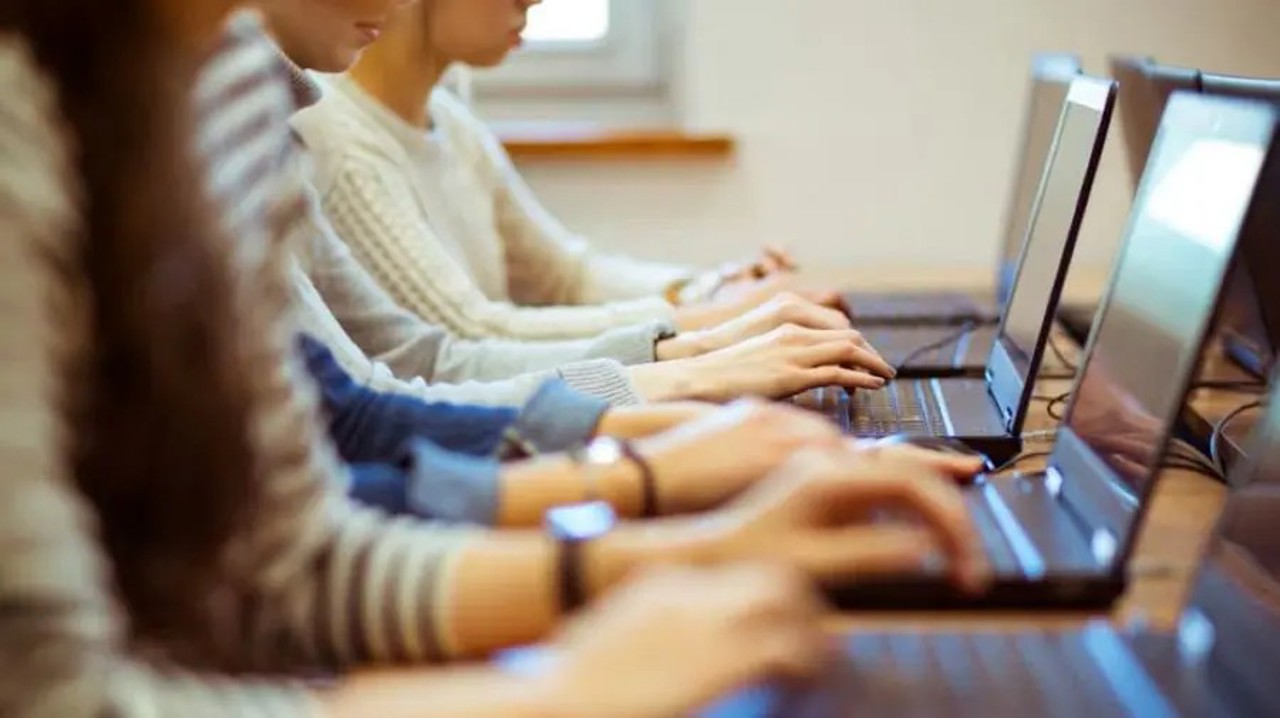
The Republic of Moldova is advancing the digitalization of education by investing in tablets and interactive textbooks. However, Sweden, a country known for pioneering this field, has demonstrated that technology is not a one-size-fits-all solution. After years of extensive digitalization, Swedish authorities are now reverting to printed textbooks and promoting handwriting.
Education expert Mariana Marin emphasizes that digitalization goes beyond merely using tablets or the internet; it requires a profound transformation in how students learn and interact with information.
“We are talking about digital thinking, not digital consumption,” she stated during the “Zi de Zi” program on Radio Moldova.
Marin believes that students should not just use technology passively but understand how it works. She warns that excessive reliance on the digital environment can pose significant risks, including communication issues and social isolation.
“There is a danger that our future generation will become too entrenched in this digital world, leading to communication problems and social withdrawal,” warns Mariana Marin.
She also highlights the issue of disinformation, noting that "over 50% of students cannot distinguish true from false information online," according to PISA studies from the Organization for Economic Cooperation and Development.
Given this context, Marin argues that schools must redefine their role: not to eliminate technology but to integrate it thoughtfully into the learning process. The focus should remain on interaction and real-world experiences.
“We want the emphasis to be on living, human, interconnected learning,” she asserts.
She advocates that the digital environment should serve as a tool rather than an end in itself. In her view, teachers should act as facilitators of learning—“the guides” who pose questions, challenges, and hypotheses, while students explore solutions, often with the help of digital resources.
Regarding the authorities' plans in Chisinau to adapt mathematics textbooks to the Estonian model, she calls for more dynamic, critical-thinking-oriented materials. Marin argues that textbooks should be “less static” and provide students with practical learning experiences.
She believes that combining traditional textbooks with interactive digital elements, such as 3D representations, can enhance learning outcomes, especially when students are actively engaged.
Marin points to Sweden as an example of the risks associated with unbalanced digitalisation, noting that “excessive technology can be problematic,” resulting in declines in reading and concentration skills.
“Now they are investing millions to bring back the book,” she observes, highlighting the need to recover students' concentration and reading abilities.
Mariana Marin recommends that educational authorities craft policies in consultation with specialists. She insists that decisions should be informed by studies conducted by neuropsychologists, doctors, and educators, and advocates for fostering trust between schools and families.
“In certain situations, I believe the Ministry of Education must prioritize established specialists,” Marin concludes, stressing the importance of creating a "culture of trust" within the educational system.
Veronica Scorpan