Reintegration and EU accession run in parallel, Chiveri
The Transnistrian settlement and the European integration of the Republic of Moldova are two parallel processes that are progressing at different rates. So far, Chișinău has not received specific conditions from the European Union regarding the Transnistrian region. However, it hopes that Brussels will be able to apply "creative elements" when Moldova is ready for accession.
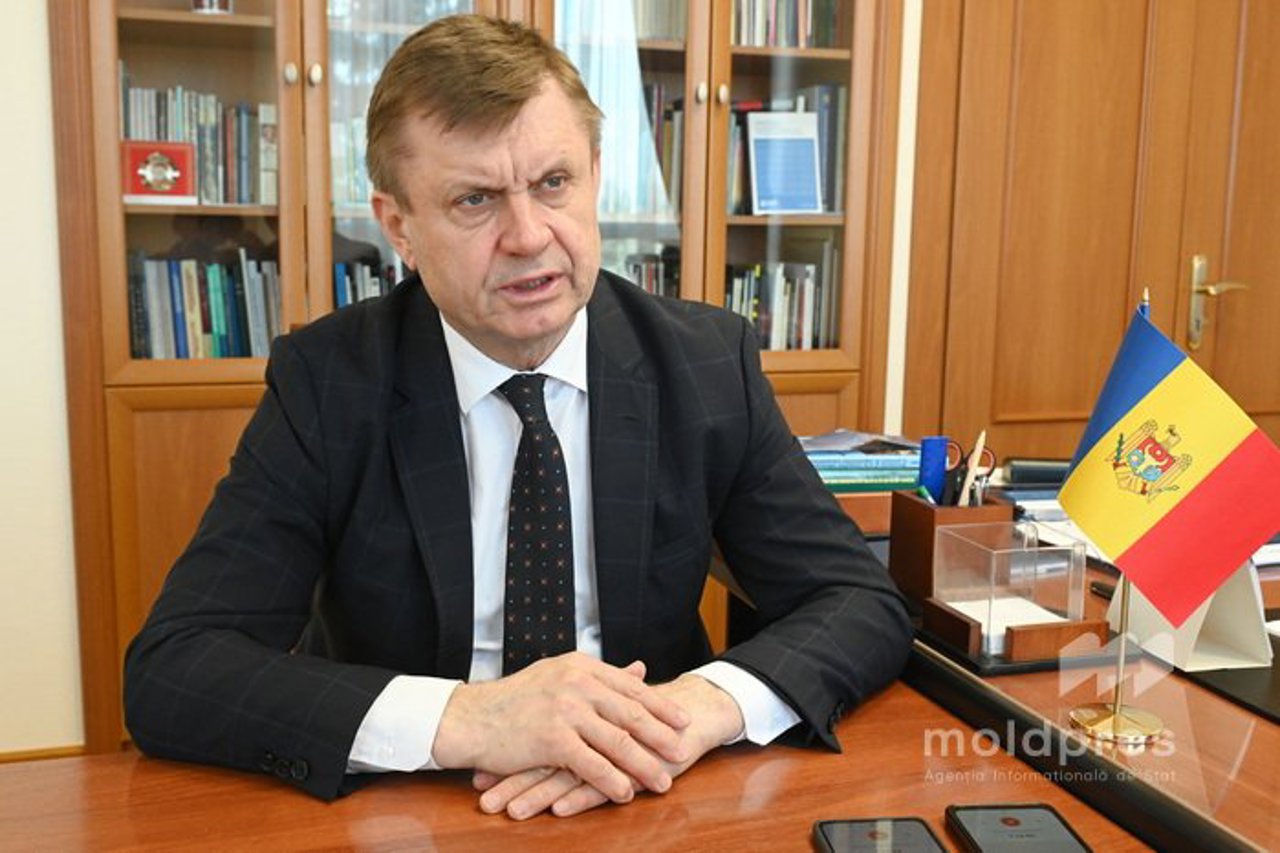
The Deputy Prime Minister for Reintegration, Valeriu Chiveri, stated in an interview with the Moldpres State Agency that the European path of the Republic of Moldova is driving the country's reintegration. However, unlike European integration, the settlement of the Transnistrian issue cannot be set on a clear timetable.
According to Chiveri, "The efforts or successes in the reintegration process do not depend exclusively on the Government but also on very important external factors, such as the illegal Russian military presence in our country and the war in Ukraine. These factors strongly influence the settlement process."
Chiveri emphasizes that for the Republic of Moldova, it is crucial that any negotiated agreement leads to a fair and lasting peace for Ukraine while also providing security guarantees for the neighboring country. In this context, he believes that certain conditions could be created to resolve the Transnistrian conflict and to withdraw the illegally deployed Russian troops across the Nistru.
He added, "We are not a party to this package, and we do not promote this objective, simply because the peace negotiations in Ukraine are complex and difficult, involving several components. Adding another topic without the participation of representatives from the Republic of Moldova could produce regulatory elements that might have implications for our country. We support the goal of the country's reintegration without being part of this package."
Chisinau's approach focuses on gradual reintegration, primarily in the economic sector. The only format for discussions is "1+1," which includes political representatives from Chisinau and Tiraspol. Chiveri described this as “a sufficiently relevant platform to discuss topics of interest to citizens on both banks of the Nistru.” He plans to meet with the Tiraspol representative next week.
"We believe that a gradual approach in different areas could create conditions for a comprehensive resolution of this conflict. Actions have been taken to invigorate the process. Starting January 1, 2024, customs duties will be introduced. Recently, a group of deputies proposed a legislative initiative to introduce specific taxes for economic agents on the left bank of the Nistru, which would help standardize the fiscal environment and apply legal norms uniformly throughout the country," Chiveri detailed.
Regarding the Convergence Fund, which is intended to finance social projects in the Transnistrian region, Chiveri estimates that the budget may be smaller than previously suggested in the public domain. "The budget largely depends on commercial and economic activity, as well as the operations of economic agents on the left bank of the Nistru. We must consider the increasingly dire socio-economic situation in the region, as some enterprises have ceased operations or are functioning at a limited capacity," he noted.
Chisinau aims to coordinate this process with the Tiraspol administration, which is currently reluctant to engage in the initiative. The mechanism for allocating funds has not yet been established; however, part of the money accumulated in the Convergence Fund would be used to support vulnerable people in the region as they adjust to the "shock of switching to market gas prices."
According to the Deputy Prime Minister, the current gas deliveries—via Moldovagaz to Tiraspoltransgaz, secured by payments from Dubai—are not sustainable and may be affected by the European Union’s sanctions policy at any moment. The contract has been extended until June 30, after which a decision will be made regarding the future model.
"Chisinau’s offer, backed by the EU, remains valid as it was in January 2025. This represents a transparent model but is conditional on respect for human rights in the region", said Chiveri.
The upcoming "1+1" meeting, scheduled for next week, will cover educational and environmental issues, with the agenda open to topics proposed by Tiraspol. The previous meeting took place on February 26 at the OSCE Mission's headquarters on the left bank of the Nistru.