Expert: Political instability in Romania risks “disconnection from EU-level discussions”
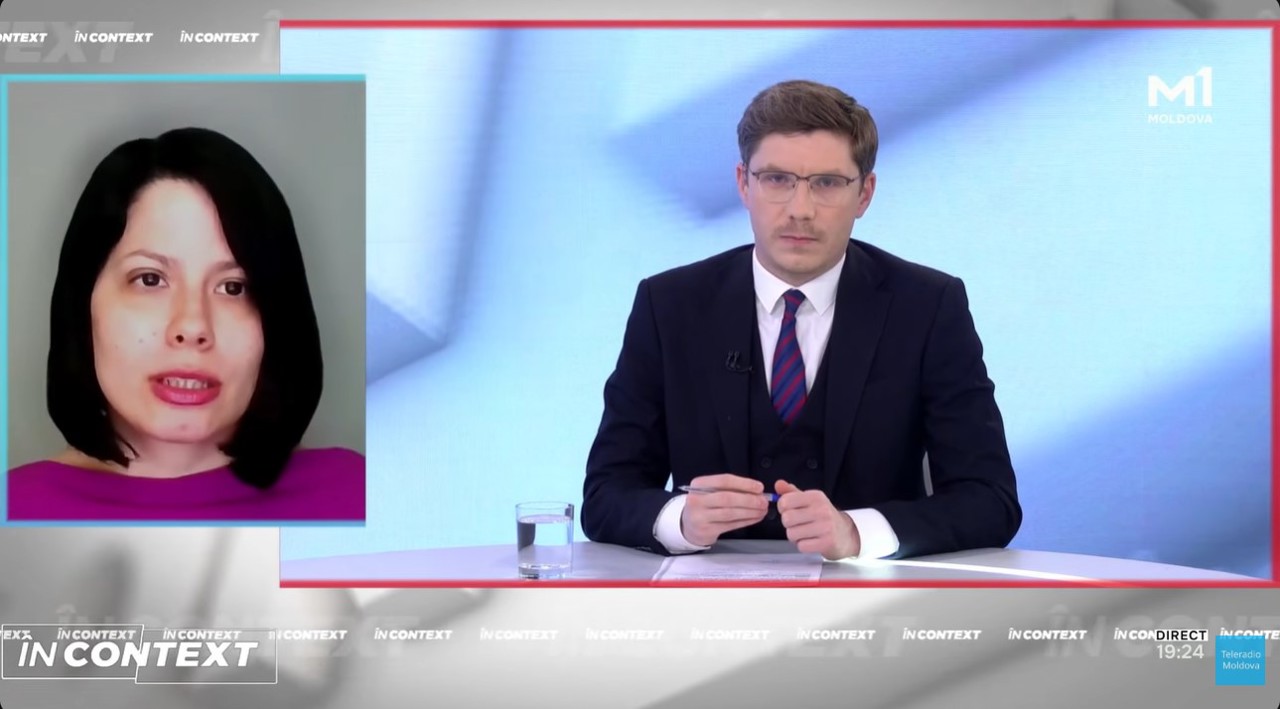
The political instability in Romania, highlighted by the motion of censure against the Bologna Government, poses risks to both domestic governance and external relations. According to Tana Foarfă, director of Europuls Romania, the absence of an executive in Bucharest could significantly affect the European Union's future budget.
Tana Foarfă, speaking on the show IN CONTEXT on Moldova 1, stated that it is currently unclear whether additional scenarios are being considered. She noted that the PNL has indicated that, due to recent behavior, it no longer wishes to form an alliance with the PSD to create a coalition for government formation. Conversely, the PSD has expressed a desire to maintain a pro-European government, but with a different prime minister.
Following the outcome of the motion, Foarfă noted that discussions and negotiations will take place, with the President of Romania playing a crucial role as a mediator.
Regarding the possibility of organizing early elections as a solution to the political impasse, Foarfă believes this scenario is unlikely. She explained, “Romania has a vote, and our collaborating states in the European Council want to understand which direction we are heading. I don’t think we will end up with early elections because we have already gone through a lengthy series of elections in 2024 and the subsequent cancellation episode. I'm uncertain whether bringing elections to the forefront will be beneficial for the parties.”
Foarfă pointed out that there is a blockage in the dialogue between the parties that comprised the former coalition. She indicated that the PSD's desire to remain on a pro-European path is contingent on the removal of the current prime minister. As a result, the political landscape remains uncertain. She cautioned that European institutions expect a stable strategic direction from Bucharest, emphasizing, "This poses a technical risk and a disconnection from major discussions occurring on the European and international stage."
She added, "The absorption of European funds and the implementation of approved projects and reforms must not be affected by political factors. However, administrative capacity should be maintained, objectives respected, and investment implementation accelerated. When there is no clear political direction—referring here to the governmental side—it becomes challenging to engage in negotiations, especially concerning the future multiannual financial framework currently being discussed in Brussels."
The motion of censure against the government led by Ilie Bolojan was signed by 253 MPs and presented on April 29 during a plenary session of the Romanian Parliament. The debate and vote on this motion are scheduled for May 5. The motion was initiated by the Social Democratic Party (PSD) and the Alliance for the Unity of Romanians (AUR), accusing the government of preparing, under the guise of the Recovery and Resilience Plan, to alienate strategic assets.
Political analyst Ion M. Ioniță suggests that the current government's chances of survival are "very small." The editor-in-chief of the magazine "Historia" notes that the Social Democrats are determined to see this initiative through in collaboration with AUR, indicating that their objective is to remove the current Cabinet of Ministers.
Ilie Bolojan, the leader of the National Liberal Party (PNL) in Romania, asserted that the PSD and AUR intend to take control of the government and warned that the ongoing political crisis "will cost Romania dearly."
To approve the motion of censure, 233 votes are required, which is half plus one of the total number of parliamentarians. According to the Constitution, Parliament can only be dissolved if it rejects two proposals for prime minister within a 60-day period. This process is a crisis measure that the president can activate to resolve the deadlock.