Kaja Kallas in Chișinău: Transnistrian region will not block Moldova’s EU accession
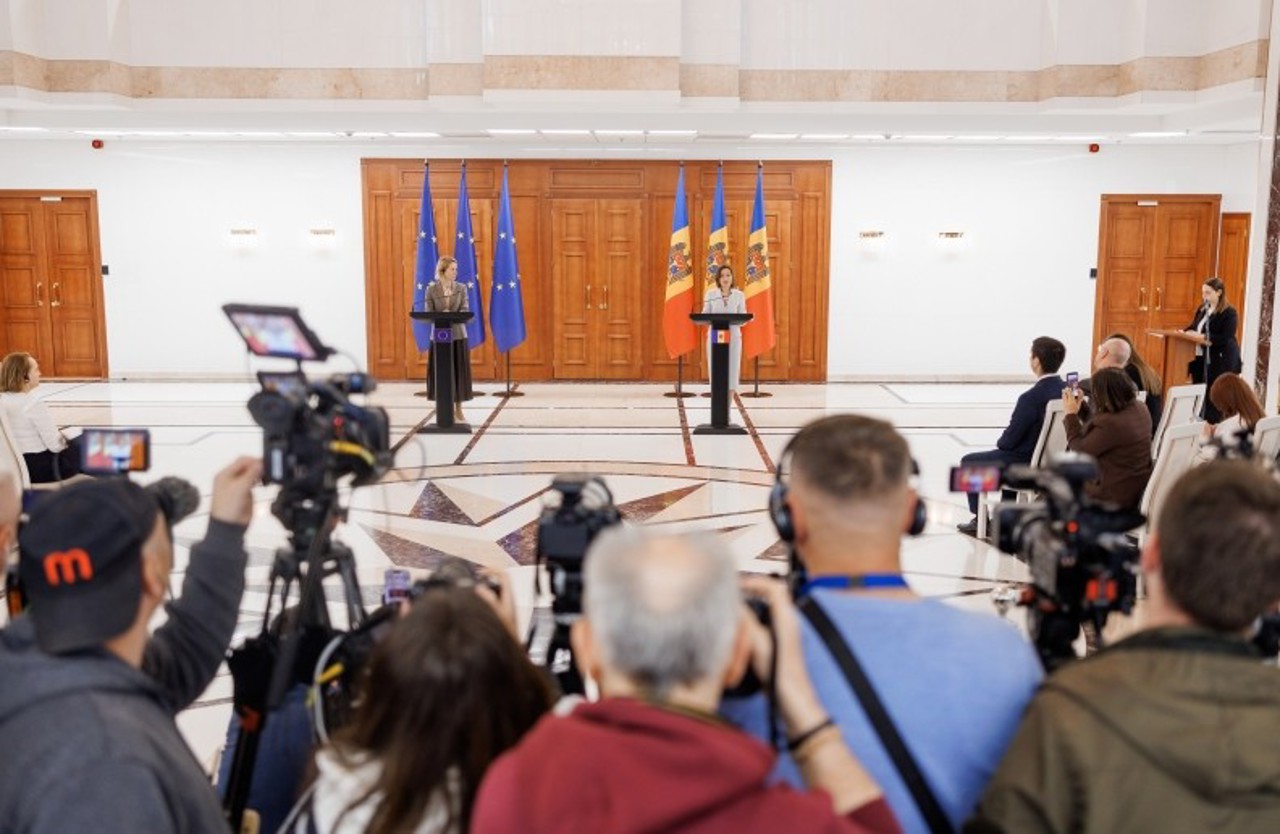
Kaja Kallas, the head of European diplomacy, reaffirmed in Chisinau that the Transnistrian region will not hinder the Republic of Moldova's accession to the European Union. She also stated that the EU will request Russia to withdraw its troops from Moldovan territory. During a press conference on May 7, alongside President Maia Sandu, the EU High Representative for Foreign Affairs and Security Policy emphasized that the current "window of opportunity" should be utilized to progress swiftly towards the official opening of negotiations, even though an exact deadline cannot be specified at this time.
Kaja Kallas emphasized the importance of taking advantage of the current window of opportunity created by changes in government in several countries. She expressed the need to move forward quickly, as long as there is no opposition to the Republic of Moldova, stating, “We never know when a government with bilateral issues could come to power. I always stress that bilateral problems should not impede this process. We sincerely hope to progress rapidly; however, I cannot provide a concrete deadline at this time.”
When asked if 2030 remains a realistic target for EU accession amid opposition from several member states to the accelerated accession of Ukraine and the Republic of Moldova, which are advancing in their integration together, President Maia Sandu affirmed that the objective remains unchanged. She said, “The commitment remains the same: to sign the Accession Treaty by 2028. We have worked diligently to achieve results in this regard. Of course, we want the formal opening of negotiations to be decided as soon as possible.”
Kaja Kallas also acknowledged the Republic of Moldova’s speed and determination, praising the country for implementing reforms that are “real and sustainable” and will deliver concrete benefits to its citizens. She stated, “Moldova is one of the strongest and closest partners of the European Union, and we want you to become a part of the European Union. We recognize the remarkable progress you have made through these challenging reforms.”
Kallas reiterated the EU's support for Moldova, especially as the country continues to face challenges from Russia's hybrid war. The EU has provided approximately €200 million in assistance through the European Peace Facility (EPF), and the European Commission has proposed increasing funding by an additional €120 million to member states.
She explained, “When the Nistru was polluted due to Russian attacks, the EU supported the purification and distribution of drinking water. When Russia targeted critical infrastructure in March, European neighbours assisted with the electricity supply. Russia frequently violates Moldova’s airspace. A new radar has already arrived in Chisinau, enhancing our capability to detect Russian drones. These examples illustrate the practical value of our support. We want a stronger, safer Moldova, better equipped to protect its citizens.”
Kaja Kallas stated that the European Union will request Russia to withdraw its troops from the Transnistrian region as part of any negotiations with President Vladimir Putin regarding the lifting of sanctions.
"Before we engage in discussions with the Russians, we need to agree on the issues we want to negotiate. A few months ago, we proposed a list of topics to the foreign ministers that we would like Russia to address, as we also have our own requests. For instance, if they are considering lifting sanctions, we have planned discussions with the foreign ministers at the end of May. Regarding the Republic of Moldova, we will submit a request for the removal of Russian troops from the transnistrian region", Kallas said.
President Maia Sandu highlighted that the European project has brought “peace and prosperity” to the continent. She asserted that the Republic of Moldova and its citizens aspire to be part of a community of states that “respect each other, live in harmony, protect one another, and offer mutual assistance.”
She noted, “Russia's war against Ukraine continues to impact our economy, security, and daily life. Russian drones violate our airspace, threaten lives, disrupt the energy system, and have recently caused a major water crisis in several areas of our country. In this context, EU support through the European Peace Facility is crucial.”
According to Sandu, funding allocated to Moldova through this initiative since 2021 has been used to purchase equipment, transport vehicles, and a new radar system, which is expected to be installed in the coming months. She pointed out, “The logistics vehicles already acquired were utilized during the crisis caused by the pollution of the Nistru to distribute drinking water to affected citizens. This demonstrates how defense equipment can also serve in managing emergencies in civilian situations.”
Finally, Sandu remarked that the Republic of Moldova is a stable democracy on the eastern border, “with direct experience in managing hybrid warfare, genuine reforms underway, and the political will to be a reliable partner.” She reaffirmed that the country remains firmly committed to the path of reforms and European integration, a process that “will yield positive results for all citizens of the Republic of Moldova.”
The EU High Representative for Foreign Affairs and Security Policy and Vice-President of the European Commission, Kaja Kallas, is on an official visit to Chisinau from May 7 to May 8, 2026. This marks her second visit to the Republic of Moldova, following her trip in April 2025.
During her visit, Kallas engaged in discussions with President Maia Sandu, Prime Minister Alexandru Munteanu, Minister of Defense Anatolie Nosatîi, and Deputy Prime Minister and Minister of Foreign Affairs Mihai Popșoi. She also met with representatives from civil society and participated in the "EuroQuiz" competition alongside young people from Moldova.
Former Government Spokesperson Daniel Vodă, an Associate Expert at the Institute for European Policies and Reforms (IPRE), noted that the European diplomatic leader's visit reinforces the EU's strategic support for the Republic of Moldova. He emphasized the importance of security and the country's European integration path. This visit provides insights beyond official reports on progress on the integration agenda.
On the show IN CONTEXT on Moldova 1, Vodă mentioned that consistent effort and the completion of necessary tasks in the area of European integration are essential for achieving certainty in economic and social security within the broader European community.