OPINION | Airspace breach may have assessed Moldova’s reaction capabilities
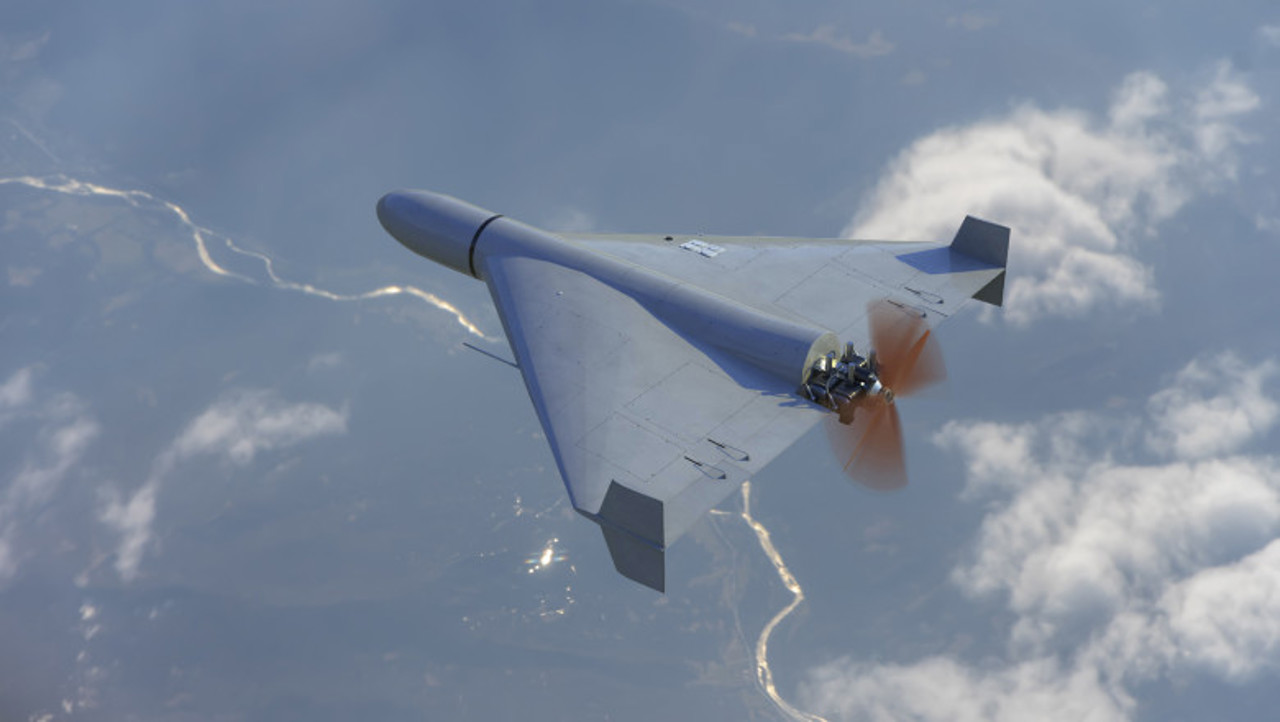
The overflight of the airspace in the Republic of Moldova from north to south for more than 20 minutes by an object resembling a Shahed drone could be seen as either a navigation error by the Russian military or as a test of the Moldovan authorities' response capability, according to military expert Artur Leșcu.
On May 13, Russian attacks primarily targeted Ukrainian ports on the Danube, particularly in the Odessa region. According to an expert, the route through the Republic of Moldova represents the "easiest" path for Russian drones aiming at towns such as Izmail, Chilia, and Cetatea Albă.
"Even if it was an error, as the Russian military is known to make such mistakes without considering the consequences, it constitutes a serious violation—probably the most significant we have witnessed," declared Leșcu during the Zi de Zi show on Radio Moldova.
He emphasized that the entire territory of the Republic of Moldova has effectively been used as a runway or flight path to launch attacks on a neighboring country. The risks to the population are substantial, especially since Shahed drones carry explosives and can drift off course. Leșcu warned that such a device could potentially strike a residential building.
"There is just a small step from this to tragedy. If this drone were to hit a multi-storey building, it could lead to the complete destruction of an apartment," he said.
The expert noted that some drones are programmed to detonate upon impact or even after landing to maximize casualties, including among response teams.
The Republic of Moldova must invest in drone deflection systems
Regarding the National Army’s capacity to respond to such incidents, Leșcu stated that while the Republic of Moldova possesses some technical capabilities, they are insufficient. "We have some resources, but we need to continue equipping our army," he said.
He also viewed the installation of a new radar system provided by the European Union as "a positive step," although he cautioned that relying on a single system is inadequate for covering the entire airspace.
"A layered system is essential so that we can monitor aerial activities at any distance and altitude in our sky," Leșcu added, advocating for investments in radars, electronic warfare equipment, and systems capable of intercepting or diverting hostile drones.
In reference to the Moldovan authorities' responses to such incidents, including the possibility of summoning the Russian Federation's ambassador to the Ministry of Foreign Affairs, Leșcu pointed out that these measures serve a largely symbolic purpose.
"The most effective response would be to shoot down such a drone at the border," he emphasized, noting that diplomatic actions have not altered Moscow's behavior up to this point.
Treating drone incidents seriously
Leșcu also highlighted the importance of regional cooperation in air security, noting that data exchange between the Republic of Moldova and Ukraine is already in place. He said that Ukraine has extensive practical experience in combating Shahed drones.
"The Ukrainians know how to respond effectively. They have equipment to shoot down these devices and have established a well-developed information system," the military expert stated.
Given the increasing frequency of drone incidents near the Republic of Moldova’s borders, it is crucial to treat the threats posed by drones with the utmost seriousness.
"These are devices laden with explosives that can cause death and destruction. This is no joke. We must take these dangers seriously," concluded Artur Leșcu.
Ongoing airspace violations
The Republic of Moldova continues to encounter systematic violations of its airspace, with the most recent incidents occurring on May 8 and 13, when unauthorized drones crossed the country’s territory, prompting authorities to impose flight restrictions.
Since the war in Ukraine began, numerous drones—some carrying explosives—have crashed in populated areas or fields. Moldovan authorities have condemned these incidents each time they occur.