Moldova negotiates social protection agreements with five more countries to ensure pensions abroad
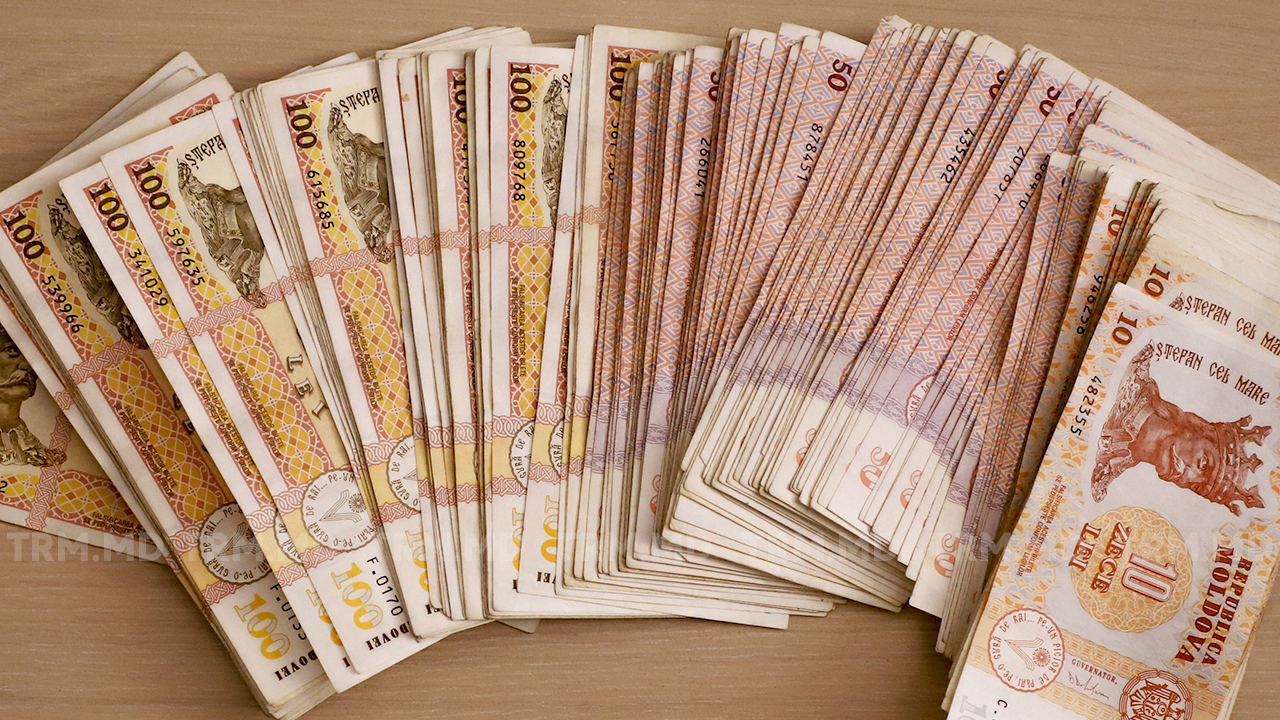
Moldovan citizens who have officially lived and worked abroad can apply for a pension from abroad upon their return to the Republic of Moldova. Additionally, Moldovans who have worked in the country but are currently employed abroad can also benefit from this opportunity. This is made possible through 18 bilateral agreements in the field of social security, which have been ratified and are enforced by the National Social Insurance House (CNAS).
CNAS pays 2,800 pensions to Moldovans abroad
Currently, the National House of Social Insurance (CNAS) is ratifying bilateral social protection agreements with five countries: Canada, Switzerland, Ukraine, France, and Slovakia. At the same time, negotiations are ongoing with countries that host a significant number of Moldovan citizens.
Iulia Saenco, the head of the General Directorate for Foreign Pensions at CNAS, mentioned on the show “Buna Dimineata” on Moldova 1, “We are currently in discussions with the province of Quebec, Ireland, Albania, and Croatia to expand our list of states with which we can establish social security agreements. I want to note that the negotiation process typically takes at least a year, and our goal is to forge relationships with countries that have a large Moldovan diaspora.”
Saenco said that these agreements are crucial in the field of social security. “We hope that, in the future, these states will be willing to negotiate and finalize such agreements,” she noted.
Currently, Moldova has 18 active agreements, 16 of which are with EU member states, while the remaining two are with the Republic of Belarus and Turkey.
In total, the Republic of Moldova pays approximately 2,800 pensions to Moldovan citizens living abroad. The distribution of these pensions includes 1,280 sent to Germany, 600 to Romania, 190 to Bulgaria, 160 to the Republic of Belarus, 150 to the Czech Republic, and others.
How the mechanism works
"The agreements stipulate that anyone who has officially worked in another country with which we have a social security agreement can receive a pension, provided they meet the eligibility criteria and have contributed to the budget of the country where they worked," said a representative from CNAS.
Currently, information on the number of pensions granted by other countries to citizens in the Republic of Moldova is incomplete, as not all pension transfers are processed through CNAS.
"Foreign pensions are transferred directly to the bank account of the person who worked in that country. For instance, according to agreements with the Republic of Belarus, Bulgaria, Estonia, and Lithuania, the funds are first deposited into the CNAS account, after which we transfer them directly to the beneficiary's account," explained Iulia Saenco.
Mixed pension – For those who have worked in two countries
One advantage of bilateral agreements is the option of obtaining a mixed pension for individuals who have not met the minimum contribution period in a single country. This pension is available to Moldovan citizens who have worked in another country.
“This type of pension recognizes the periods worked in both countries. For instance, in the Republic of Moldova, the minimum required contribution period is 15 years. If a person has worked for only 13 years in Moldova and an additional 7 years in Italy, the totalization procedure will be applied when they apply for a pension in Moldova: 13 years of work in Moldova and 2 years in Italy will be considered,” explained Iulia Saenco.
According to her, the payment structure is as follows: the Republic of Moldova will pay the pension based on the 13 years of service in the country, while Italy will be responsible for the payment corresponding to the 2 years worked on its territory.
How to benefit from a foreign pension
To receive a pension from the country where they worked, a citizen of the Republic of Moldova can submit an application to the National Social Insurance House along with a set of supporting documents. This process can also be initiated from abroad while simultaneously applying for a pension from the Republic of Moldova.
"The agreements apply only to insured individuals—those who have worked legally and contributed to the social insurance system in both the Republic of Moldova and the country where they resided for a certain period. Regardless of how little you work, it is crucial to do so legally to ensure that you can benefit from a pension when you reach retirement age," explained Iulia Saenco.
Pensions are paid exclusively in the currency specified by the agreement, without conversion into Moldovan lei.
"The funds are transferred in euros or another currency agreed upon by the social security agreement. Individuals can open a foreign-currency account at any bank in the Republic of Moldova. The same procedure is followed by CNAS when transferring pensions abroad," concluded Iulia Saenco.
Please note that, starting April 1, 2026, the minimum old-age pension in the Republic of Moldova will be set at 3,264 lei and 66 bani. For individuals with a contribution period of at least 40 years, the minimum pension will reach 3,525 lei and 72 bani.