Parliament debates political impact of IMF agreement without funding
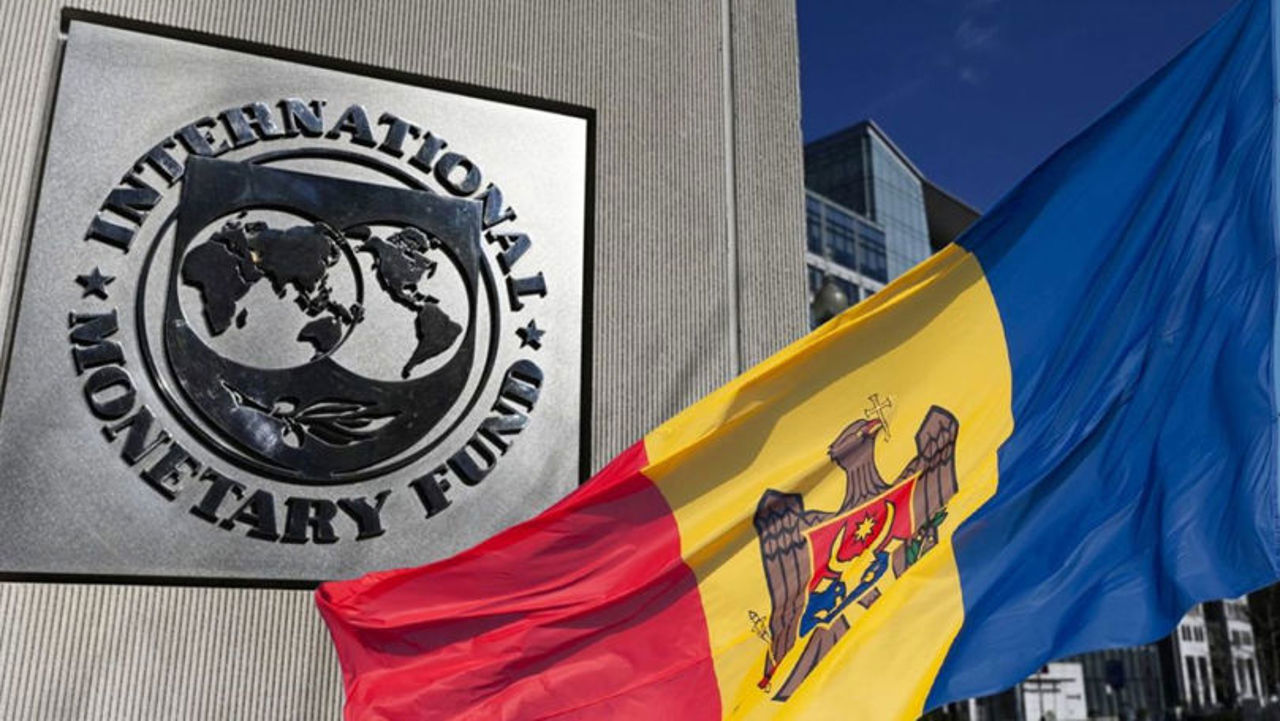
The agreement between the Republic of Moldova and the International Monetary Fund (IMF), reached at the expert level for the next three years, has sparked mixed reactions in Chisinau's political landscape. While opposition leaders caution about potential austerity measures and the risk of an economic crisis, government representatives assert that the program is designed to support economic reforms and ensure financial stability.
The new agreement with the International Monetary Fund (IMF) highlights the economic challenges facing the Republic of Moldova, as commented by Igor Dodon, the leader of the Socialist Party of the Republic of Moldova (PSRM), before a Parliament session on May 21.
According to Dodon, the program agreed upon with the IMF may result in spending cuts and tax increases.
"The IMF program implies several consequences. Firstly, it may lead to budget reductions, which could affect social allowances or capital investments. Secondly, a significant issue with this IMF memorandum is the potential increase in taxes. These measures will severely impact ordinary citizens and the real economy. A serious crisis is on the horizon," predicted the PSRM leader.
Meanwhile, Renato Usatîi, the leader of Our Party and vice chairman of the Parliamentary Committee for National Security, Defense, and Public Order, emphasized the necessity of external support.
"We should take advantage of any support available to us today. However, I need to review the agreement to provide a thorough analysis. Reducing spending is not always beneficial; sometimes, increasing spending is essential to achieve positive outcomes," Usatîi stated.
The Agreement with the IMF: A sign for external partners
The agreement with the IMF signals positively for the Republic of Moldova's external partners, according to the Speaker of the Parliament, Igor Grosu.
"Having such an agreement with the IMF is advantageous because it serves as an indicator for many bilateral or multilateral partners, including the European Union. Everyone is watching and asking themselves: does country X have a framework for cooperation and policies in place for interaction with the IMF and the World Bank?" Grosu commented.
The head of the Legislature emphasized that the new program does not involve borrowing.
"We are not borrowing; the agreement does not involve borrowing. This was our decision. At the moment, we have resources available from the European Union, and only if we determine that additional financial resources are needed will we consider borrowing,” the official clarified.
This agreement differs from previous programs with the IMF in that it does not include direct financing, as noted by Radu Marian, the chairman of the Parliamentary Committee on Economy, Budget, and Finance.
"The agreement has not been signed yet; it was only a 'Staff-Level Agreement.' This means that we have agreed on certain measures with the Government, but the official agreement will be formalized and approved by the IMF at a later date,” Marian stated.
He also dismissed claims that the program would automatically lead to spending cuts.
"It does not refer to reducing spending; it refers to reducing the deficit. Reducing the deficit does not necessarily mean automatically cutting spending; it could also mean increasing revenues,” he explained.
According to Marian, the program aims to implement fiscal reforms and improve public financial management.
"It is a policy support agreement, through which we outline the reforms we want to implement: increasing revenues for better fiscal administration and eliminating certain tax exemptions that are not compliant. We currently have 10 billion in VAT debts owed to businesses, accumulated over several years, and we aim to recover these debts within the next 5-6 years while improving the mechanism for reimbursing VAT,” said the PAS deputy.
Regarding economic prospects, he acknowledged that the Republic of Moldova will feel the impacts of regional conflicts.
"Unfortunately, we have been affected by the shock of the war in the Middle East. As a small country, the impact is more significant for us. This means that the pace of economic growth will slow down, resulting in a higher inflation rate,” Radu Marian anticipated.
It is important to note that the Republic of Moldova and the IMF mission have reached an agreement at the expert level on a 36-month program supported by the Policy Coordination Instrument (PCI) to facilitate economic reforms and maintain macroeconomic stability.
While the program does not provide for direct financing, it is expected to be approved by the IMF Executive Board.
The institution anticipates that the Republic of Moldova's economy will slow in 2026 due to the effects of the war in the Middle East and the ongoing war in Ukraine. The IMF estimates economic growth to be just 1.5% this year, down from 2.4% in 2025, with average annual inflation expected to reach 8.1%.