Only one in ten Moldovan localities has sewage
In the Republic of Moldova, about 65% of localities are connected to water supply systems; however, access to sewage services remains significantly lower. According to data from the National Bureau of Statistics (NBS) for 2025, only 109 villages and 55 cities have access to public sewage systems. Over the past year, the number of localities connected to these services increased by just 6%.
The Director of the Regional Development Agency (ADR) Centru, Ion Pînzari, attributes the differences in sanitation infrastructure to the investment priorities established over the years and the high costs associated with building these facilities.
"First of all, we need to ensure water access for our localities; as a result, the sanitation sector has somewhat been pushed to the background. Additionally, constructing sewage systems is particularly costly in rural areas where the population is smaller,” Pînzari stated during the “Bună dimineața” show on Moldova 1.
He emphasized that while authorities are working to address this imbalance, the main priority remains to provide the population with access to drinking water.
There are significant disparities among different regions. The best situation is in the Chișinău municipality and its suburbs, where approximately 90% of localities are connected to water supply systems. In the south of the country and in Gagauzia, the connection rate exceeds 80%, while in the Central region it stands at 75%.
Authorities believe that amalgamating localities could accelerate the development of water and sewage infrastructure. According to Pînzari, united localities will receive additional financial incentives to access infrastructure projects. Concurrently, the Ministry of Infrastructure and Regional Development is working on the National Spatial Planning Plan for water and sanitation.
In areas with smaller populations, centralized solutions are not always economically viable. Thus, the authorities are also considering decentralized sanitation systems.
"Where it is efficient, we opt for a centralized sewage system. However, we must also keep in mind the European Union directive on wastewater treatment, which permits decentralized sewage services, such as septic tanks," explained Pînzari.
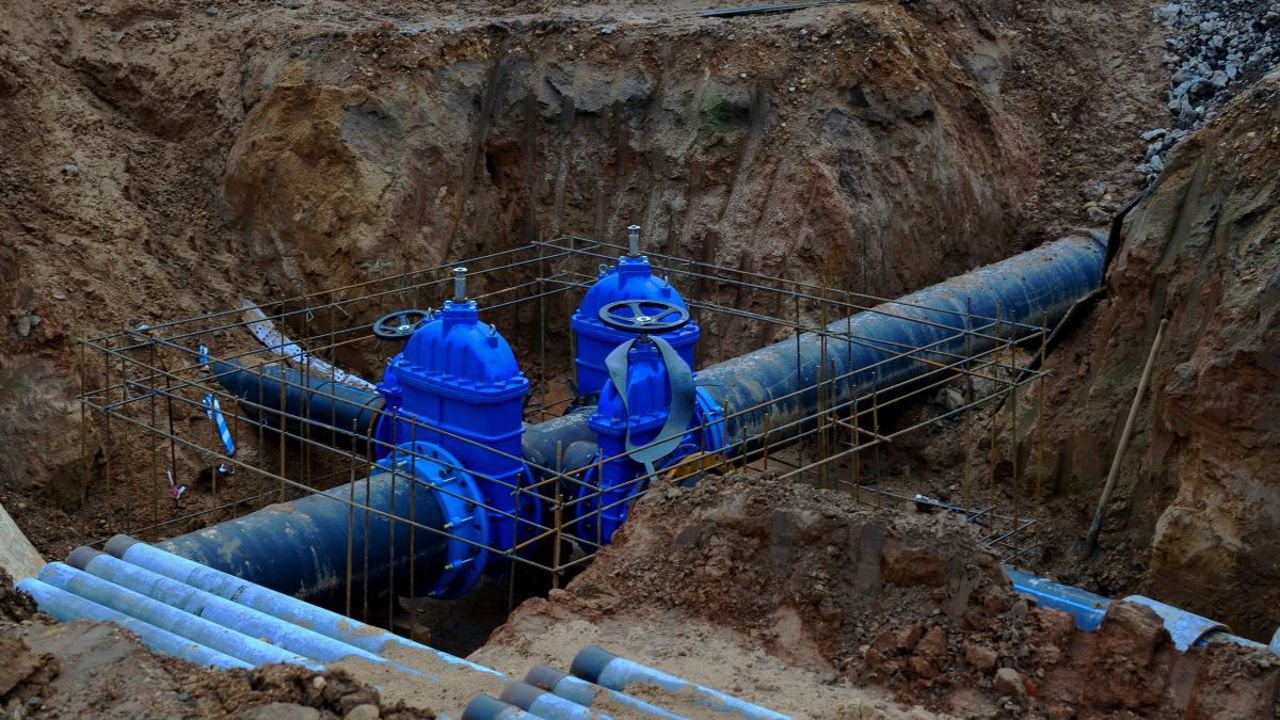
One of the most significant ongoing projects he mentioned is the construction of the Chisinau-Strășeni-Călărași aqueduct, which will span approximately 52 kilometers.
"In the first phase, we plan to connect the municipality of Strășeni and the city of Călărași, and gradually regionalize this service to neighboring localities," emphasized Ion Pînzari.
This project is largely financed through external sources and has an estimated cost of about 45 million euros, of which 40 million euros is a grant from the German Government.
Regarding sewage systems, authorities are advocating for the regionalization of services and the establishment of common treatment plants for several localities. For instance, Strășeni will be connected to Chișinău's treatment plant.
"We have decided against constructing a separate water treatment plant due to the high costs and maintenance challenges. Instead, we will connect the entire municipality, along with seven localities in the Strășeni district," explained the ADR Centru director.
Residents of Strășeni and Călărași are expected to benefit from the regional water system starting next year. In parallel, a strategic project to build a new water capture station on the Nistru is underway. This station will secure water supply for the Chișinău municipality and, in the future, for the Strășeni, Călărași, and Ialoveni districts.
"The capture station on the Nistru is a strategic asset for the country, beyond just the Chișinău municipality. We have a projected timeline for the construction of this station, with completion expected by 2030," noted the ADR Centru director.