Dan Alexe | EU-Moldova Summit: How EU leaders can accelerate Moldova’s accession process
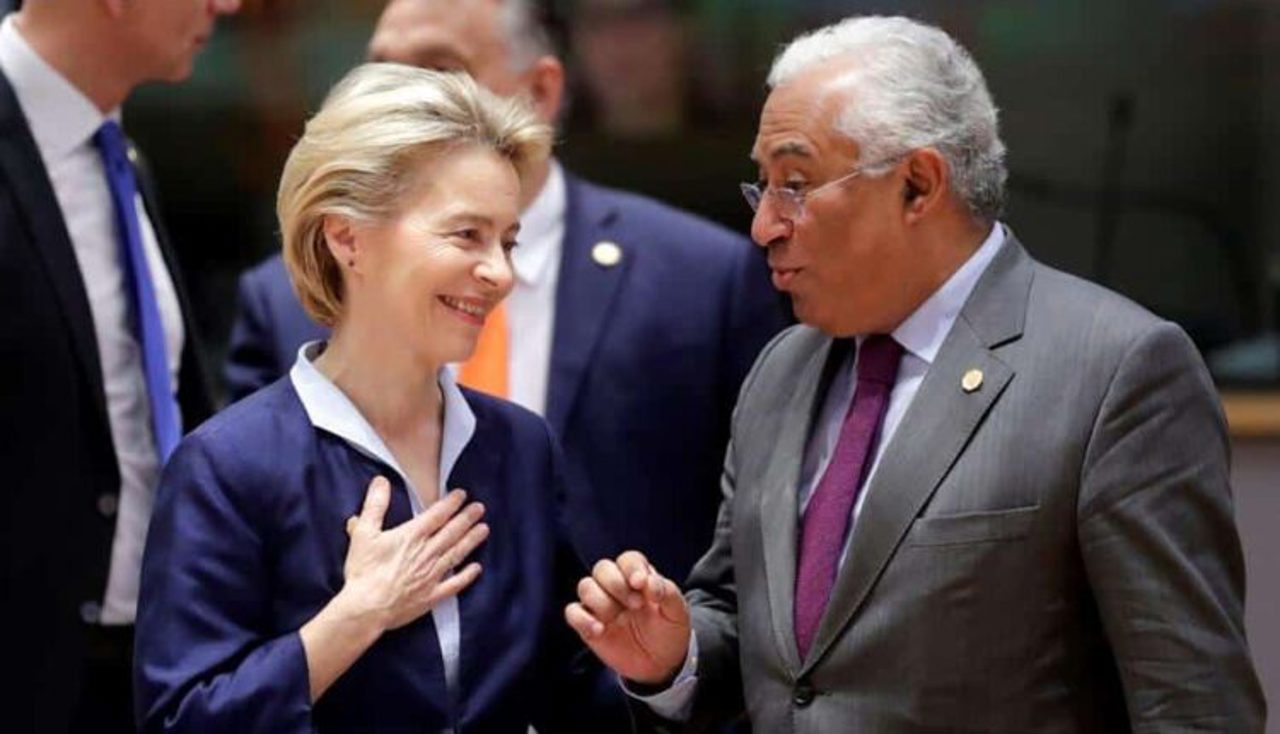
The second official summit between the European Union and the Republic of Moldova is scheduled to take place in Brussels on Monday, June 22. The event will be hosted by António Costa, the President of the European Council, and Ursula von der Leyen, the President of the European Commission. President Maia Sandu will represent the Republic of Moldova at the summit.
The meeting comes a week after an important moment: on June 15, in Luxembourg, Moldova officially opened the first "cluster" of accession negotiations - the one on the rule of law, justice and the fight against corruption. Basically, after four years of bureaucratic road, Chisinau has moved from words to deeds.
For many citizens, European institutions seem complicated and difficult to understand. That is why the natural question arises: what can Costa and von der Leyen do specifically to help Moldova reach the EU faster, possibly decoupled from Ukraine, which risks remaining permanently blocked by the veto of a country like Hungary or by the reluctance of EU members?
The short answer is that they can do a lot, but they cannot be involved in the final decision, much less could they make any decision themselves.
António Costa heads the European Council, that is, the meeting of the heads of state and government of the 27 member states. He does not have executive powers, but he has significant political influence. His role is to build consensus between European capitals and push the files forward. If some member states are reluctant to enlargement, Costa can negotiate, mediate and seek compromises so that Moldova’s accession process is not blocked or slowed down.
Ursula von der Leyen heads the European Commission, the institution that closely monitors the reforms carried out by candidate countries. It is the Commission that verifies whether Moldova meets European criteria on justice, the fight against corruption, the economy and public administration. It is also the Commission that recommends the opening and closing of negotiation chapters.
In other words, if António Costa is a kind of “political arbiter” of the Union, Ursula von der Leyen is the main “administrative engine” of the accession process. What could the two of them announce specifically at this summit?
First of all, more technical support. Accession negotiations are extremely complex. Thousands of pages of legislation must be harmonized with European norms. The Commission can send experts, advisers and officials to work directly with the Chisinau administration to accelerate reforms.
In recent months, a subtle change in tone has been observed in Brussels. More and more European officials are talking about the principle of “own merit”. In other words, if Moldova fulfills its obligations faster than Ukraine, it should not be forced to wait. Officially, however, neither António Costa nor Ursula von der Leyen can propose “decoupling” Chisinau from Kiev. The term “decoupling” is used mainly in diplomatic and journalistic circles. In practice, the two can promote the strict application of the principle of individual merit: each candidate advances only on the basis of his own reforms, regardless of the others' speed.
António Costa can help build a political consensus in this direction among European leaders. Ursula von der Leyen can formulate the technical recommendations and reports that would justify accelerating Moldova’s path.
For Chisinau, the real stakes of the June 22 summit are not a spectacular promise or a precise accession date. The stakes are to send a clear signal that Moldova will be judged by its own results and that successful reforms will be rewarded with a concrete and accelerated rapprochement with the European Union. Sometimes, in the EU, an obscure paragraph in the conclusions is worth more than ten solemn speeches.
What else can Moldova expect?
Secondly, more money. The European Union has already become the Republic of Moldova's main financial supporter. The Commission can propose increasing European funds for infrastructure, energy, agriculture and the modernization of state institutions. The faster the Moldovan economy approaches European standards, the more realistic accession becomes.
Thirdly, gradual integration before accession. This is probably the most interesting tool at Brussels’ disposal. Even before becoming a full member, Moldova can be integrated into certain European policies: the single market, energy systems, research, education and transport programs.
In practice, Moldovan citizens and companies could begin to benefit from some of the advantages of European Union membership before formal accession.
But the question that increasingly concerns European diplomats remains: can Moldova move forward separately from Ukraine?
Officially, the European Union insists that each candidate country is assessed individually. In reality, Moldova and Ukraine have so far been treated as a political tandem. Both received candidate status in 2022 and began accession negotiations almost simultaneously.
However, it is worth highlighting one detail: this is only the second EU-Moldova summit in history. The fact that it takes place just a few days after the opening of the first “cluster” of negotiations gives it a much greater symbolic importance than the previous meeting.