Corina Călugăru on women’s role and Moldova’s global image: from diplomacy to culture
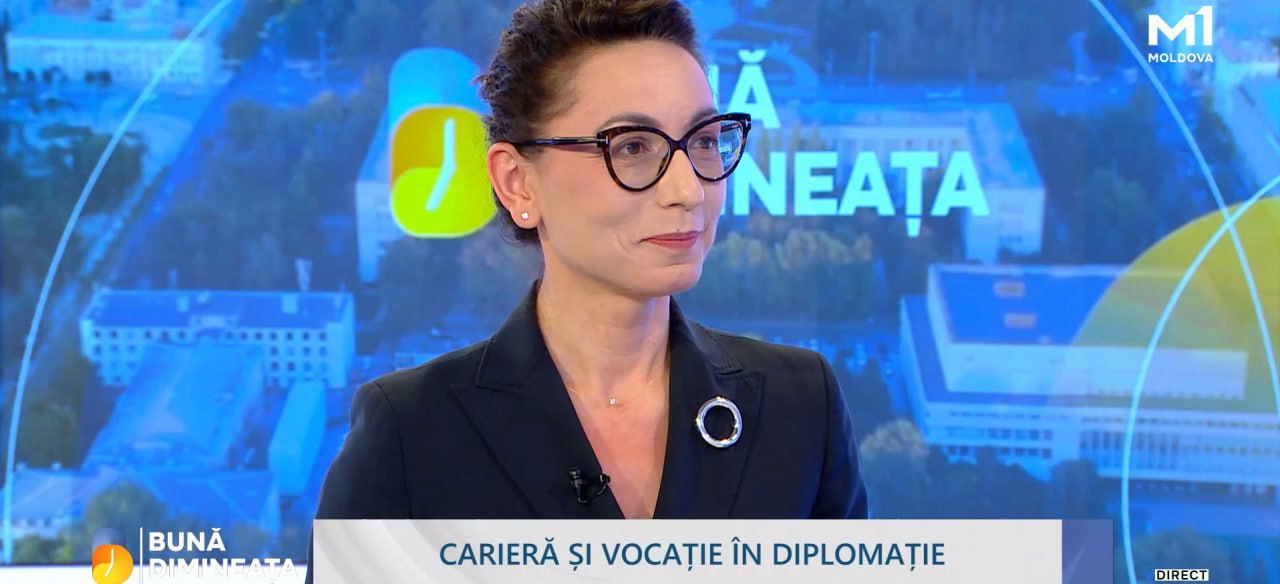
The State Secretary of the Ministry of Foreign Affairs, Corina Călugăru, states that women represent approximately half of the diplomatic corps of the Republic of Moldova, a significant improvement compared to two decades ago, when their presence in diplomacy was much lower. The statements were made in the studio of the "Bună dimineaza" show on Moldova 1.
According to the diplomat, although women make up only about 20-23% of the diplomatic corps worldwide, in the Republic of Moldova, they have achieved "about 50% gender equality" in the diplomatic service.
"If, when I entered the diplomatic service, there were very few women, today we have an increasing number of female diplomats, both in management positions within the Ministry of Foreign Affairs and as ambassadors," said Corina Călugăru.
The Secretary of State emphasized that diplomacy remains a demanding profession that involves numerous sacrifices, particularly for women who try to balance professional and family life. "It is a job that requires special discipline, understanding, and 100% dedication every day, starting with love for the country," the diplomat mentioned. She added that "for women with families and children, it entails even more sacrifices because it is complicated to combine personal life with professional responsibilities."
Reflecting on her career, Corina Călugăru revealed that she initially aspired to become a doctor, but her passion for history and interest in diplomacy led her to pursue a career in diplomacy. She also recalled her experience in 2022, when, as ambassador and permanent delegate of the Republic of Moldova to UNESCO, she helped secure the inscription of the shirt with the altiță (the art of the traditional blouse with embroidery on the shoulder) on the List of the Intangible Cultural Heritage of Humanity. "I had the challenge, honor, and privilege to support and defend the registration of the shirt with the altiță as part of UNESCO's intangible world heritage," she stated, specifying that this success resulted from close collaboration between experts from the Republic of Moldova and Romania.
Regarding the Republic of Moldova's international standing, Corina Călugăru believes that the country's image has improved significantly in recent years, especially amid the geopolitical shifts brought about by the war in Ukraine and the country's European trajectory. "Today, it is much easier to be a diplomat of the Republic of Moldova, both domestically and internationally, because opportunities seem to arise more readily," she explained.
She also noted that the election of Maia Sandu as president has positively influenced the external perception of the Republic of Moldova, while the commitment to European integration provides the country "a clear model of democracy, the rule of law, and values that we share."
Corina Călugăru encouraged young people interested in a diplomatic career to invest in education, internships, and building a professional network, stressing that success in this field depends on discipline, dedication, and hard work.