Moldova marks 12 years of EU Association Agreement, seen as a key step toward accession
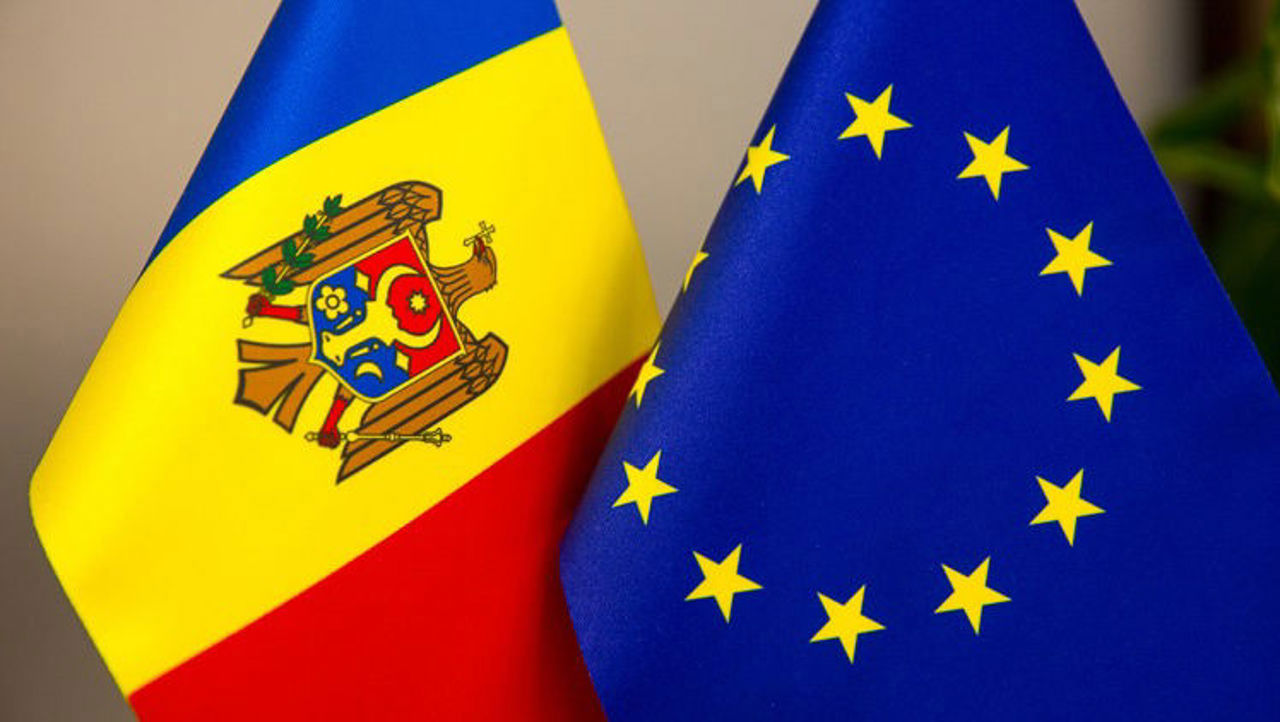
Twelve years ago, the Republic of Moldova signed the Association Agreement with the European Union, marking a significant milestone in the country's efforts to strengthen its relationship with the EU and modernize its economy. This agreement has played a crucial role in liberating Moldova from Russian influence and in the nation's development.
Experts assert that the agreement has demonstrated its effectiveness by boosting exports to the European market, attracting investments, and initiating reforms necessary for European integration. Grigore Guzun, an expert on European integration policies from the WatchDog.MD community, emphasized that the Association Agreement signifies more than just a political commitment; it serves as a genuine roadmap for reforms and economic development.
“It was not just a political document, but a roadmap for reform, economic development, and alignment with European standards,” Guzun stated during the “Zi de Zi” program on Radio Moldova.
In his view, one of the most significant outcomes is the reorientation of Moldova’s foreign trade. Before the agreement was signed, approximately 40% of Moldovan exports went to the European Union market, whereas now nearly 70% are directed to EU member states. Guzun believes that this diversification of export markets has reduced Moldova's economic dependence on the Russian Federation and enhanced the resilience of its economy amid the current geopolitical situation.
Grigore Guzun emphasized the liberalization of the visa regime, which allows citizens of the Republic of Moldova to travel visa-free within Europe. He also noted the financial support provided by the European Union during the pandemic, the energy crisis, and the war in Ukraine's aftermath. Following the grant of candidate country status and the initiation of accession negotiations, the Association Agreement remains a vital tool for aligning legislation and implementing the reforms necessary for accession.
"Twelve years ago, we discussed our desire to get closer to the European Union, and today we are already talking about accession," the expert highlighted.
The impact of the agreement is particularly noticeable in the agricultural sector, especially in the fruit industry. Iurie Fală, the executive director of the Moldova Fruct Association, stated that signing the Deep and Comprehensive Free Trade Agreement (DCFTA) was a turning point for Moldovan producers who had faced embargoes imposed by the Russian Federation.
According to Fală, access to the European market has encouraged producers to invest in modern orchards, improve post-harvest infrastructure, and adopt European quality and food safety standards.
“Currently, approximately 50% of the fruit produced in the Republic of Moldova is exported to the European Union,” the executive director said.
Romania remains the primary market for Moldovan fruit, followed by Poland, Germany, Austria, and the Netherlands. The Republic of Moldova has become one of the most important exporters of plums and table grapes in the European market.
For the upcoming period, representatives of the horticultural sector identify several key priorities: modernizing plantations, developing storage and packaging infrastructure, strengthening cooperation among producers, maintaining quality investments, and promoting Moldovan products in the European market.
Experts agree that while the Republic of Moldova has made significant progress over the past 12 years, its accession to the European Union hinges on implementing internal reforms and achieving political consensus among EU member states.
The Republic of Moldova has gradually moved closer to the European Union, starting with the signing of the Association Agreement on June 27, 2014. This agreement, which includes the Deep and Comprehensive Free Trade Area (DCFTA), established the legal framework for political rapprochement and economic integration into the European single market, as well as for harmonizing national legislation with EU standards.
In the following years, the European Union remained Moldova's primary economic and political partner, with the Association Agreement serving as the main instrument for state modernization. The submission of the accession application and the attainment of candidate country status in 2022 marked a transition from an associative relationship to a pre-accession one.
In 2024, the European Union launched a technical assessment to evaluate compliance with European legislation, known as screening. In June 2026, the first of six negotiation clusters, titled “Fundamental Values,” was opened. This cluster covers critical areas such as the rule of law, the functioning of democratic institutions, public administration reform, and the protection of fundamental rights, marking the Republic of Moldova's entry into the substantive stage of accession negotiations.
Experts believe that the government's objective of joining the EU by 2030 is achievable, provided that the pace of reforms is maintained.