OPINION | Moldova urgently needs a new government to avoid setbacks in its European path
The Republic of Moldova risks major blockages in the process of accession to the European Union if it does not have a new government as soon as possible, warn political analysts, who attribute the resignation of Prime Minister Alexandru Munteanu to recent scandals at state-owned enterprises and possible dissensions within the government.
"For the Republic of Moldova, it is important that a new government be sworn in as quickly as possible, given the commitments under the Economic Growth Plan and the negotiations with the European Union. We are expected to open at least two more negotiation clusters, and any signal that we lack a functioning government could affect that relationship. It is a race against time to nominate a new prime minister and ensure the continuity of the country's European integration path," expert Andrei Curăraru told Teleradio-Moldova.
Munteanu's reasons for resigning remain "vague"
Regarding the reasons behind the resignation, Curăraru said Alexandru Munteanu's public statement, "I can no longer carry out my mandate in line with my principles and convictions," was "too vague" to support any firm conclusions.
However, he believes the decision may have been influenced by both the recent scandals that damaged the government's image and the difficulties in implementing key reforms.
"The wording of his social media post suggests that he could no longer continue serving under the conditions he believed were necessary. I think this relates to several scandals involving the government, including those concerning the management of state-owned enterprises and the implementation of unpopular reforms. Alexandru Munteanu came from a technocratic background and lacked extensive political experience. The administrative and tax reforms were not communicated effectively, and the government failed to explain their necessity to the public. At the same time, I cannot rule out personal reasons, because his message is too vague to interpret with certainty," Curăraru said.
In his view, the next government should preserve continuity while being led by a prime minister with experience in both managing reforms and communicating with the public.
A new government within two weeks?
Political analyst Nicolae Negru also believes the prime minister's resignation is closely linked to the recent scandal involving the state-owned air traffic management company MoldATSA and the need to limit the political damage to the ruling authorities.
"I believe the reasons are connected to the MoldATSA scandal. The leaders of the Party of Action and Solidarity, the president, and Mr. Munteanu likely concluded that the damage to the government's image had to be contained. Several officials had already resigned, but that was apparently not enough. A stronger political gesture was needed, and this resignation was that gesture," Negru said.
The analyst expects the appointment of a new cabinet to move quickly if the resignation resulted from a coordinated decision between the prime minister and the country's leadership.
"Under the Constitution, the prime minister's resignation also means the resignation of the entire government. If this was a mutually agreed decision, a new candidate will be nominated very soon and will form a new cabinet. Within about two weeks, the new government could seek a vote of confidence from Parliament," Negru estimated.
Speaking about the profile of the next cabinet, the analyst argued that Moldova does not need a major change in direction but rather more effective governance.
"The government must pay much closer attention to weaknesses within the state system. The MoldATSA case showed that several institutions failed to fulfill their responsibilities, including the prime minister's Control Office, the Public Property Agency, and the supervisory boards of state-owned enterprises. Those responsibilities ultimately fall to the executive and the ruling party," Negru said.
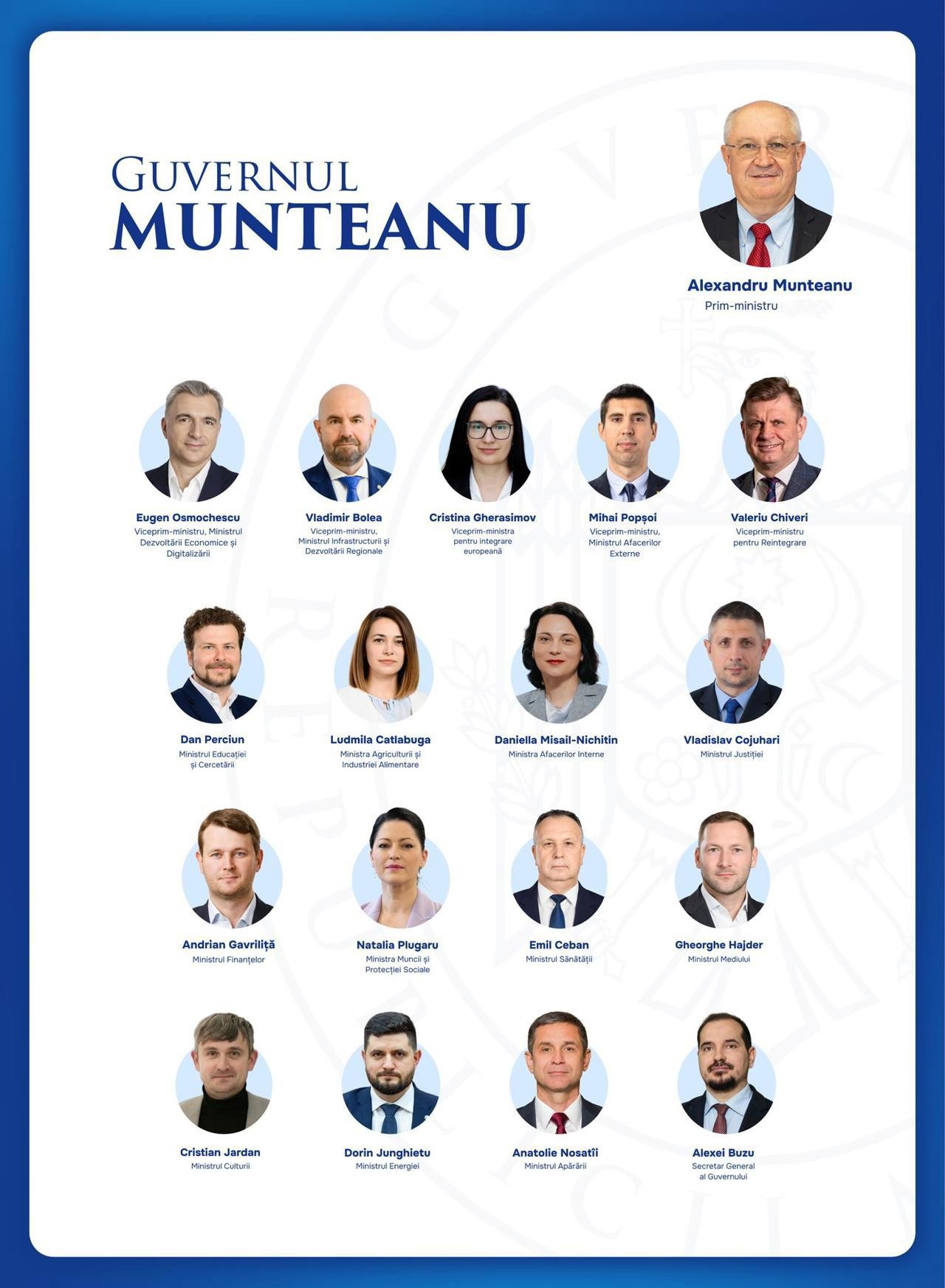
Communication shortcomings marked former prime minister's tenure.
Political analyst Ion Tăbîrță believes it is still too early to predict when a new government will take office. He said the timeline will depend on how quickly the ruling Party of Action and Solidarity, or PAS, identifies a candidate for prime minister and forms a new cabinet.
"It is difficult to say how soon a new government will be sworn in. Everything depends on how quickly PAS finds someone to replace Alexandru Munteanu and whether that person comes from within the party or from outside it. It also depends on how quickly the team of ministers can be assembled, either by keeping the current cabinet or through a broader reshuffle," Tăbîrță said.
Regarding the exact reasons behind Munteanu's resignation, the analyst suggested it may have stemmed from internal tensions.
"I cannot say for certain, but from what I understand, there may have been disagreements between Mr. Munteanu and the PAS leadership. However, the information available so far does not allow for a clear conclusion," he said.
As for the profile of the next prime minister, Tăbîrță argued that the position requires a combination of economic expertise, strong management skills, and effective public communication.
"When Alexandru Munteanu was appointed, the focus was on economic development and European integration. Those priorities remain just as important today. However, the next prime minister must also be an excellent manager. The experience of recent months has shown that the head of government must communicate effectively with the public. If there is one major criticism of Mr. Munteanu, it concerns his public communication, even though, overall, his actions were sound," the analyst concluded.
Alexandru Munteanu announced his resignation as Prime Minister of the Republic of Moldova on the morning of July 3 in a Facebook post. He served only eight months as head of government.
Munteanu said he accepted the role last autumn with a sense of responsibility and the belief that he could help bring about change. However, he decided to step down after concluding that he could no longer carry out his duties "in line with his principles and convictions."