Rapid government transition is needed to keep reforms and EU negotiations on track
The Republic of Moldova cannot afford a prolonged period without a functioning Executive. The next Prime Minister will need to continue reforms and ensure transparency in the management of state assets. From the standpoint of European institutions, the government's resignation is an internal matter that does not impact accession negotiations, provided that the commitments made are upheld.
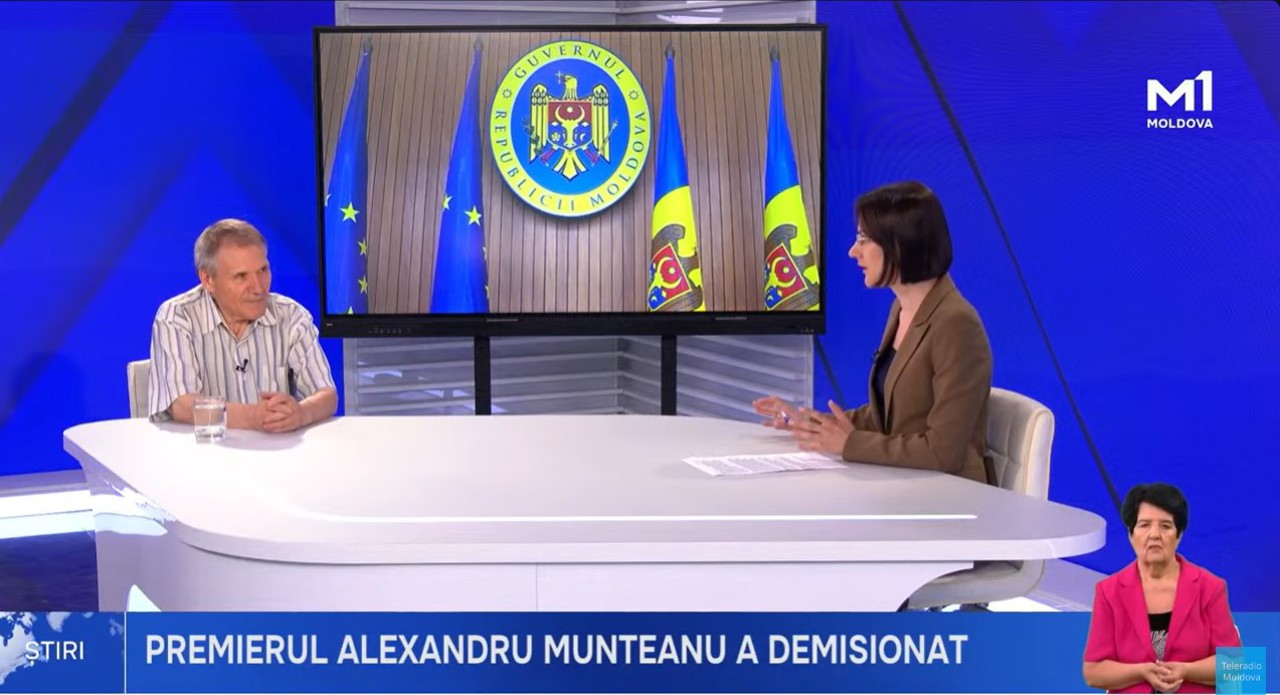
Political analyst Nicolae Negru believes that the change of Government must be managed quickly, without institutional blockages, and the new Executive must ensure the continuity of the reforms already launched and the negotiations with the European Union.
"Some changes are required. Of course, this is not the right time. We have also started these reforms, the administrative-territorial one. A fiscal reform was also announced, I agree that the communication here was not brilliant. We also have these negotiations. So, this change must be carried out as quickly as possible", Nicolae Negru declared in jurnalul amiezii from Moldova 1.
Negru: Changes in the Government are necessary, but the transition must be made quickly
At the same time, the commentator believes that optimizing public spending is an internal priority, and the modernization of the administration cannot be postponed.
"Reforms are inevitable. Not only because the European Union demands it, because we have certain commitments to the EU, we must fulfill certain conditions, but also for ourselves. Our state should optimize itself in such a way as not to throw money away. We have little money and we must save it. If we pay salaries as we have so far, or if we have a very large administrative structure, we will pay many bureaucrats. Of course, this is in our interest, to carry out and optimize spending in the Republic of Moldova", Negru explained.
In the analyst's opinion, Prime Minister Munteanu's resignation must be accompanied by more transparency and the assumption of political responsibility for the problems reported in public institutions.
"There is a certain amount of responsibility on the part of the party (PAS - editor's note), because some things depended on the party, on the party's interference. The party should have monitored the situation at Moldatsa and in other government institutions. The party did not do it. And I would say that some changes at the top of the party would be necessary," said Nicolae Negru.
Early elections would interrupt European negotiations and block reforms
In the context of the opposition's requests for early parliamentary elections, the columnist argues that such a scenario would not bring benefits and would create delays at a decisive moment for the Republic of Moldova.
"What would these elections change? The polls do not show much difference from the results that the government obtained on September 28, 2025. And especially since there are urgent things to do. Early elections now would mean interrupting negotiations, it would mean stopping the reforms, which I said were necessary", concluded Nicolae Negru.
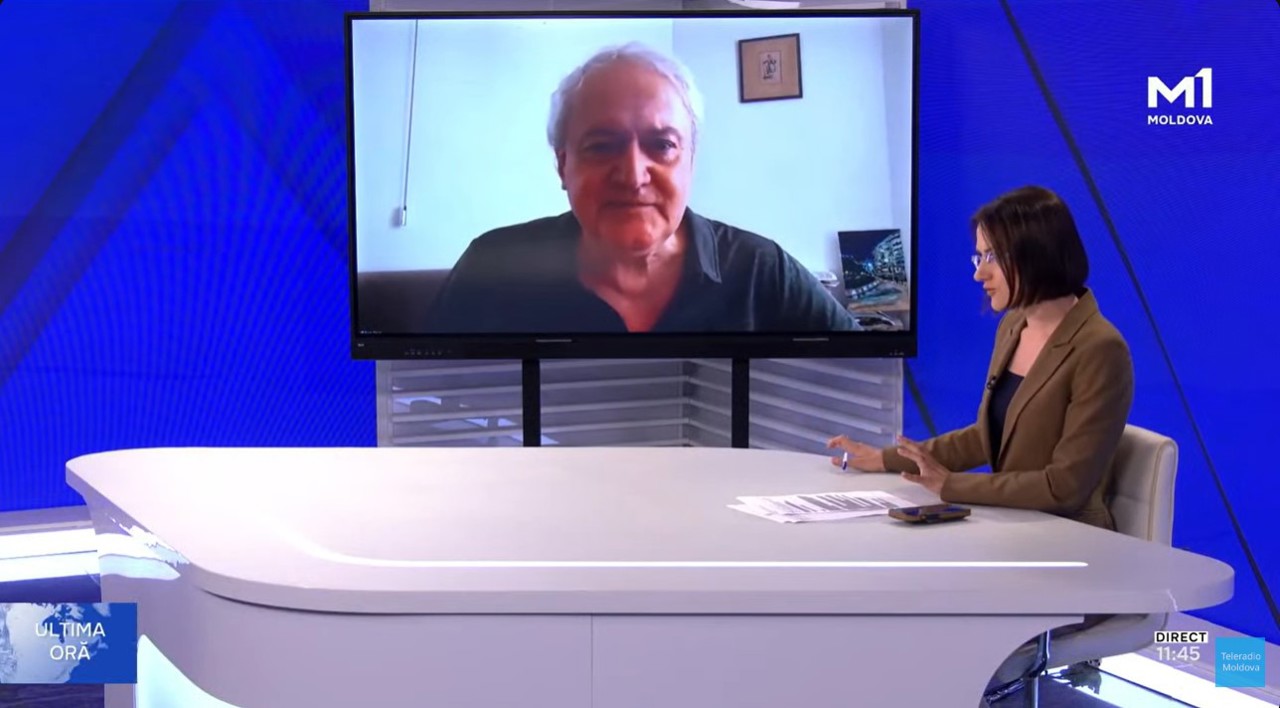
Dan Alexe: Brussels follows the political direction of the Republic of Moldova
From the perspective of European institutions, the change of a Government represents a natural internal process in a democracy. The resignation of Prime Minister Munteanu does not change the relationship of the Republic of Moldova with the European Union and will not influence the accession negotiations as long as the new Executive maintains the pro-European direction, argues Teleradio-Moldova correspondent in Brussels, Dan Alexe.
"Let's first put everything in a broader context: in the European context of negotiations with several countries in Eastern Europe and the Balkans, not just with the Republic of Moldova. And here I would completely relativize a certain frenzy that is felt in Chisinau. We will have absolutely no reaction from Brussels as long as there is no clear change in foreign policy from the future Government of the Republic of Moldova. The fact that a prime minister resigned (...) is of an internal-institutional nature. It has no relevance in Brussels", Dan Alexe declared on Moldova 1.
Negotiations continue, pro-European direction remains unchanged
In the journalist's opinion, the European institutions evaluate the consistency of the policies promoted by the authorities in Chisinau, and not the changes in the people at the top of the Government: "As long as the policy vis-à-vis the European Union and the stage of negotiations does not change, Brussels has nothing to comment on", Dan Alexe stated on Moldova 1.
"It is quite common for governments to fall or change, and as long as the democratic process is followed, the situation can be viewed positively, albeit paradoxically. For instance, a few years ago, the Czech Republic experienced a government collapse while it held the presidency of the European Union. Such incidents are minor and part of the democratic framework. Therefore, there is nothing terrible or alarming about a prime minister announcing his resignation," the journalist said.
European institutions currently have no official reactions or discussions planned concerning the Prime Minister’s resignation, indicating that this issue is not seen as affecting relations with the Republic of Moldova.
"Today in Brussels, nothing is planned—no press conferences, comments, or announcements. Everything is as calm as possible as they expect to move past this minor setback in the progress of democracy towards the European path,” explained Dan Alexe.
When asked how the European Union would respond in the event of early parliamentary elections, the reporter stated that Brussels does not speculate and only forms its positions after citizens have voted.
"The results will be awaited first. No one comments before seeing the election results. And if we have a government that intends to change the pro-European course in the Republic of Moldova—though this is somewhat of a political fiction at the moment—even then, big surprises can occur,” concluded Dan Alexe.
On the morning of July 3, Alexandru Munteanu announced his resignation as Prime Minister. He explained that he accepted the mandate last fall with a sense of responsibility and the belief that he could help bring about change. However, he decided to step down after realising he could no longer fulfil his role "in accordance with his principles and beliefs."
Following his resignation, President Maia Sandu acknowledged Munteanu's decision and expressed her gratitude for his service. She emphasized her expectation for "more involvement in complicated decisions, more presence to listen to people, and to explain to them what kind of reforms we need to make and why we need to make them."
Next week, the President will initiate consultations with parliamentary factions to identify a candidate for the position of Prime Minister. This candidate will seek a vote of confidence from Parliament within 15 days.
If it becomes impossible to form a government—such as if Parliament rejects at least two requests for investiture within 45 days of the first request—the President has the authority to dissolve Parliament, potentially leading to early parliamentary elections.