Moldova invited to present EU negotiating position for Cluster 6
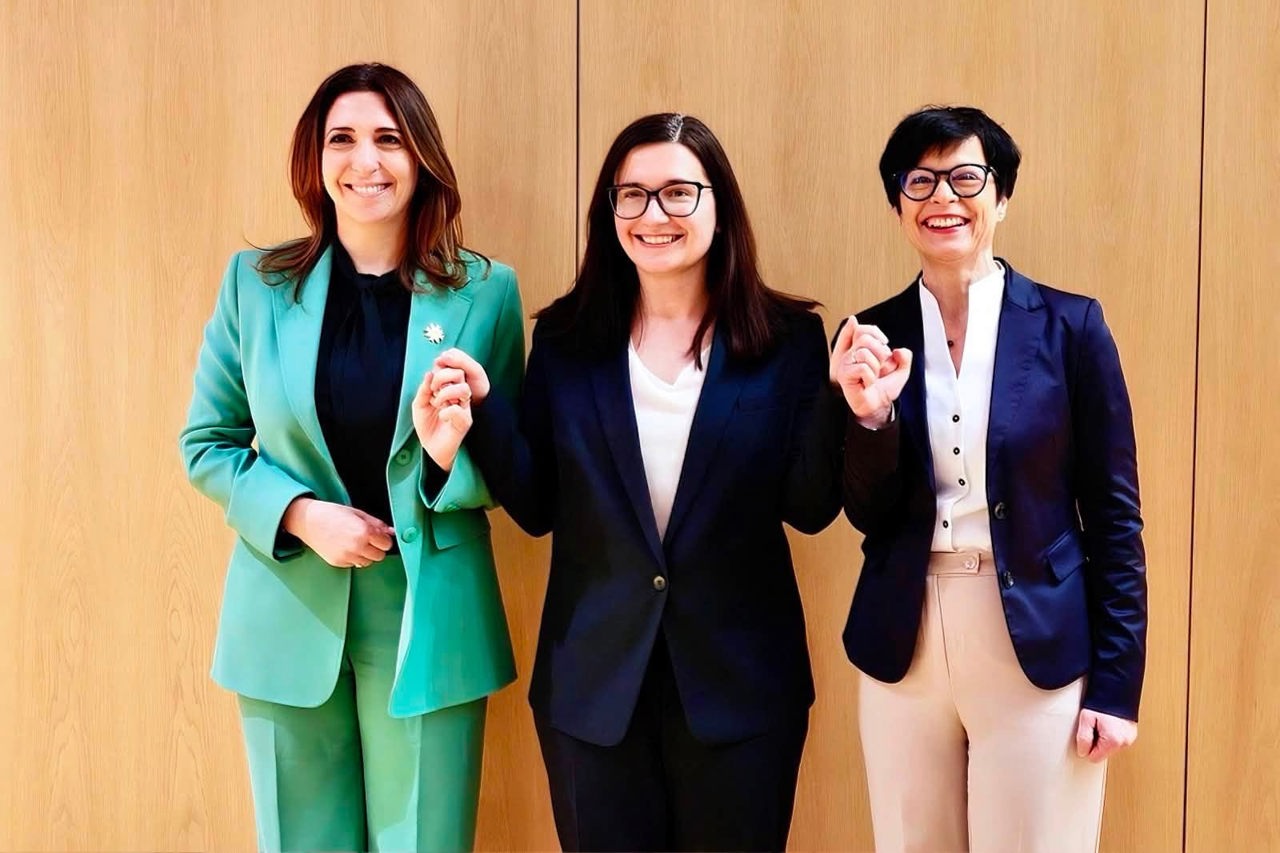
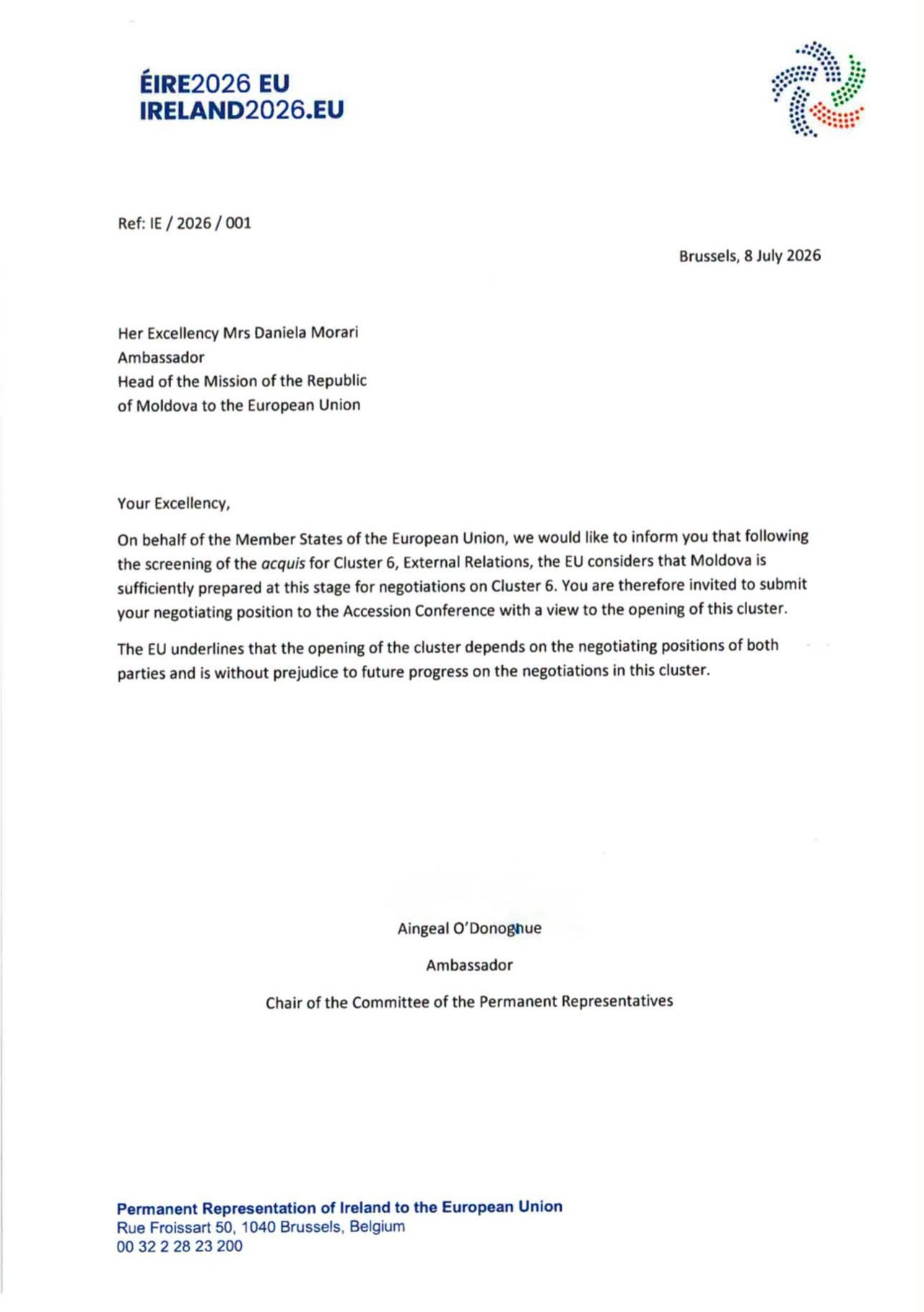
The Republic of Moldova has received an official invitation to present its negotiating position for Cluster 6: "External Relations." This is in preparation for the formal opening of these chapters at an upcoming Intergovernmental Accession Conference. The invitation was issued in a letter signed by Ambassador Aingeal O'Donoghue, who is the Chair of the Committee of Permanent Representatives (COREPER) and Head of the Irish Delegation, representing the country that currently holds the rotating presidency of the Council of the European Union (EU).
The invitation was issued five days after Prime Minister Alexandru Munteanu announced his resignation, leaving Chisinau without a fully mandated government for the time being.
The letter, addressed to Daniela Morari, the Moldovan ambassador to the European Union, states that after evaluating the acquis for Thematic Group 6, the member states believe Moldova is sufficiently prepared at this stage to enter into negotiations.
As a result, Chisinau is invited to present its negotiating position at an Accession Conference, a preliminary step toward the cluster's actual opening.
“We continue to move forward in the EU accession negotiations,” wrote Deputy Prime Minister for European Integration Cristina Gherasimov on Facebook. She noted that the country has been “prepared for this step for more than a year.”
In her message, Gherasimov emphasized that maintaining the pace of reforms is essential and described European integration as a “national objective,” rather than a project of a single political party.
The sixth of the thematic clusters
Cluster 6 groups the chapters on common foreign and security policy, trade policy and relations with third countries. This is considered, together with Cluster I, to be one of the chapters that the Republic of Moldova has completed the fastest at a technical level, negotiations on this level having been launched in December 2025. The formal opening, however, depends on a distinct political decision of the 27 member states, a stage that has not yet been completed.
Preparations for the next stage of accession negotiations continue according to the established calendar, sources in European diplomacy confirmed to Teleradio-Moldova.
According to them, the member states of the European Union agreed, last week, to move forward with the evaluation letters for Cluster 6, which concerns external relations for the Republic of Moldova and Ukraine.
The documents are to be formally approved at this week’s COREPER meeting. After finalizing the evaluation letters and establishing common positions, formal approval is expected for July 13, and a meeting of the Intergovernmental Conference (IGC), the formal framework for accession negotiations, is planned for July 14.
European sources have stated that, so far, there are no indications that the recent political developments in Chisinau would affect this calendar, emphasizing that the European Union wants to make further progress on the other clusters before the summer break.
On Tuesday evening, July 7, the European Parliament also asked the Council of the European Union to rapidly open all negotiation clusters with the Republic of Moldova. The request was made after debating, in the Strasbourg plenary, the annual report on the European path of the Republic of Moldova and welcoming the pace of reforms in Chisinau.
The pace set by the Irish Presidency
The Irish Presidency of the Council of the EU, which took over on 1 July this year, opted for a gradual approach - opening the clusters one by one, a strategy that allowed for the Hungarian consensus to be obtained, after Budapest's change of position following Péter Magyar's victory in the Hungarian elections and the agreement with Kiev that unblocked, on 3 June, the opening of Cluster 1. It was officially opened on 15 June, in Luxembourg, during the second Intergovernmental Conference.
The invitation to the Republic of Moldova to present its negotiating position for Cluster 6 - "External Relations" - is issued in the context of our country currently having an interim government.
Prime Minister Alexandru Munteanu announced his resignation on 3 July, stating that he could no longer exercise his mandate "in accordance with the principles and convictions that I hold". He refused to provide the interim government until a new Cabinet of Ministers is sworn in.
President Maia Sandu designated, by presidential decree, the acting Deputy Prime Minister, Eugeniu Osmochescu, Minister of Economic Development and Digitalization, to lead the interim Government, starting July 8.
The leader of the Action and Solidarity Party, Igor Grosu, previously stated that a candidacy for the position of Prime Minister would be announced by the end of this week and that the future Government would not undergo essential changes to ensure the continuity of the reforms necessary for the European path.