Webb Telescope uncovers hidden giant planet Beta Pictoris d
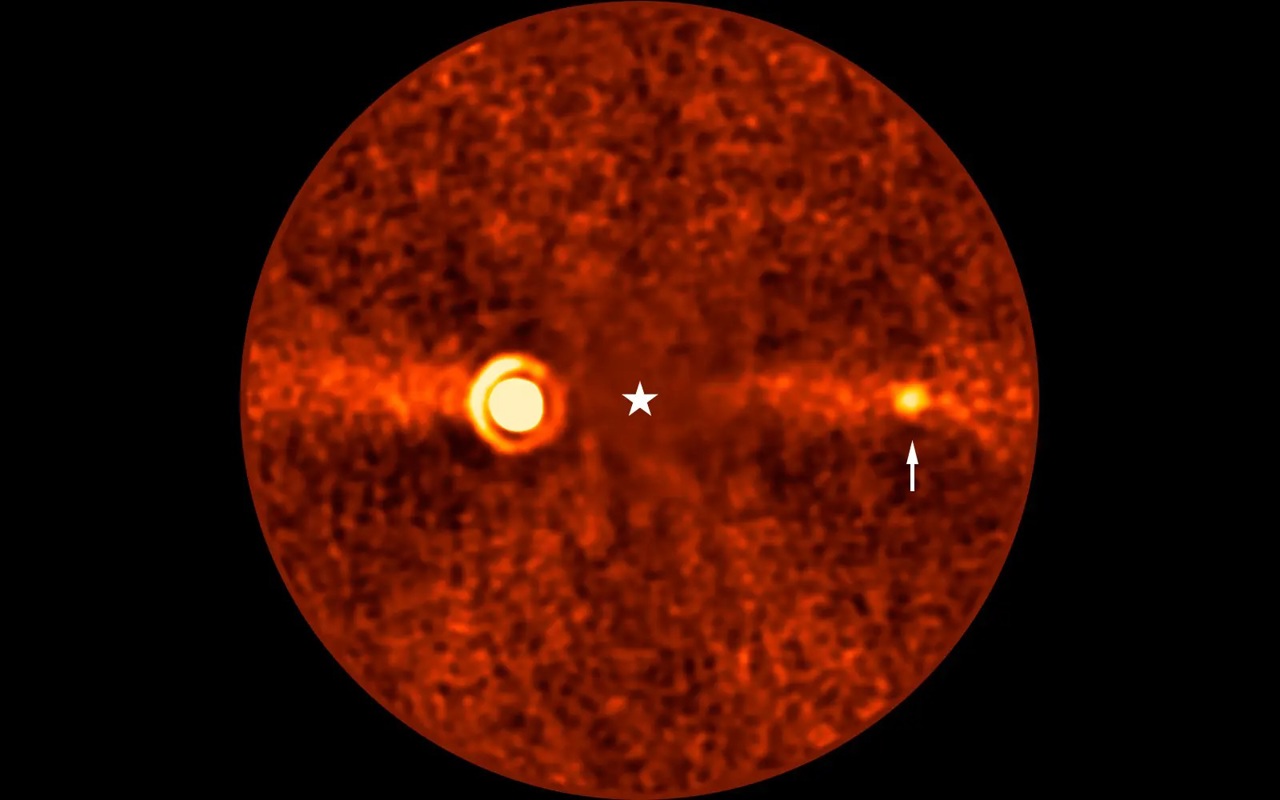
Astronomers monitoring deep-space data from NASA’s James Webb Space Telescope have discovered a giant exoplanet within one of the most intensively studied planetary systems in the Milky Way.
Located 63 light-years from Earth, the young star system Beta Pictoris was already known to host two massive gas giants: Beta Pictoris b—one of the first exoplanets ever directly imaged—and Beta Pictoris c.
Unlike its sister planets, Beta Pictoris d was not found through direct visual imaging. Instead, astronomers identified it by detecting the unique chemical fingerprint of its atmosphere, a breakthrough technique that could transform exoplanet exploration.
A new piece in a cosmic laboratory
"This discovery adds a new piece to an already fascinating planetary system," said Aidan Gibbs, lead author of the study published in The Astrophysical Journal Letters and a researcher at the University of California, San Diego. "Beta Pictoris has long served as a laboratory for understanding how planetary systems form and evolve, and now we have a new planet to help us decipher that story."
Estimated to be around 23 million years old, the system offers researchers a rare window into interactions between newborn planets and the surrounding disk of gas and dust.
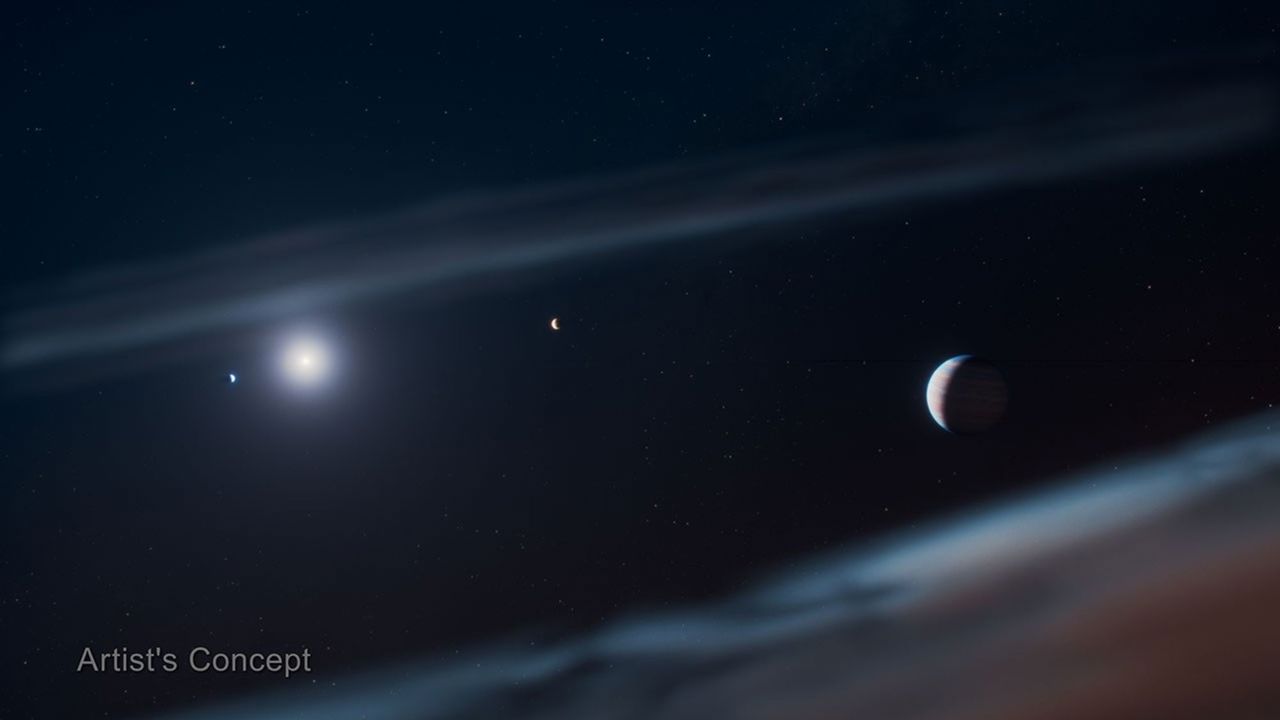
Scientists estimate that Beta Pictoris d has a mass at least twice that of Jupiter, making it the smallest of the three giant planets in the system. It orbits its host star at a distance of roughly 30 astronomical units, a path comparable to Neptune's orbit around our Sun.
A serendipitous discovery
The team was not actively looking for a new planet. Beta Pictoris d emerged while researchers were using Webb’s infrared spectrograph to analyze the atmosphere of Beta Pictoris b.
"We were trying to understand a planet we already knew existed," Gibbs explained. "Then, this unexpected signal appeared right in the data where we didn't expect it."
Because spectroscopy reveals both chemical composition and physical movement, the team quickly confirmed that the object's speed and position matched a stable orbit around Beta Pictoris. Subsequent observations using Webb's Mid-Infrared Instrument (MIRI) detected water vapor and methane, confirming the planet's existence and providing a detailed atmospheric profile.
Beta Pictoris d remained hidden for decades because it orbits inside one of the brightest known debris disks. This thick belt of dust acts like a dense cosmic haze, scattering starlight and obscuring smaller bodies from traditional telescopes.
By bypassing optical imaging and isolating atmospheric molecular signatures directly, Webb's spectroscopic technique successfully pierced through the dust—opening a powerful new pathway for detecting hidden worlds across the galaxy.
Translation by Iurie Tataru