Light industry struggles as Moldova loses thousands of jobs
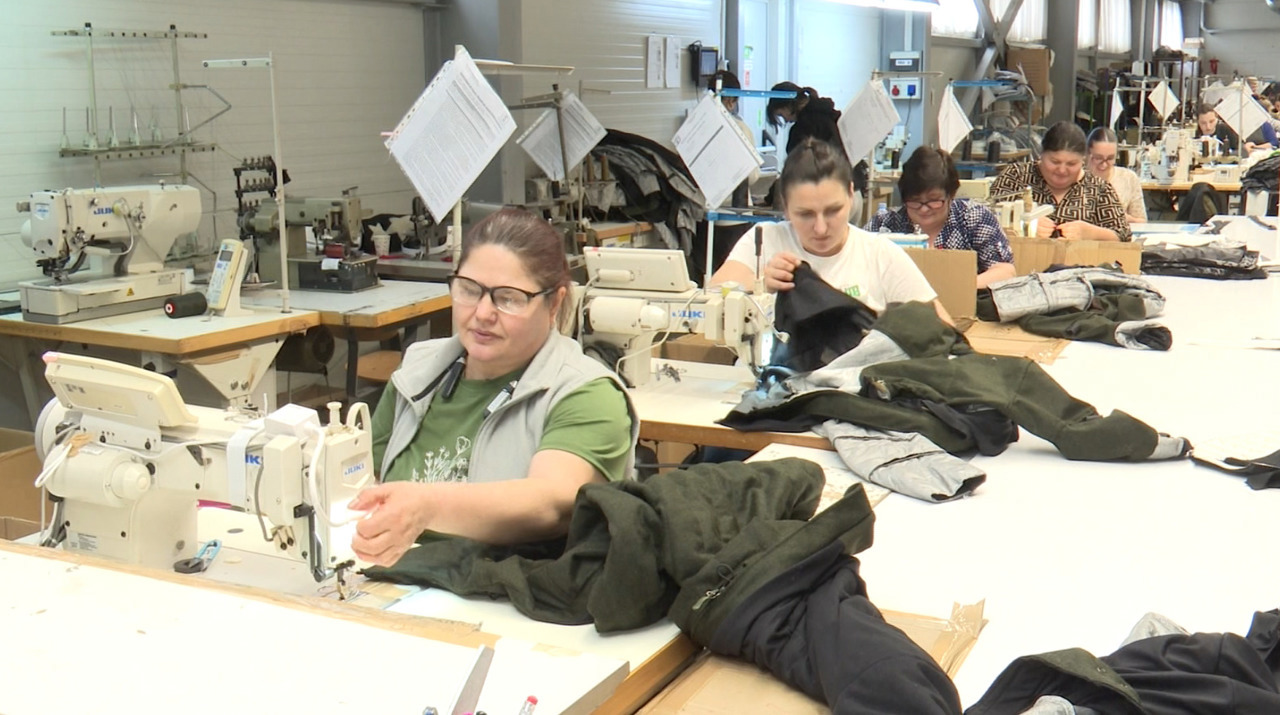
Moldova's light industry has seen a loss of over 8,000 jobs in recent years, as reported by the consulting company "Europolis." The most significant impact was in the garment, textile, leather, and footwear sectors, where approximately one in three jobs has disappeared.
The study analyzes the evolution of the light industry from 2019 to 2024, during which the economic model based on the lohn regime—with low wages and reliance on external orders—has become increasingly vulnerable.
In 2019, the sector employed 26,623 workers, but by 2024, that number had decreased by more than 8,000.
Among the affected companies are some well-known names in the industry. The "Zorile" factory has ceased production, "Covoare-Ungheni" has entered the insolvency process, and "Floare-Carpet" is in the process of closing. Other companies, such as "Artima," "Ionel," and "Tricon," are also facing decline. At "Lear Corporation" in Ungheni, over 750 jobs were eliminated.
These losses represent not only the closure of some factories but also a significant shift in an economic model that had primarily relied on low labor costs for decades.
"In a country with a shortage of employees and rising wage costs, the competitive edge based almost exclusively on cheap labor can no longer sustain the sector," argues Ghenadie Ivașcenco, the executive director of "Europolis."
However, the analysis reveals that the light industry is not disappearing; it is undergoing a transformation. The number of enterprises in the field has increased from 680 to 736, and new or relaunched companies have created over 2,000 jobs.
The new generation of producers is increasingly focused on higher-value-added products. For instance, companies such as "Molltex Group" from Bălți, which has nearly 800 employees, and "Trox BR" from Briceni, which has created over 300 jobs, are noteworthy examples. Another example is “Bautex Composites” from Strășeni, which produces fibreglass materials for the European market.
The expert cautions, however, that the pace of change remains too slow to counterbalance the job losses. The reduction in activity at “Lear Corporation” and the closure of “Floreana Fashion,” for example, led to the loss of approximately 1,500 jobs.
In his view, the future of the light industry depends on investments in new technologies, retraining employees, and developing more specialized sectors, such as technical textiles.
“Moldova can no longer compete through low wages. The advantage must be built through productivity, technology, and products with higher added value,” concluded Ghenadie Ivașcenco.
We remind that, starting in 2025, the Ministry of Economic Development and Digitalization launched a support mechanism for investments in the manufacturing industry, valid for the period 2025–2026. Among the eligible areas is the textile and clothing industry.
Through this mechanism, companies that make new investments of at least 10 million lei in eligible sectors can benefit from state aid of up to 60% of the investment value. Support is provided through non-refundable grants and tax incentives. The budget provided for this instrument is at least two billion lei.
According to the Ministry of Economic Development and Digitalization, the textile and clothing industry represents approximately 9% of the manufacturing industry of the Republic of Moldova and provides income for about 17 thousand families. Approximately 80% of the sector's production is intended for export.
Through the National Industrialization Program, the authorities estimate the attraction, by 2036, of investments of over 500 million euros in the industrial sector.