Sandu faces impeachment bid as nepotism scandals rock Moldova
Moldova’s parliamentary opposition has launched an impeachment procedure against pro-Western President Maia Sandu. The move follows a series of high-profile integrity and nepotism scandals that have hit the ruling Action and Solidarity Party (PAS) over the past month.
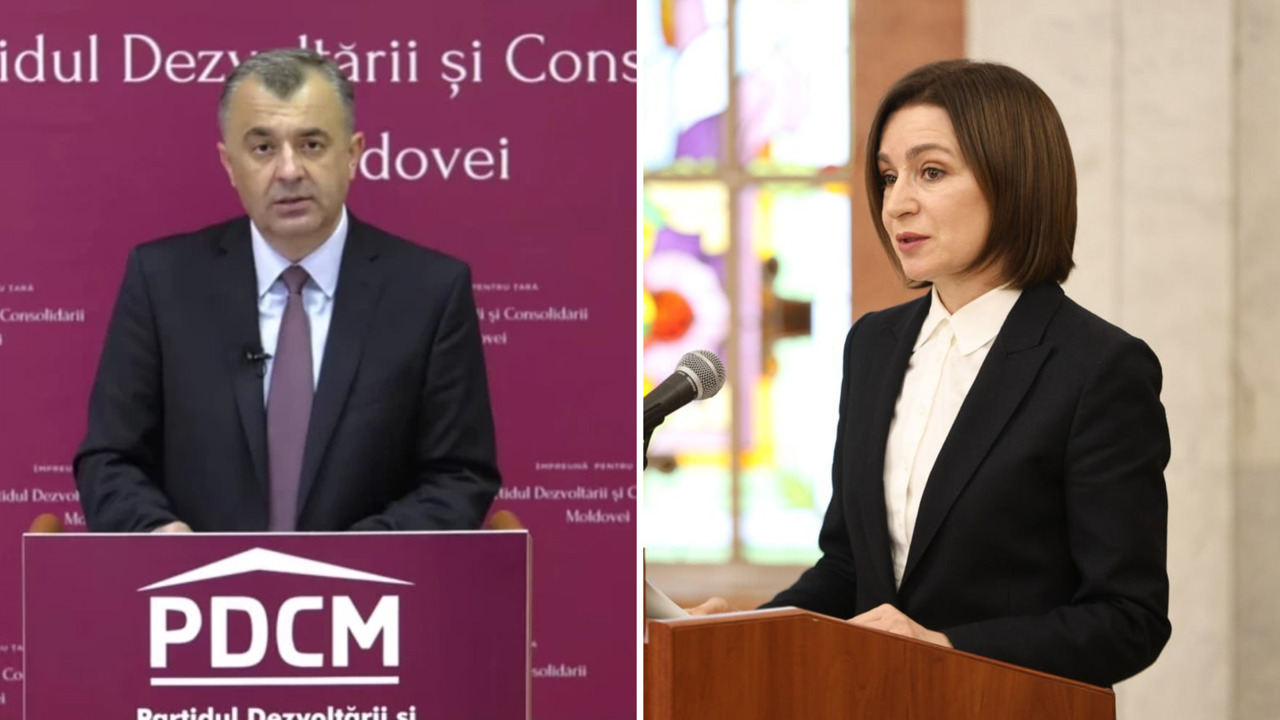
The draft resolution for the suspension of the head of state was submitted by Ion Chicu, MP and leader of the Development and Consolidation Party of Moldova (PDCM). Chicu aims to gather at least 34 MP signatures required to officially register the motion in Parliament.
The initiative is currently backed by the Socialist Party (PSRM), the Communist Party (PCRM), and the Democratia Acasa Party. Meanwhile, the ruling PAS party has declared its unanimous support for President Sandu.
The opposition's case against the presidency
The 40-page draft resolution details alleged constitutional violations by President Sandu, focusing on her failure to react to recent public scandals. These include financial mismanagement at the state air traffic control enterprise, Moldatsa, and controversial real estate dealings involving former PAS MP Alexandru Trubca.
Chicu stated on social media that it is highly unlikely Sandu was unaware of these schemes given her six-year tenure. He emphasized that the motion serves to make both the Moldovan public and international observers aware of these alleged institutional breaches.
Communist MP Diana Caraman confirmed her faction's support, arguing that the president has unlawfully interfered in domestic political processes.
Conversely, Vasile Costiuc, leader of Democratia Acasa, expressed skepticism despite signing the document. Costiuc described the initiative as a symbolic political statement with no real chance of success during the August parliamentary recess, warning that it might backfire by allowing Sandu to claim political victimization.
Presidential and ruling party response
The Presidency responded by stating that initiating such a procedure is a constitutional right and that Parliament will decide on the matter in accordance with the law. The institution reinforced that President Sandu remains fully committed to fulfilling the mandate entrusted to her by the citizens.
The ruling PAS party issued a statement affirming full solidarity with the head of state. The party emphasized that Sandu won the majority's trust to lead Moldova into the European Union, and PAS will provide all necessary support to achieve this objective.
Constitutional thresholds and feasibility
Legal expert Alexandru Bot from the Watchdog think-tank noted that while the procedure is legally viable, its practical execution remains highly hypothetical.
According to Article 89 of the Moldovan Constitution, suspending the president requires the initiation by at least one-third of MPs, followed by a two-thirds majority vote in Parliament. If approved, a national referendum must be organized within 30 days to finalize the dismissal. Bot characterized the move as a strategic political step meant to gain leverage ahead of upcoming elections.
The chain of scandals rocking the administration
The political crisis intensified following a June 18 investigation by Ziarul de Gardă, which revealed that the former director of Moldatsa, Dumitru Vangheli, falsified his CV. Vangheli, who earned a monthly salary of around 110,000 MDL (approx. €5,612), was dismissed four days later. A subsequent National Anticorruption Center (CNA) audit exposed 33 uncompetitive hirings, unjustified bonuses, and suspicious expenses exceeding 9 million MDL (approx. €459,184).
The scandal deepened when it was revealed that Anastasia Taburceanu, a cousin of President Sandu, was earning over 120,000 MDL (approx. €6,122) per month as a spokesperson for Moldatsa. Taburceanu resigned shortly after, and Parliament Speaker Igor Grosu confirmed she had fully reimbursed the state enterprise.
Another cousin of the president, Tatiana Batin, resigned from her position as Chief of Staff to the Parliament Speaker. Public asset declarations showed Batin earned over 548,000 MDL (approx. €27,959) last year, averaging more than 45,000 MDL (approx. €2,296) per month.
On the day of her resignation, an investigation by TV8 exposed her husband, Constantin Batin, director of the "Expo-Business-Chisinau" Free Economic Zone. Journalists revealed that weeks before his appointment, Batin engaged in corporate asset swaps with Latvian businessman Marks Blats.
Blats was under US sanctions at the time for participating in a procurement network supplying advanced technology to the Russian military during the invasion of Ukraine. Blats has since been sanctioned by the EU, the UK, Latvia, and Ukraine. President Sandu stated that Constantin Batin was hired via a public contest and directed further inquiries to the individuals involved.
Government restructuring and anti-corruption measures
The fallout led to prominent resignations within the ruling party. On June 29, PAS MP Radu Marian resigned as chairman of the parliamentary Committee for Economy, Budget, and Finance.
On the same evening, Roman Cojuhari stepped down as Director General of the Public Property Agency (APP), assuming institutional responsibility for the lack of oversight at Moldatsa.
In response, the government announced a comprehensive reorganization of the APP on June 24. Parliament Speaker Igor Grosu publicly apologized for the Moldatsa irregularities and announced several party expulsions, including Taburceanu.
On July 1, President Sandu condemned the institutional abuses as incompatible with her values. She proposed a mandatory integrity vetting mechanism for public officials involving the Intelligence and Security Service (SIS) and the CNA.
Furthermore, the government is implementing structural optimization measures to reform all state-owned corporate boards. These reforms include limiting board sizes, enforcing a single-representation principle, revising remuneration policies, and mandating bi-annual performance reporting. Sandu reiterated that a rigorous political and institutional cleanup will take place within the administration.
Translation by Iurie Tataru