Moldova to launch vital Romania-linked power line by August
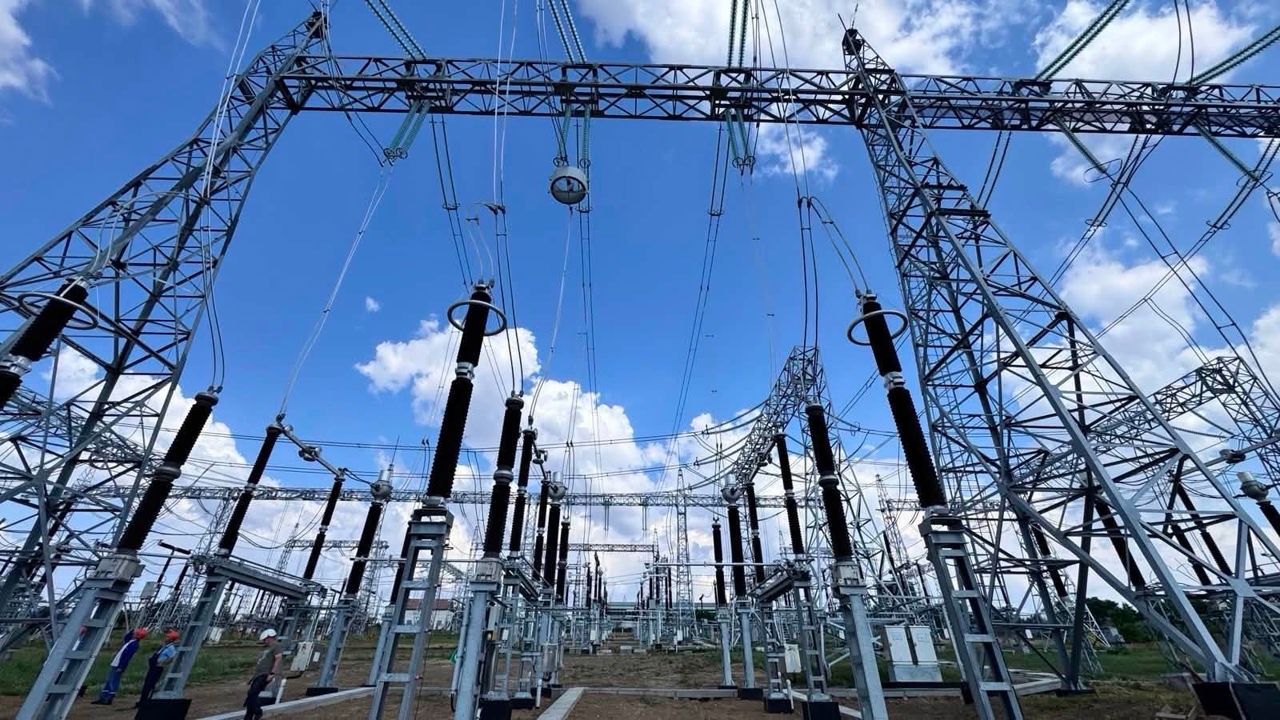
The entire 400 kV Vulcănești–Chișinău overhead power line will be energized this week up to the Chișinău Electrical Substation. The announcement was made on Monday, July 20, by the Acting Minister of Energy, Dorin Junghietu, following an official site visit to the facility.
This major technical operation represents the final large-scale verification process before the strategic infrastructure is officially commissioned. The full commercial launch of the transmission line remains firmly scheduled for the end of August.
In a video message published on Facebook, Junghietu confirmed that the institutional workweek commenced directly at the Chișinău Substation. The official inspected the site to ensure that technical teams are fully prepared for the operation, which he characterized as critical for testing the functional integrity of the entire grid system.
Phased technical verification
The first stage of testing successfully targeted the new 400 kV cell at the Vulcănești Electrical Substation. Following initial energization, engineers verified standard equipment operations, baseline technical parameters, and the integration of protection, command, and automation systems, all of which strictly complied with technical criteria.
Subsequently, the first 100-kilometer section of the line was successfully maintained under continuous test conditions for 48 hours. This phase was managed under the rigorous supervision and coordination of the technical team at Moldelectrica, the national state transmission system operator.
Extending the live voltage framework to the Chișinău Substation systematically interconnects the three primary components of the national project for the first time. The southern substation, the transmission line, and the central substation are now functionally linked, clearing the path for comprehensive system-wide testing.
Strategic supply and capacity metrics
The core objective of this infrastructure asset is to directly supply the largest energy consumption hub in the country. Spanning approximately 157 kilometers, the high-voltage line connects the 400 kV Vulcănești Substation to the 330 kV Chișinău Substation.
The new transmission asset boasts an operational capacity sufficient to secure over 50% of the Republic of Moldova's electricity consumption during peak load periods. Full commercial exploitation will commence at the end of August, following the completion of complex stress tests across the entire infrastructure network.
European integration and regional resilience
The electricity interconnection between the Republic of Moldova and Romania represents the oldest strategic energy infrastructure project assumed by the Chișinău authorities since 2019. It serves as the primary pillar for the country’s full integration into the European Network of Transmission System Operators for Electricity (ENTSO-E).
While state officials previously announced successive deadlines for commissioning the Vulcănești–Chișinău line—initially at the end of 2025, followed by targets in March and June 2026—the current final testing phase confirms definitive progress toward operational status.
However, this single line does not entirely fulfill regional interconnection requirements. A second 400 kV project, the Suceava–Bălți line, widely designated as the "resilience line," will span approximately 45 kilometers within Moldovan territory, crosscutting 12 local communities.
To advance this second corridor, Moldelectrica signed a €17.5 million (approx. 343 million MDL) contract on June 26 with the Turkish engineering firm SA-RA. The contract stipulates a 24-month execution window as part of a broader €77 million regional project, funded by a €15.4 million European Union grant alongside development loans from the EBRD and the EIB.
Furthermore, a third planned interconnection linking Strășeni and Gutinaș is projected to be financed through a $130 million United States government grant. On June 18, Moldovan authorities officially received the comprehensive feasibility study for this link from the Embassy of the United States, cementing long-term grid diversification plans.
Translation by Iurie Tataru