Moldova's reform agenda hinges on public administration overhaul
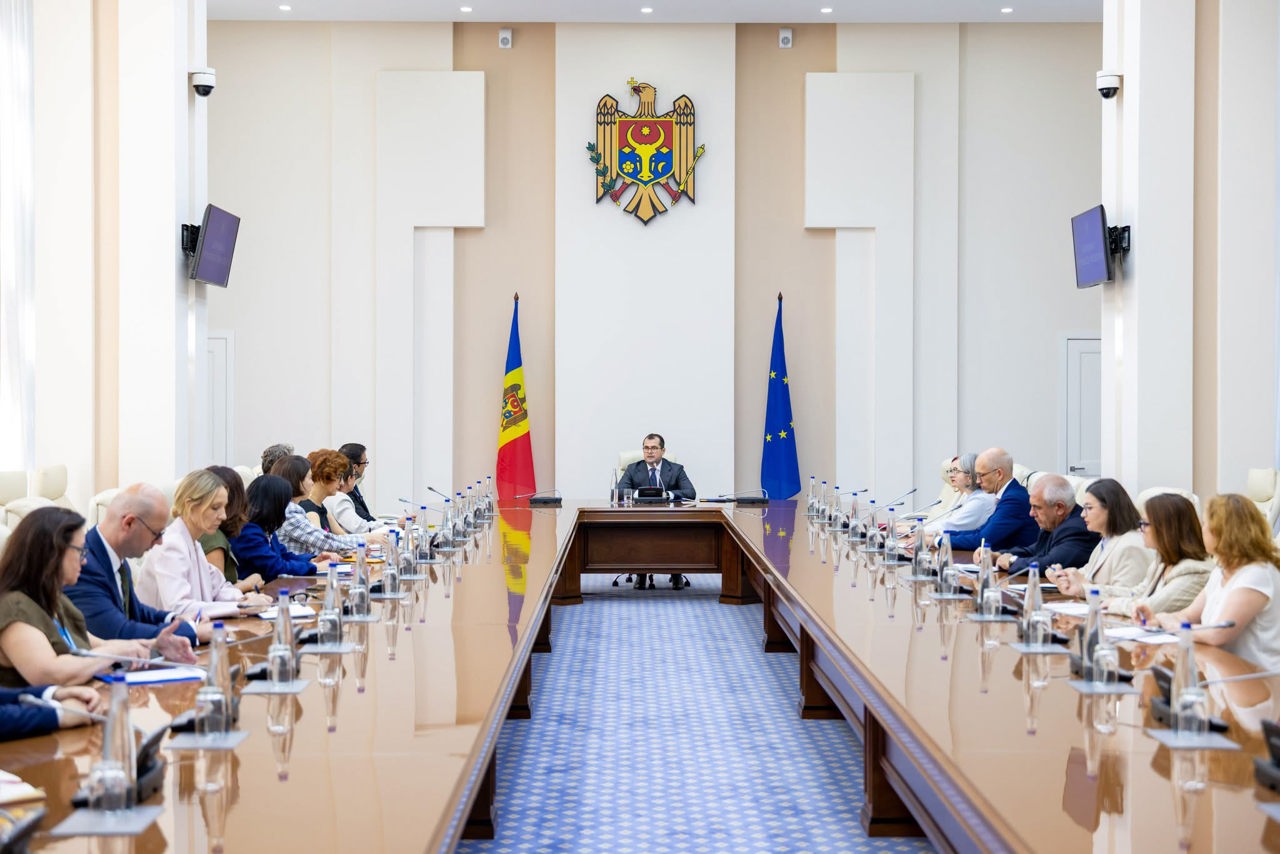
The newly formed Moldovan government under Prime Minister Vasile Tofan has launched an ambitious reform agenda. However, experts warn that its success depends entirely on reforming public administration, strengthening state institutions, and translating European Union support into concrete benefits for citizens.
These findings stem from the latest Foreign Policy Bulletin published jointly by the Friedrich Ebert Foundation (FES) and the Foreign Policy Association (APE).
Political analyst Dionis Cenușă highlights that the government's program centers on state efficiency, economic revival, investment attraction, and accelerated EU integration. Nevertheless, he cautions that mounting economic pressures and opposition backlash over fiscal policies could trigger inflation and burden the business environment.
"The government under Vasile Tofan has less than two years to rehabilitate the image of the Action and Solidarity Party ahead of the 2027 local elections and the 2028 presidential vote," Cenușă noted.
Pressure from nepotism scandals
Igor Munteanu, an expert at IDIS "Viitorul", emphasizes that rebuilding public administration and depoliticizing state institutions remain the cabinet's greatest hurdles. While the Prime Minister benefits from a favorable international context, unresolved internal issues threaten the government's credibility.
"Scandals involving nepotism, influence peddling, and patronage create a toxic environment that damages the cabinet's credibility," Munteanu stated. "It is essential that this background noise does not drown out the government's strategic communication."
Munteanu praised the Prime Minister's focus on economic diplomacy and deregulation, noting that Moldovan embassies must actively drive foreign investment and exports. However, he warned that a politicized civil service could derail EU accession negotiations, calling for immediate transparent merit-based competitions for all leadership roles.
The fiscal reform test
Economic analyst Viorel Gîrbu argues that administrative reform must go hand in hand with fiscal and wage restructuring based on performance. He stresses that combining budgetary discipline with effective tax collection and sound EU fund management is essential for long-term growth.
"Raising salaries is relatively easy, but building a system that enforces accountability, performance, and control over public spending is far more complex," Gîrbu explained.
European integration starts in state agencies
In the bulletin's editorial, journalist Mădălin Necșuțu writes that the cabinet's key challenge is turning EU political support into functional institutions and higher-quality public services. The upcoming months will reveal whether the government can deliver tangible policy results.
Addressing the Transnistrian region, Necșuțu stresses that authorities can no longer manage reintegration and EU integration as separate tracks.
"If Moldova advances toward EU membership, reintegration must become an economic, administrative, and institutional project," Necșuțu noted. "It requires concrete investments, infrastructure development, energy connectivity, and public services rather than mere declarations."
Experts conclude that while the opening of EU accession negotiations offers Moldova an unprecedented opportunity, ultimate success will depend on institutional capacity rather than political statements.
Translation by Iurie Tataru