Moldovan MPs back grain import licenses to protect local farmers
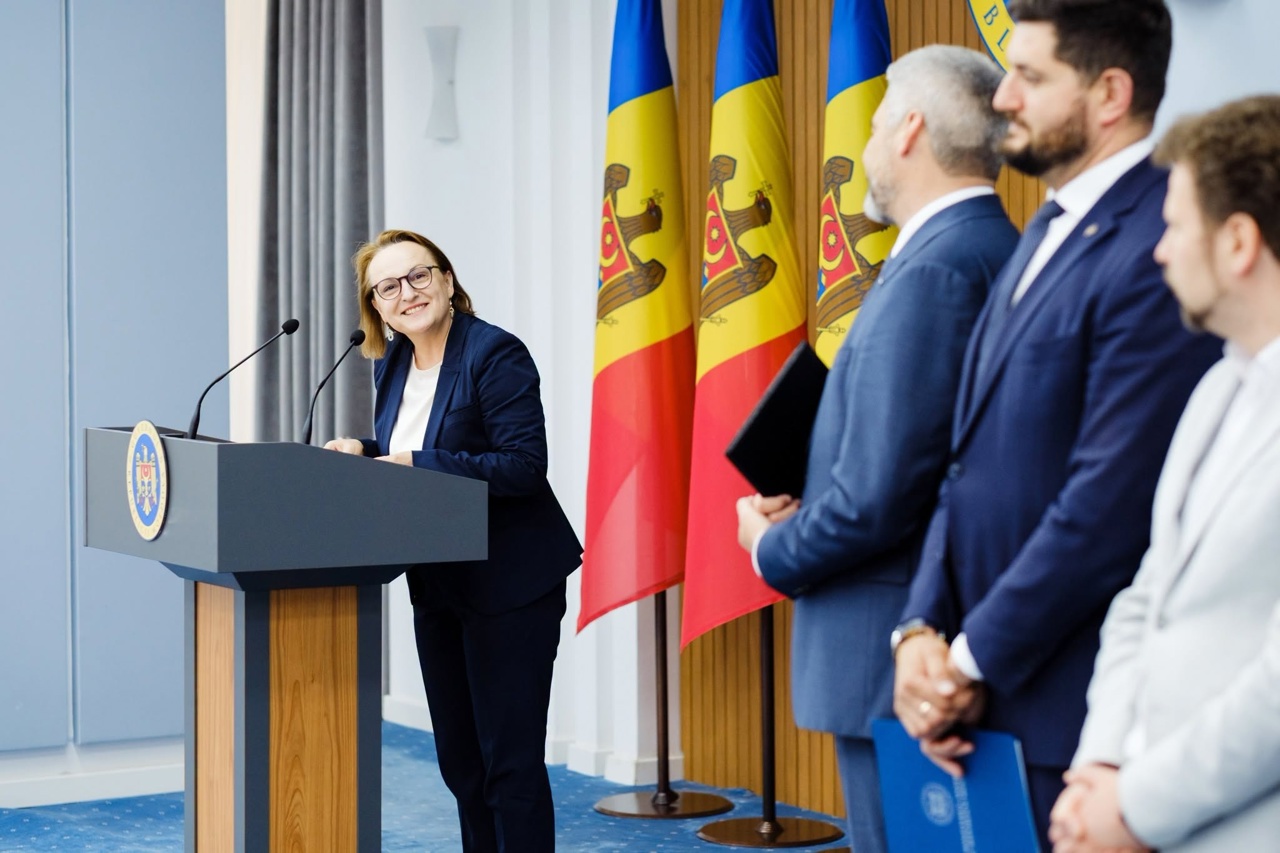
Moldova's parliament approved a provisional grain and oilseed import licensing regime in first reading on Thursday, while senior lawmakers demanded extending the protections through 2027 to shield domestic farmers from regional market shocks.
Two-month window versus multi-year safeguard
The government proposal currently limits the import licensing regime until October 31, 2026. However, Serghei Ivanov, chairman of parliament’s Committee on Agriculture and Food Industry, argued that a two-month application window fails to account for severe national transport bottlenecks and high Ukrainian grain volumes transiting through the EU Solidarity Lanes.
“We requested an extension until December 31, 2027, because our logistics cannot handle massive grain flows in just three or four months,” Ivanov told lawmakers during the plenary debate. “We need a longer timeframe to clear bottlenecks and dispatch domestic production toward Romania's port of Constanța and wider European Union markets.”
Under the draft law, import permits will be issued free of charge exclusively to registered domestic processors in livestock breeding, animal feed preparation, vegetable oil milling, and flour production. Crucially, license recipients are strictly prohibited from reselling or re-exporting imported commodities.
Dumping risks, price spreads, and regional traceability
Ivanov stressed that import curbs are critical to shielding Moldovan farmers, noting that domestic wheat trades at 1.5 Moldovan lei (approx. €0.075; $0.087) per kilogram below benchmarks at Romania’s Black Sea port of Constanța. He noted that Article 2 of the draft legislation allows annual extensions to deter traders from speculative warehousing.
“These rules prevent speculative operators from simply waiting out the clock to resume imports later,” Ivanov said. “This is a matter of national food and economic security, ensuring full traceability as practiced in neighboring Romania.”
The committee chairman dismissed concerns that the measure could breach World Trade Organization (WTO) regulations, noting that identical safeguard mechanisms operated successfully across Moldova and Romania during 2024 and 2025 without triggering trade disputes. Ivanov also recalled an episode from 2023 when Romanian authorities highlighted discrepancies between volumes harvested in Moldova and subsequent exports, triggering scrutiny over uncertified shipments originating from Moldova's Transnistrian region.
Logistical bottlenecks and rising production costs
Opposition lawmakers broadly supported maintaining import restrictions but warned of widening input costs. Socialist lawmaker Petru Burduja noted that Moldova produces 1.5 million tonnes of wheat and 2.7 million tonnes of total grain annually, warning that unregulated transits from Ukraine—which exports 40 million tonnes each year—could overwhelm domestic agricultural operators.
“In 2021, when diesel stood at 13 to 17 lei (€0.65–€0.85) per liter, wheat fetched 4.10 lei (€0.20), whereas today wheat trades at 2.50 lei (€0.12) against diesel costs of 34 lei (€1.70),” Burduja said. “Without transparent, strict transit monitoring, our farmers face severe economic distress.”
Lawmaker Sergiu Stefanco echoed the call for extending the regime to 2027, underscoring that Moldovan agriculture has endured overlapping crises, including prolonged droughts and soaring fertilizer costs. He observed that licensing has proven to be the state’s most effective policy lever after other support mechanisms, such as diesel excise rebates and customs tariff reductions, failed to materialize.
Competition review and next parliamentary steps
Presenting the report of the Committee on Economy, Budget, and Finance, Vice Chairman Dorian Istrati highlighted observations from the Government and the Competition Council regarding the composition of the licensing commission. The regulatory panel is slated to include delegates from the Ministry of Agriculture, the Ministry of Economic Development, the National Food Safety Agency (ANSA), and private agricultural associations.
“The bill does not specify the criteria for selecting industry associations or the legal basis for their decision-making role,” Istrati noted. “Given that these associations represent commercial operators who may themselves apply for licenses, their presence could create conflicts of interest and compromise procedural impartiality.”
The draft legislation will undergo revisions ahead of its final second reading in parliament. The law will enter into force immediately upon publication in Moldova's Official Gazette.
Translation by Iurie Tataru
RELATED COVERAGE