PM Tofan meets farmers after protest threats: "We need sustainable solutions"

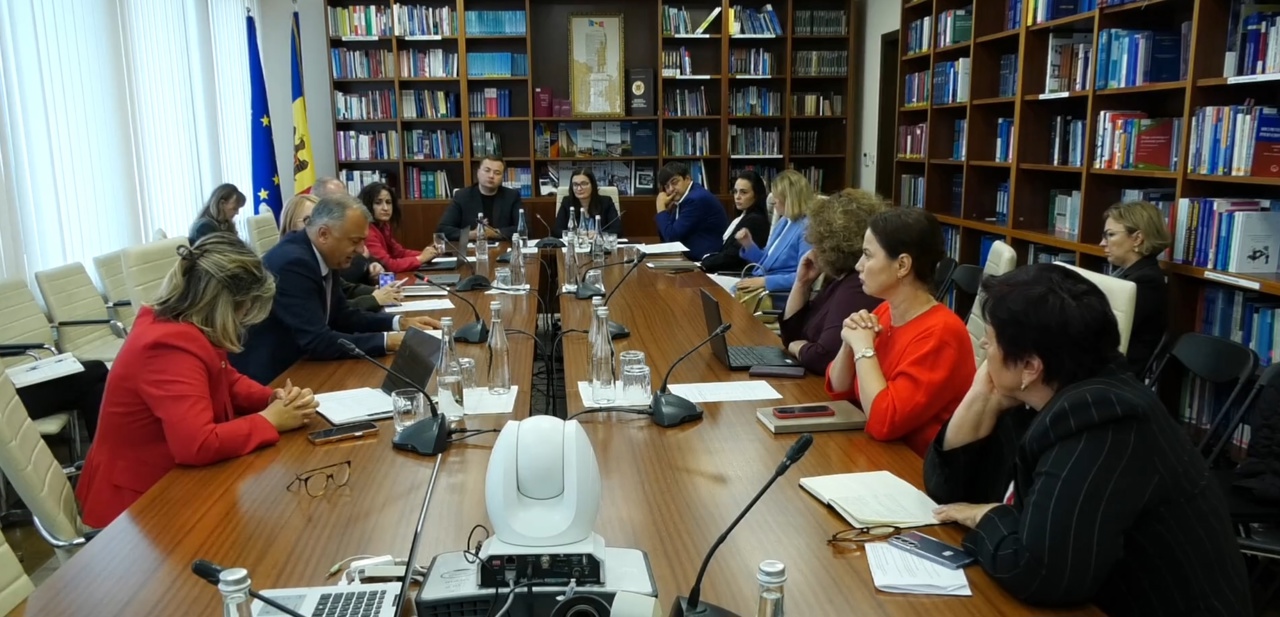
The government is working to ease tensions with farmers following a recent threat of renewed protests, which may involve bringing tractors onto the roads. On September 14, the "Farmers' Force" Association issued this warning. In response, Prime Minister Vasile Tofan met with farmers to find a "balance" that would provide support—such as bank lending—while also reducing inspections.
During discussions with the Prime Minister, farmers called for expanding long-term lending mechanisms designed specifically for agriculture. They also sought solutions for debt restructuring, including concerns such as enforcing guarantees against sureties, applying an enforcement moratorium, and bailiff fees.
In response, Prime Minister Vasile Tofan emphasized the need to strike a balance between the financing needs of farmers and the interests of the banking sector.
"We must find a balance where banks are motivated to lend to the agricultural sector, while farmers have the necessary tools to finance their operations and protect themselves during difficult times. We need sustainable solutions that benefit both farmers and the financial system," the Prime Minister stated.
The meeting also addressed the need to simplify administrative processes, including the implementation of the "once-only" reporting principle and the streamlining of mechanisms regarding day laborers. The Prime Minister reaffirmed the Government's commitment to deregulation to eliminate unnecessary bureaucratic procedures.
Regarding farmers' concerns about field inspections, Vasile Tofan assured that he would instruct government agencies to ensure that checks are well-founded and do not create unjustified barriers to agricultural activities.
Discussions also included the reimbursement of excise duties on diesel fuel used in agriculture—a measure supported by the Government—as well as the optimization of current subsidy mechanisms for the sector.
The group will examine issues requiring legislative amendments or inter-institutional solutions during joint meetings with the relevant authorities. Meanwhile, dialogue with farmers' representatives will continue to translate proposals into concrete measures.
Furthermore, the "Farmers' Force" Association announced on September 14 that farmers may take to the streets again if Parliament does not reconsider the second reading of the fiscal policy regarding the VAT increase on cereals and oilseeds.
The organization considers this measure discriminatory compared to other European countries, where VAT rates range between 5% and 11%. Additionally, the association's executive director, Alexandru Slusari, highlighted a 75% rise in diesel prices between March and September and called for parliamentary hearings on the matter, citing risks to food security since cereals dominate the country’s arable land.
The fiscal and customs policy for 2027 passed its first legislative hurdle during the parliamentary session on September 10, being adopted in the first reading after hours of debate and disputes with the opposition. The document is set for examination in the second reading, during which MPs may submit amendments.
Most provisions will take effect on January 1, 2027, except for the VAT applied to parcels, which will take effect on October 1, 2026, and the reduced rate for natural gas, which will be introduced on April 1, 2027.