Experts say Kremlin aims to weaken Moldova
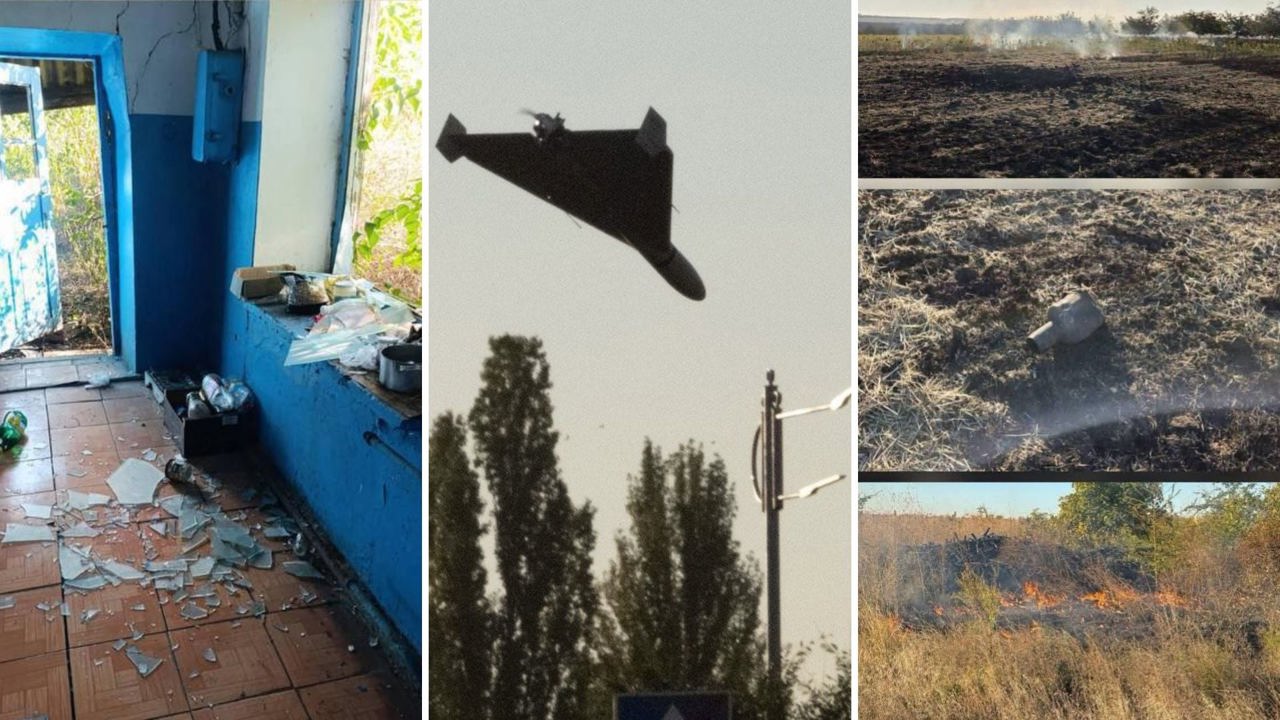
The mounting pressure and increasingly frequent drone incidents in the Republic of Moldova's airspace are part of a broad Kremlin strategy of intimidation. Analysts warn that these actions have a clear objective: transforming Moldova into a weak, vulnerable state lacking the capacity to respond to regional challenges.
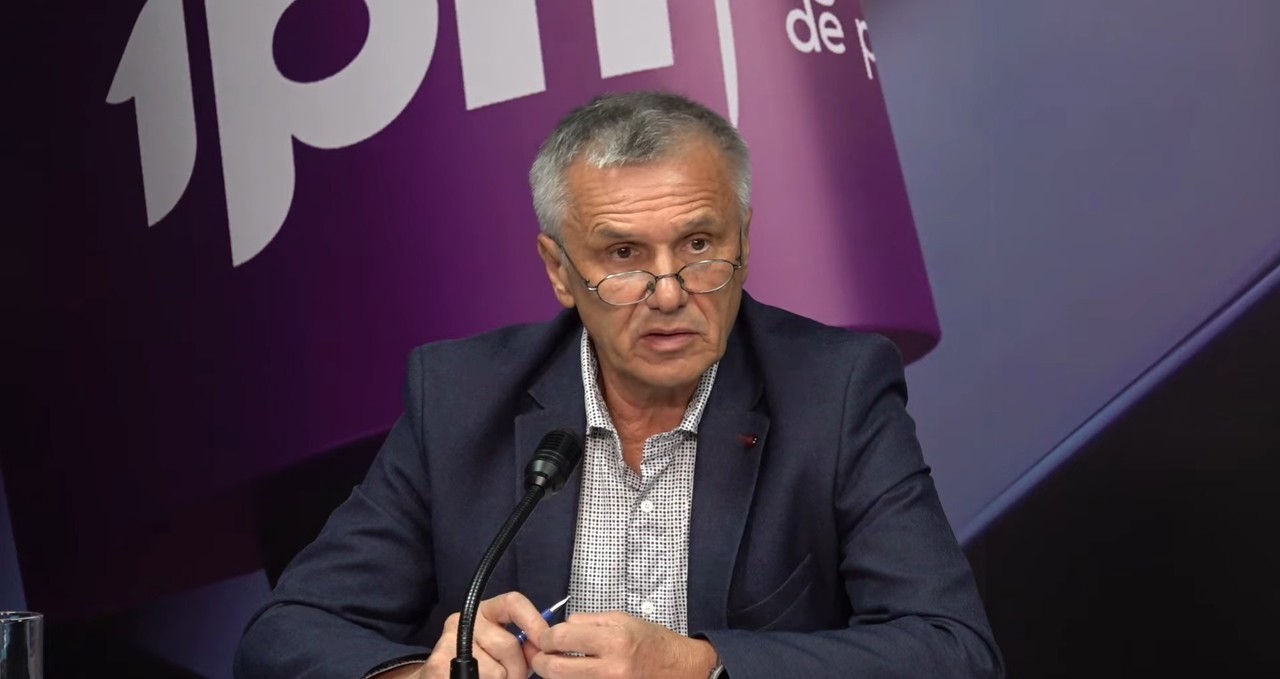
"Hybrid warfare is a modern conflict strategy that simultaneously combines conventional military means with non-military, asymmetric, and subversive tools. The aggressor state's primary goal is to destabilise, weaken, and manipulate the target state by attacking not only its military capabilities but, above all, its economic institutions, social cohesion, and public perception," explained political analyst Igor Boțan during a public debate organised by IPN on Monday, October 5.
The analyst pointed out that the United Nations Charter prohibits such actions, which stipulates that "the use of force or the threat of force against the territorial integrity or political independence of any state is prohibited."
Hybrid warfare typically unfolds in a so-called "gray zone"—an ambiguous space falling below the threshold of a formal declaration of war. The strategic objective is for the aggressor to penetrate the target country's information space and become a toxic actor in its domestic politics.
Warfare affects neighboring countries
In this context, the Russian Federation's threats against the Republic of Moldova are not intended to warn Chișinău of an imminent attack, argues Laurențiu Pleșca, a senior policy researcher at the Romanian Center for Russian Studies. "These threats serve primarily as a tool of pressure—often involving limited resources for a state like the Russian Federation—aimed at a specific goal: turning the Republic of Moldova into a weak, self-limiting state on the verge of collapse," the expert stated.
Pressure on the Republic of Moldova has intensified significantly as the war has escalated over the past four and a half years, compounded by the fact that the country shares the longest border with Ukraine.
Consequently, the expert argues that as combat tactics evolve, their consequences spill over into neighboring territories, creating a snowball effect.
"Given the Republic of Moldova's extensive border with Ukraine, we certainly cannot view Chișinău as the capital of a state unaffected by this conflict. We are facing a security crisis that hinders investment in a country so close to the front lines. We are also facing an energy crisis that impacts national economies and the ability of citizens to pay their bills," commented Laurențiu Pleșca.

The key figures who have threatened the Republic of Moldova are Russian Foreign Ministry spokesperson Maria Zakharova and Deputy Foreign Minister Mikhail Galuzin. The language these officials use creates a pretext for potential escalation and intensification of the conflict in the region.
"We are talking here about laying the groundwork—a sort of 'casus belli' (cause for war)—aimed at the Republic of Moldova. We are witnessing direct pressure on the authorities and the local political landscape from the Russian Federation's designated ambassador to Chișinău, Oleg Ozerov. He holds discussions in both Tiraspol and Comrat, presenting himself as an actor deeply involved in domestic politics," Pleșca noted.
Vulnerable neutrality and the "Russian world"
One of Galuzin's notable statements is that "Russia will take decisive measures to protect Russian citizens and compatriots in the Transnistrian region" in the event of a military attempt to intervene in that area.
Such threats must be analyzed within a broader context—one in which the Kremlin seeks to restore the former empire—suggests Alexandru Tănase, former President of the Constitutional Court. "What does Russia actually want in this region? I believe that both the war in Ukraine and the threats against the Republic of Moldova follow the same logic. Vladimir Putin seeks a reconfiguration of spheres of influence. He wants a new agreement—something akin to a new Yalta—that would formalize the Russian Federation's right to a special mandate over the former Soviet republics, perhaps with the exception of the Baltic states, given that they are already members of the North Atlantic Alliance," Tănase predicted.
Ultimately, the Republic of Moldova is extremely vulnerable, as it lacks the military capacity to resist an attack. Nor would its neutral status offer protection against a potential invasion.
"In the 1990s, the neutrality clause allowed us to build certain international relationships, but over time, it fostered a mindset suggesting that if we were neutral, we didn't need an army. Now, we find ourselves completely unprotected in the face of danger. Russia is well aware of this reality. In this context, I believe that the drones directed into the territory of the Republic of Moldova are deliberate provocations," the constitutional law expert opined.
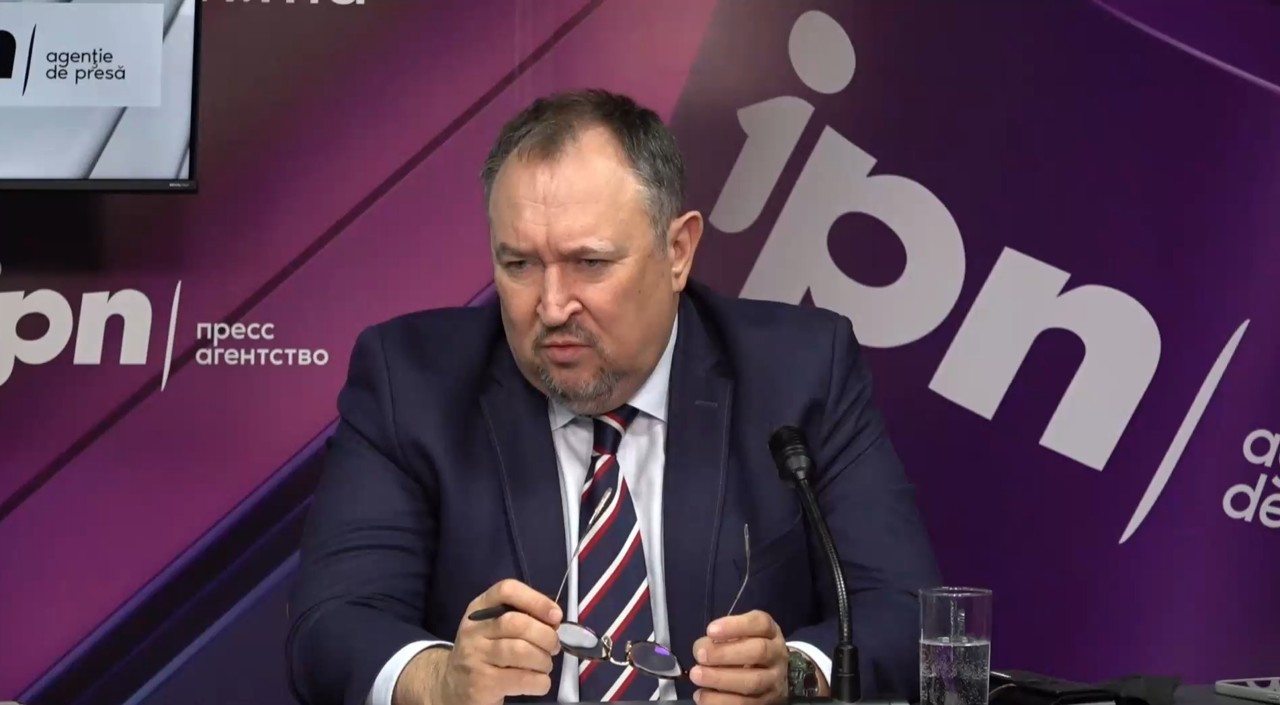
At the same debates, political analyst Igor Boțan drew attention to a principle that Russian President Vladimir Putin systematically applies in occupied territories when he intends to launch a war in a neighboring country—a principle known as sobiranie russkikh zemel (the gathering of Russian lands).
"Through these actions, Russia is taking back the gifts the Russian people bestowed upon the former Soviet republics. These are, therefore, subtle yet very clear threats. And we all understand what is meant by 'gifts of the Russian people.' Thus, the anchors Russia left behind via separatist regimes—the Transnistrian region, Crimea, Abkhazia, South Ossetia, Karabakh—all these separatist enclaves were subsequently used by Putin to rebuild what he calls the 'Russian world,'" Boțan added.
A new escalation of the war between Russia and Ukraine
Another type of threat voiced by the Kremlin suggests that the Republic of Moldova has lost its sovereignty, effectively becoming a logistical hub for supplying the Ukrainian army in its conflict with Russia—a status that, according to Moscow, would justify treating the country as a potential aggressor and a legitimate target.
"The message is being widely disseminated, and these threats are well known. Behind the accusations of Russophobia—whether regarding the name of the language, the history curriculum, the shutting down of propaganda outlets, or the banning of 'agents of influence' from entering the country—all these actions are viewed as offenses against the Russian Federation," explained Laurențiu Pleșca.
"There is no political group in the Republic of Moldova that promotes xenophobia or Russophobia. No militaristic parties exist, nor do any politicians espouse nationalist rhetoric or anything of the sort. Consequently, the very premise—that the Republic of Moldova is inherently hostile to the Russian Federation or its citizens—is completely false," added Alexandru Tănase.
Drones that (do not) attack the Republic of Moldova
Drone overflights and explosions near local communities across the country represent another threat to national security. Although Russia does not acknowledge these attacks, recovered debris indicates that the aircraft belong to the aggressor state. "We are told that these [objects] are landing haphazardly on the territory of the Republic of Moldova because the Russian Federation has no interest in provoking or attacking the country. Of course, there is a logical explanation, and we need to understand where they are actually coming from and why these attacks have become more frequent. We are currently witnessing a new escalation of the war between Russia and Ukraine. Russia is launching massive attacks on southern Ukraine, including Danube ports located just a few kilometers from the Moldovan border," Pleșca argued.
All these incidents affecting the territory of the Republic of Moldova represent a major security issue that should spark a broad public debate. Furthermore, the overflights serve as a warning signal for the authorities and a source of encouragement for a certain segment of the opposition, the experts concluded.