Moldova is essential for a strong Eastern Flank, say experts at the Moldova Security Forum 2026
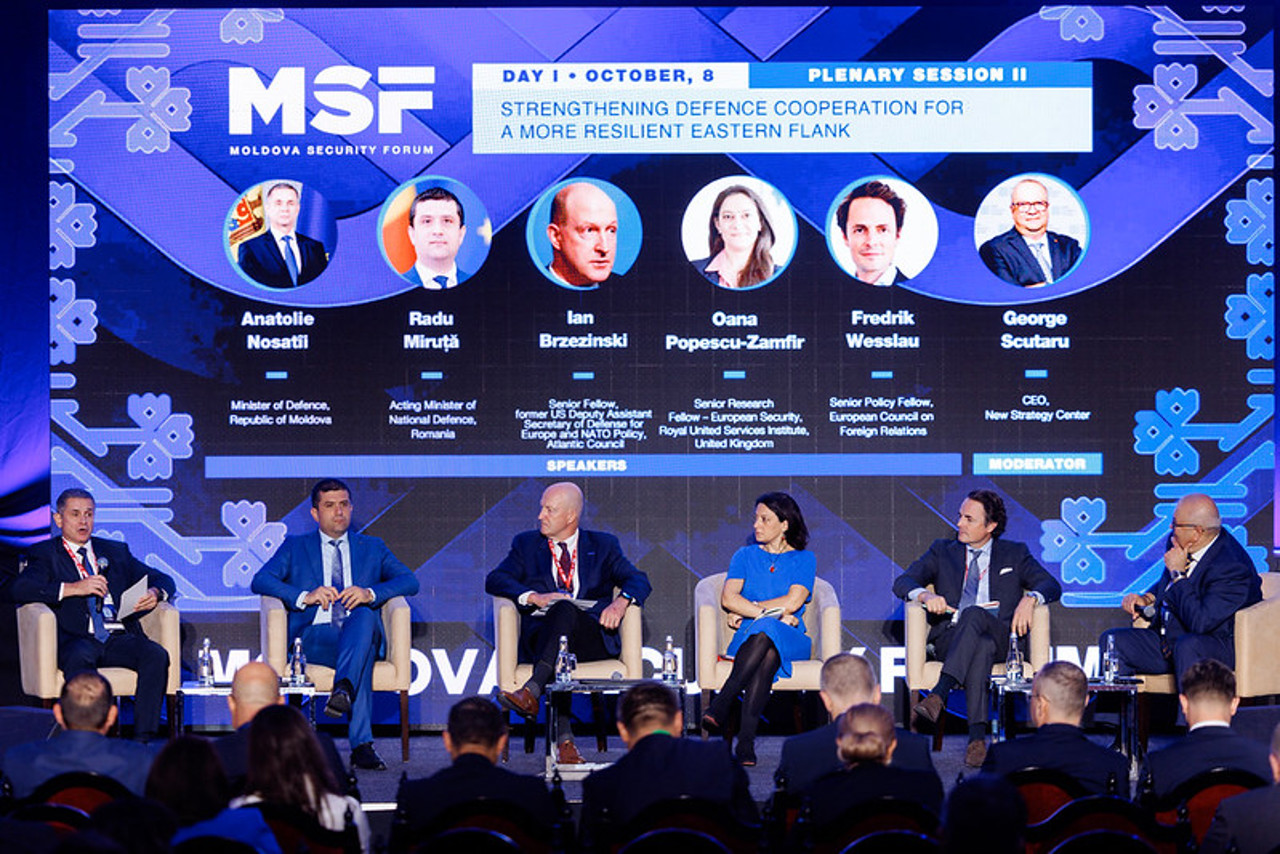
European security no longer stops at the European Union's borders; it depends directly on the Republic of Moldova's resilience and the support it provides to Ukraine in the face of Russian aggression. At the same time, hybrid attacks and drone incursions into Moldovan territory constitute clear tactics of intimidation, according to experts gathered at the third edition of the Moldova Security Forum 2026, who emphasize that defending the Eastern Flank is a shared responsibility of the entire Euro-Atlantic bloc.
Military forecasts point to an intensification of armed clashes
The war along the Republic of Moldova's borders has severe consequences, affecting the entire Black Sea region and directly influencing economic and energy stability. Therefore, the security of countries within the Eastern region is interdependent and requires collective, rather than individual, strengthening.
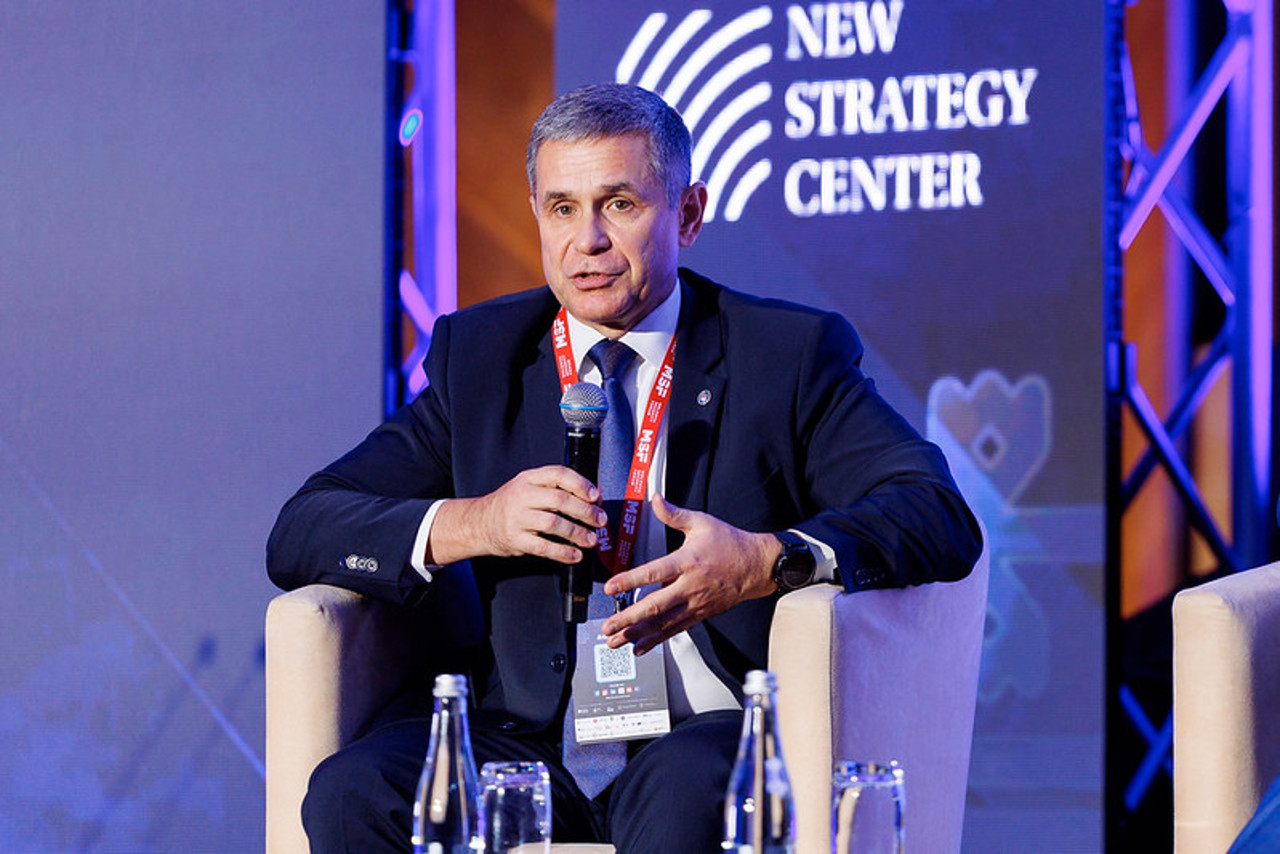
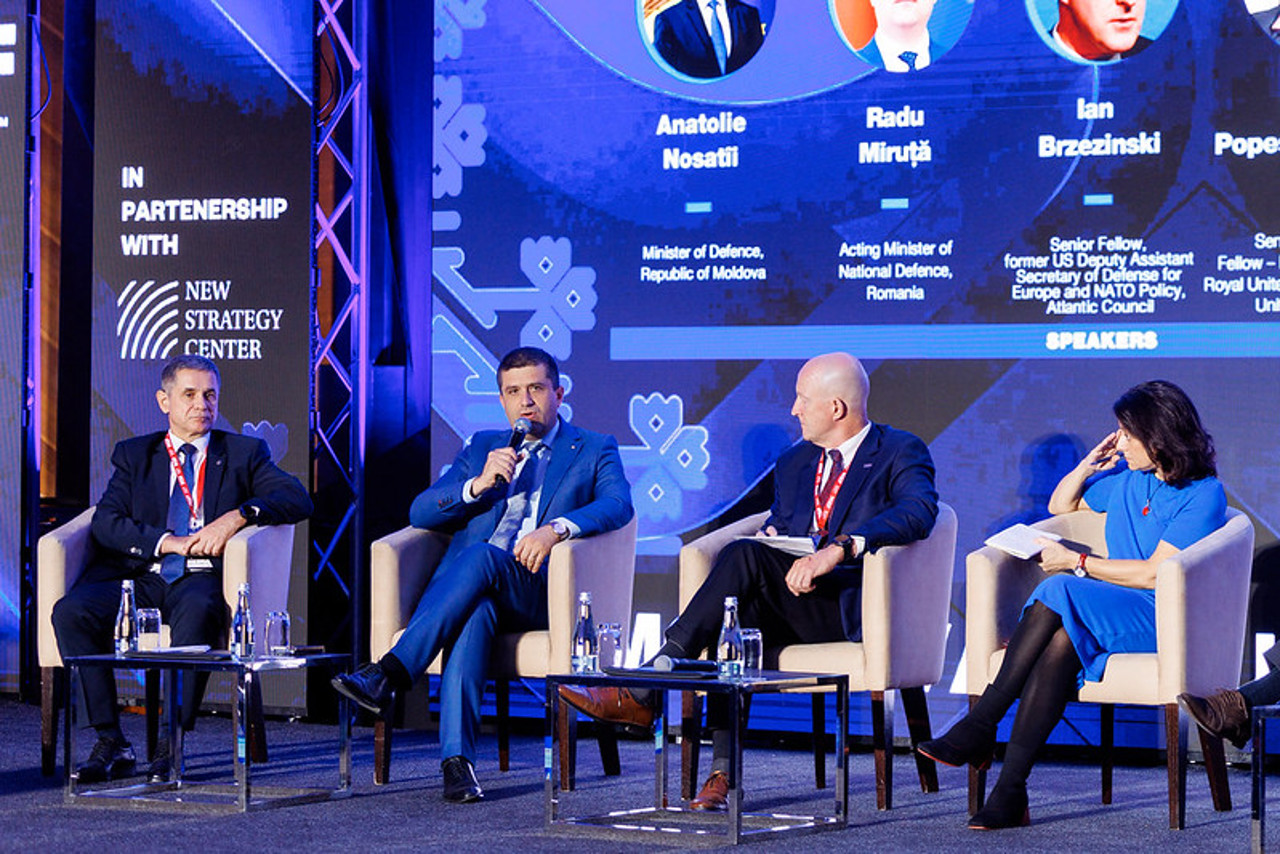
"The Republic of Moldova is landlocked, yet we are part of the Black Sea security region. Over the past five years, with a war on our doorstep, we have seen consequences that affect the entire region. I would describe security on the Eastern Flank as indivisible. Russia's war has altered Europe's security architecture and demonstrated just how interconnected each country's security environment is," stated Anatolie Nosatîi, the Minister of Defense of the Republic of Moldova, during the forum.
Analyzing the evolution of the conflict, the official warned that military forecasts do not point to a quick resolution, but rather to an intensification of armed clashes. This could generate additional risks for Eastern Europe. "As career military personnel, we always plan for the worst-case scenario and devise strategies for unpredictable situations. There is no quick fix in the near future. According to our estimates, hostilities are expected to escalate, which will significantly impact the region. To address these challenges, we must seek solutions, generate new ideas, and then attempt to implement them in our respective capitals," Nosatîi explained.
Russia opposes the arming of the Republic of Moldova
Regarding the strengthening of defense capabilities, the minister explained that allocating resources to the military sector is a constant challenge, particularly given that the Russian Federation employs hybrid pressures and intimidation tactics to obstruct the democratic path and sow division within society.
"Investing in defense is no easy task. In our case, it is certainly even more complex, as Russia’s hybrid pressures aim to divide society by instilling fear. The narrative is that if we proceed with this reform, we will end up in the same situation as Ukraine. The Russian Federation wants our institutions to remain weak and lack capacity, thereby undermining support for reforms," the Minister of Defense stated.
The national effort to modernize defense capabilities is closely linked to cooperation with Western strategic partners. Without external support, the Republic of Moldova would not have been able to make such significant progress in bolstering its air defense. "We need equipment to counter those Shahed drones; after all, we must also be prepared for the Geran, and we do not know what tomorrow holds. So, it is not easy, but working together offers a way to access the resources needed to develop the necessary capabilities. Protecting lives and ensuring the safety of our citizens is important. As the president noted, 'The Republic of Moldova is a peaceful country,'" concluded Minister Anatolie Nosatîi.
Romanian Defense Minister: "Russia is attacking, Ukraine is defending, and we are just a few steps away"
As the conflict evolves along the alliance's eastern borders, Romania's acting Minister of National Defence, Radu Miruță, emphasised that the war is unfolding on two parallel fronts, with conventional military means accompanied by an aggressive campaign to manipulate public opinion.
"The current situation reveals two levels to this war. The first involves the use of military capabilities for defence or offence—a conventional military war—but there is another level focused on disinformation. It is a war waged through disinformation. And while we combat this disinformation, the very entities orchestrating and instigating it are the ones increasingly influencing the population," Radu Miruță noted.
In this context, the official stressed the need to include all frontline states in security planning, while also highlighting the Republic of Moldova's essential role on the eastern flank.
"Returning to the situation on the front, we cannot discuss such a flank without mentioning and including all the frontline countries. Let it be clearly stated: Russia is attacking, Ukraine is defending, and we are just a few steps away. Russia must be compelled to respect international agreements and international law. We cannot speak of a strong eastern flank without including the Republic of Moldova," the Romanian minister stated.
"Russia is waging war against the West"
Russian aggression is not an isolated conflict against a single state, but rather a systematic offensive against the entire global democratic order and the security rules established over recent decades, according to Ian Brzezinski, an American security policy expert.
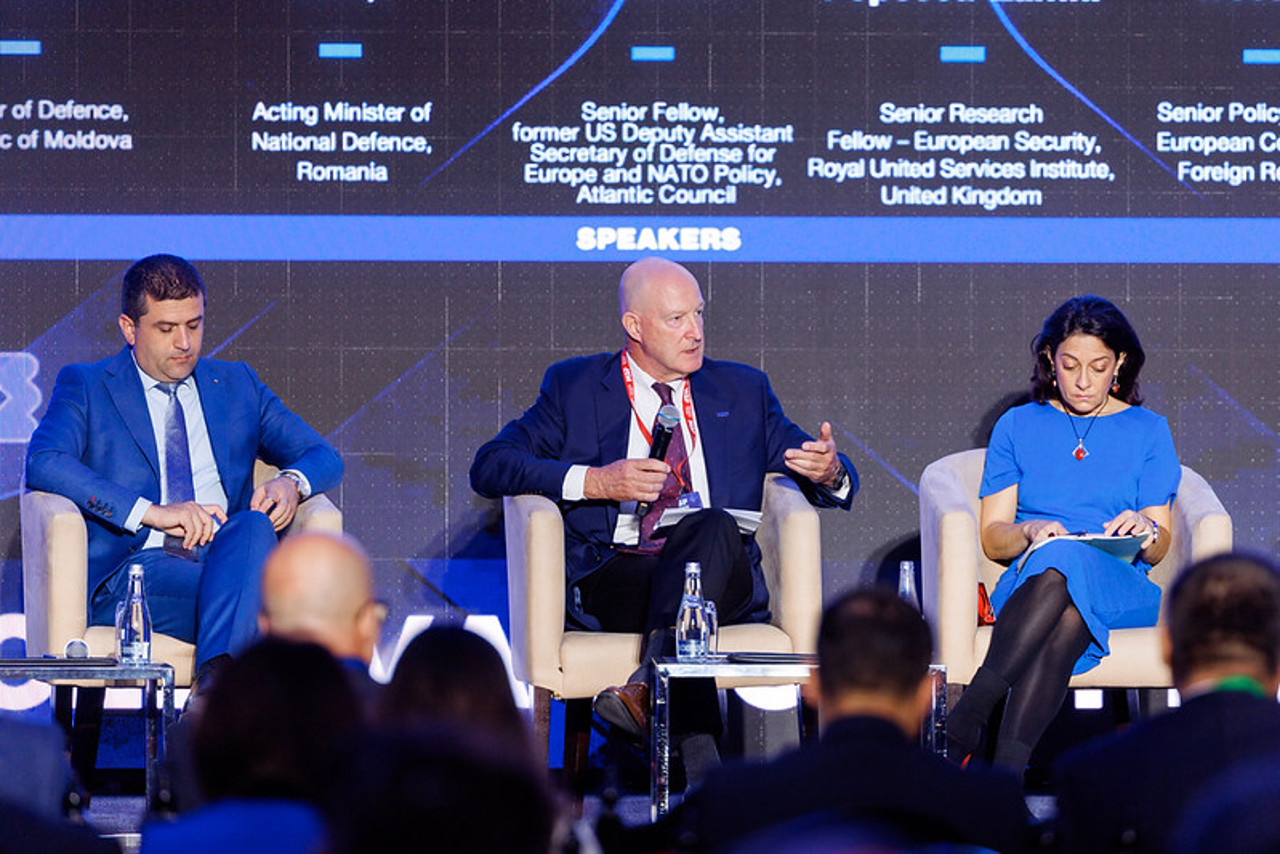
"We must consider the state of deterrence and response capabilities in the Black Sea region, but we must also look at what is happening on the European continent. I will start by stating the obvious: Russia is not waging war solely against Ukraine. Putin is at war with the West, with the Western security architecture established after World War II, and also with NATO," stated Ian Brzezinski, a fellow at the Scowcroft Center for Strategy and Security and a former U.S. Deputy Assistant Secretary of Defense for Europe and NATO Policy.
In his view, Moscow's actions aim both to restore hegemony over former Soviet republics and to neutralize the Western alliances that block these expansionist ambitions. "Putin’s objective is clear; he has two sets of goals. First, he wants to restore Russian control over the territory of the former Soviet Union by intensifying aggression against the Republic of Moldova. The second key objective is to destroy or render dysfunctional the security architecture built over eight decades. He wants to destroy NATO, and the reason is clear: this organization destroyed his beloved Soviet Union. Currently, this community prevents him from subjugating Ukraine, Georgia, Moldova, and other states," the American expert stated.
NATO has the capacity but lacks the will
At the same time, Brzezinski criticized the lack of firmness among Western states in deterring hybrid attacks, noting that NATO possesses overwhelming economic and military superiority over the Russian Federation.
"We must acknowledge that we are currently in the midst of a failure to deter the aggressor, and we are witnessing escalating consequences: criminal and information attacks, strikes against critical infrastructure—including cables in the North and the Baltic Sea—attempts to derail trains in Poland, drone attacks on civilian airports, and assassination attempts. We have the capacity, but we lack the will. NATO has a GDP of $6 trillion; Russia has $2 trillion. How much does NATO spend on defense? 1.5 trillion dollars. NATO is better prepared; we are far more capable than Russia, and it is striking how the Russians have got away with it so far. We need to change our approach to deterrence," the American researcher urged.
"It is a myth that small countries can be easily seized by Russia"
Security analyst Oana Popescu-Zamfir criticized the distinction drawn between conventional and hybrid warfare, explaining that Russian tactics pursue concrete military goals across the entire continent.
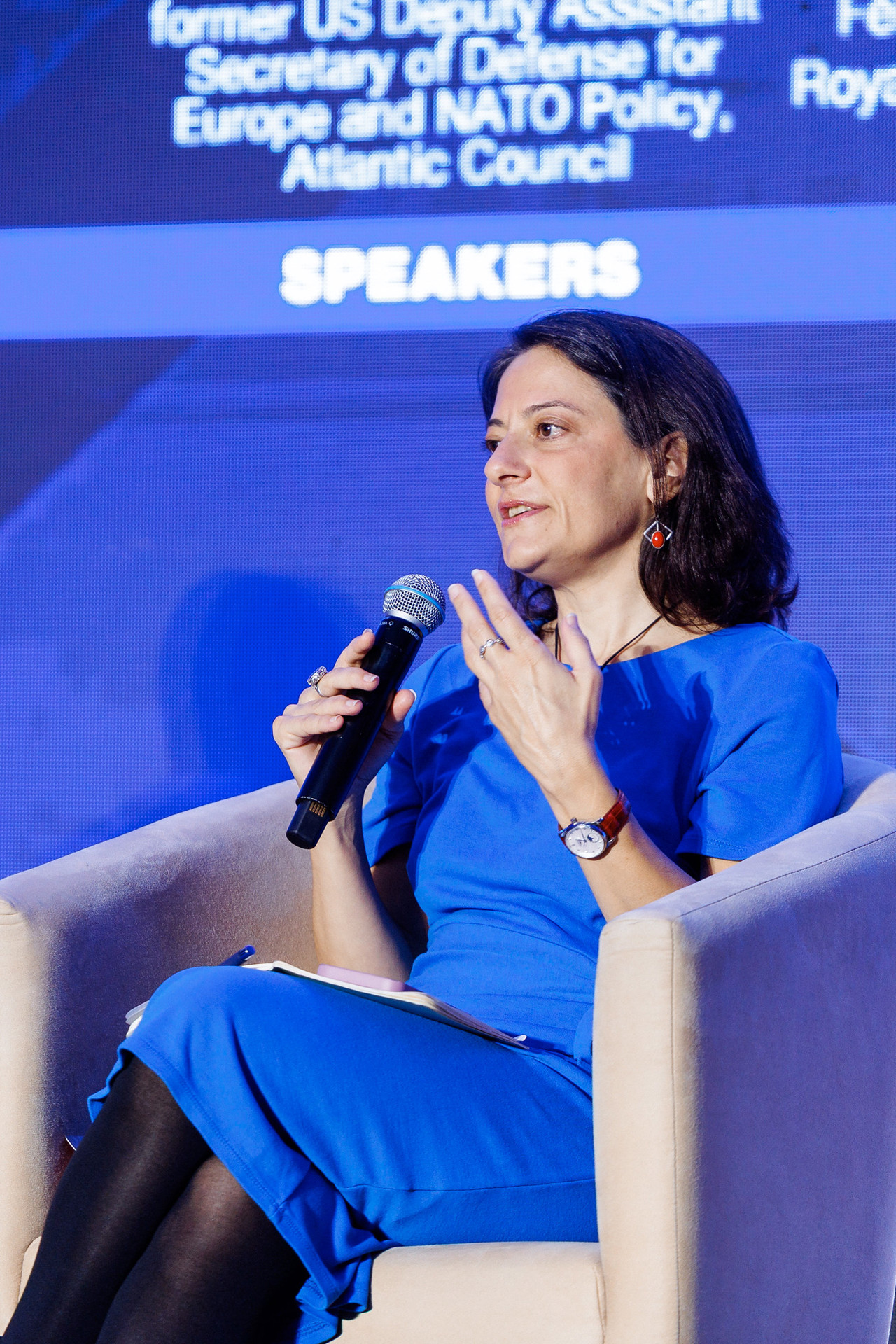
"I do not agree with the current separation between hybrid warfare and conventional warfare. We keep emphasizing this distinction. I do not deny that differences exist, but Russia's hybrid warfare seeks to achieve military objectives," stated the researcher from the Royal United Services Institute (RUSI) in the UK.
Regarding the geopolitical positioning and vulnerabilities of small states on the Eastern Flank, Oana Popescu-Zamfir highlighted clear parallels between the Republic of Moldova and the Baltic states.
"If we look at the Eastern Flank, Moldova shares a great deal with the Baltic states. The first thing they have in common is that they are often—mistakenly—described as territories that could easily be seized by Russia because they lack strategic depth, and they are frequently lumped together simply as recipients of defense assistance. Yet, despite these factors, these countries have taken admirable steps to strengthen their resilience. I believe Western nations have lessons to learn from the countries on the Eastern Flank," noted Oana Popescu-Zamfir.
The researcher emphasised that the entire Western bloc must share responsibility for defending against Russian attacks, not just the countries on the eastern border. "Countries on the eastern flank have the right to ask NATO for protection. The burden of defense must not fall exclusively on the shoulders of the eastern flank. Everyone should benefit from this shield. Russian hybrid attacks have already become a reality across Europe," the security expert concluded.
Russia’s war does not stop at Ukraine’s borders
Fredrik Wesslau, an expert at the European Council on Foreign Relations, issued a similar warning. He highlighted a flawed approach regarding defensive lines, emphasizing that the Russian threat should not be viewed merely as a strictly defined, isolated geographical boundary.
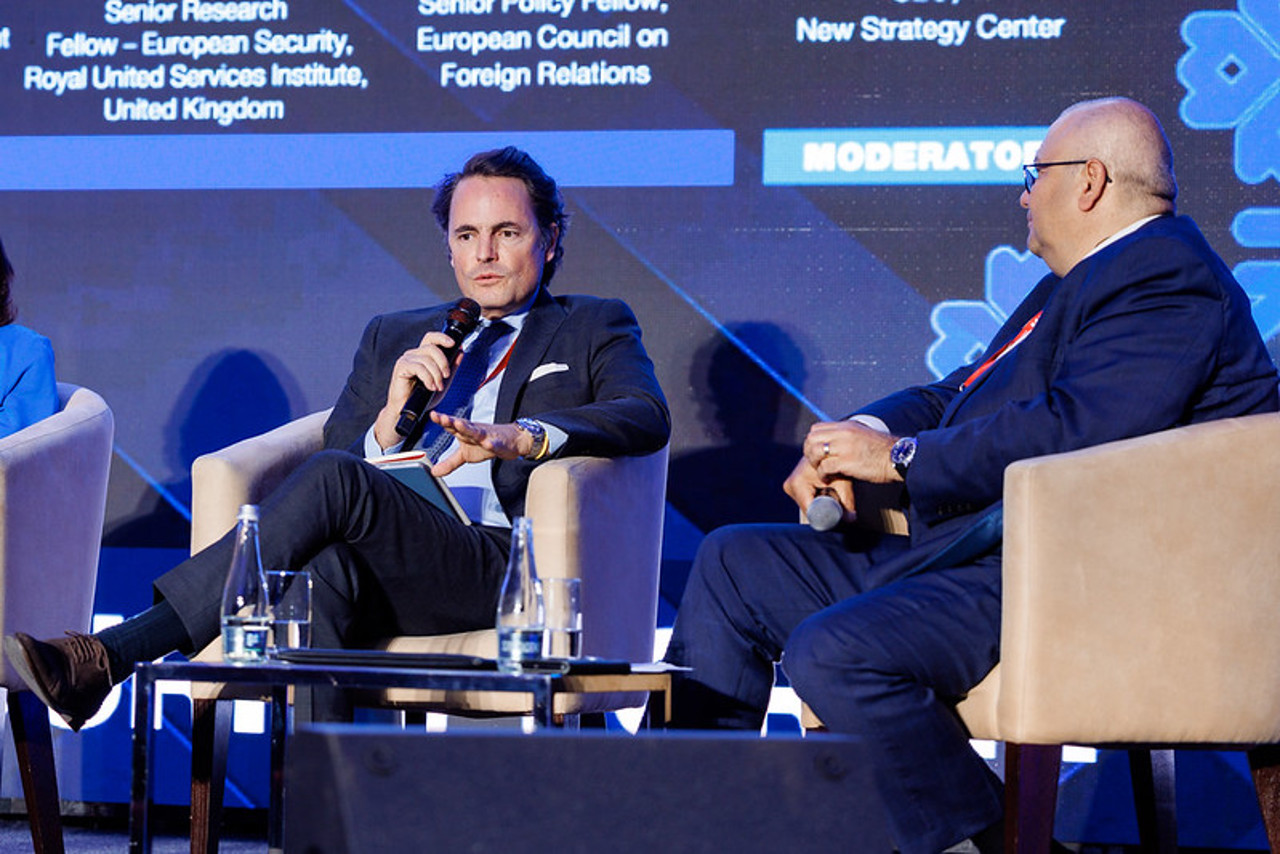
"We tend to think of it as a line running from north to south—believing that if we secure the West, we are safe, and what happens in the East doesn't concern us. This is a dangerous mistake because it leads to erroneous political conclusions. Russia’s war in Ukraine does not stop at Ukraine’s borders. Russia is at war with Ukraine, Moldova, and Europe—albeit on different fronts," Wesslau noted.
Analyzing battlefield developments, the researcher explained that the difficulties Russian troops face on the front line are prompting them to shift tactics and increasingly target the civilian sector.
"When looking at the security situation, we must consider where the true front lines lie. Ukraine is defending itself against Russian aggression—even reclaiming territory—while Russian lines are weakening, logistics hubs are being captured, and the range for drone strikes has expanded. Consequently, as it becomes harder for Russia to advance along the front line, it has become more active in targeting civilian areas," the expert explained regarding the changes on the battlefield.
Drones aim to exert psychological pressure on citizens
Regarding the Republic of Moldova, Fredrik Wesslau noted that Moscow's initial plans were thwarted by Ukrainian resistance, forcing the Kremlin to resort to internal destabilization operations.
"It is clear to us that Putin's plans from 2022 included the Republic of Moldova, but Ukrainian forces halted the Russian advance, preventing them from reaching the Transnistrian region and Moldova. Furthermore, the Russians attempted a coup d'état, sent Wagner forces there in 2023, and waged an undeclared war against the Republic of Moldova: they interfered in elections, tried to sow political discord, and engaged in acts of sabotage and disinformation campaigns," the expert listed.
The expert maintains that recent developments, such as airspace violations, represent a deliberate continuation of this strategy of psychological intimidation directed at Moldovan citizens.
"We are seeing an increase in the number of drones entering the territory of the Republic of Moldova. This is no coincidence; it is simply a continuation of the escalation of Russian actions in Ukraine. The drones are not intended to destroy infrastructure. The goal is to frighten Moldovans—to convey the message that unless they side with Russia, they will end up in a state of war like the one in Ukraine. That is the tactic behind these drone incursions," Fredrik Wesslau explained.
The Moldova Security Forum is an international dialogue platform dedicated to security challenges facing the Republic of Moldova, the Black Sea region, and Europe; it is organized by the Institute for European Policies and Reforms (IPRE) with the support of over 40 partners from Moldova, the European Union, and the United States.
The third edition, held this year on October 8 and 9, brings together nearly 100 speakers from more than 20 countries. The agenda includes discussions on hybrid threats, the war in Ukraine, regional security, drone defense, and democratic resilience.
This year’s theme reflects how the Republic of Moldova contributes to its own security and the region's by strengthening democracy.