Moldovan president says Russian hybrid attacks exploit living costs
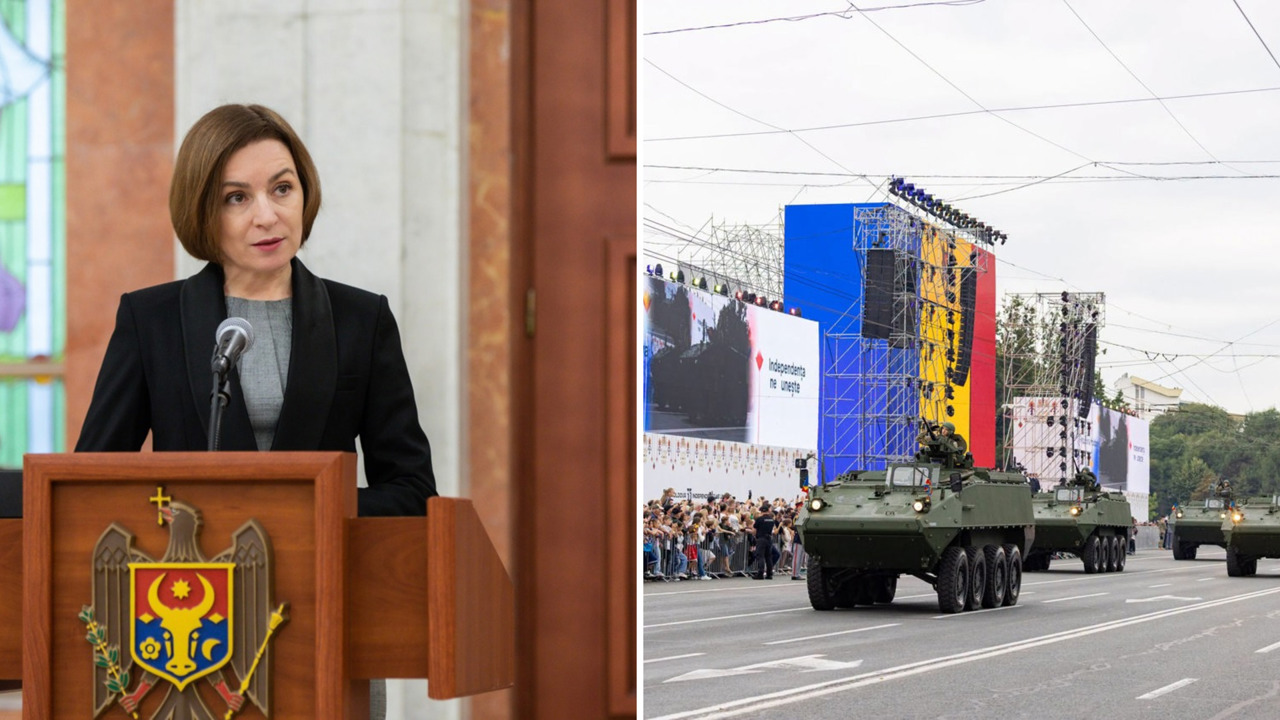
Constitutional neutrality offers no protection against Russian aggression, Moldovan President Maia Sandu warned, stressing that the Kremlin is actively weaponizing rising living costs and economic anxieties to undermine trust in democratic institutions.
Speaking in an interview with CaleaEuropeana.ro, the head of state emphasized that Moscow has continually violated Moldova’s constitutional status by maintaining an unauthorized military garrison on the left bank of the Dniester.
“It is not, and has never been, a shield,” Sandu said. “Even before this war began, Russia violated Moldova’s neutrality by illegally maintaining its army on Moldovan territory against the will of our people.”
Strengthening national defense and Western partnerships
Sandu noted that persistent regional instability—exacerbated by the war in neighboring Ukraine and recurring Russian drone incursions across Moldovan airspace—makes air defense a top priority. She stressed that constitutional neutrality does not bar Chisinau from reinforcing defense ties with NATO and European partners.
“We have a close partnership with NATO and several NATO member states, and we are grateful to all who assist us, particularly Romania,” Sandu stated, describing Bucharest as an essential pillar of national defense resilience.
Kremlin cognitive warfare targets economic vulnerabilities
Beyond external military risks, Sandu warned that Moscow is running a sophisticated, decentralized influence campaign across Telegram channels, media outlets, and pro-Kremlin lawmakers in Parliament to amplify public dissatisfaction over soaring energy bills and inflation.
Natural gas tariffs have jumped approximately 80% compared to March levels, handing Russian psychological operations fertile ground to fabricate narratives and attack governance capacity. Sandu characterized these destabilization tactics as an enduring “cognitive war” aimed at eroding social cohesion.
“Russian propaganda consistently exploits real grievances as well as fabricated situations to foster distrust in the state and undermine confidence in Moldova’s ability to cope with these challenges,” Sandu explained.
European integration drives structural overhauls
Despite public fatigue over economic turbulence, Sandu argued that the prospect of European Union membership provides the strategic anchor needed to push forward demanding institutional modernizations.
Among the primary initiatives is a sweeping territorial-administrative overhaul that aims to consolidate roughly 900 local town halls down to under 300, alongside merging 35 administrative districts into three broader regions, excluding the Gagauz autonomy.
Public opinion remains divided on national defense choices. A survey conducted between August 25 and September 9 by the CBS-AXA Center for Sociological Investigation and Marketing revealed that 45.2% of respondents still view constitutional neutrality as Moldova's most viable security option, even as nearly 84% believe the country is unprepared to repel foreign military aggression. The poll of 2,009 respondents, with a margin of error of ±2.2%, also showed that over 65% consider the EU and Romania vital partners for safeguarding national sovereignty.
Translation by Iurie Tataru
RELATED COVERAGE
- Maia Sandu warns: Moldova is Russia's testing ground for hybrid war on Europe
- Moldova: President Sandu warns of Russia's 'unprecedented' hybrid war
- NATO reaffirms partnership with neutral Moldova amid regional threats
- NATO has economic and military superiority over Russia, expert at the Moldova Security Forum