Edineț plans a billion lei investment and 1,000 new jobs to boost its economy
Edineț could become a regional socio-economic hub in the coming years, supported by investment estimated at one billion lei and the creation of more than 1,000 jobs. The municipality’s development strategy for 2027–2031, recently approved by local authorities, prioritises infrastructure upgrades and improved living standards. It aims to stem the outflow of residents and attract newcomers.
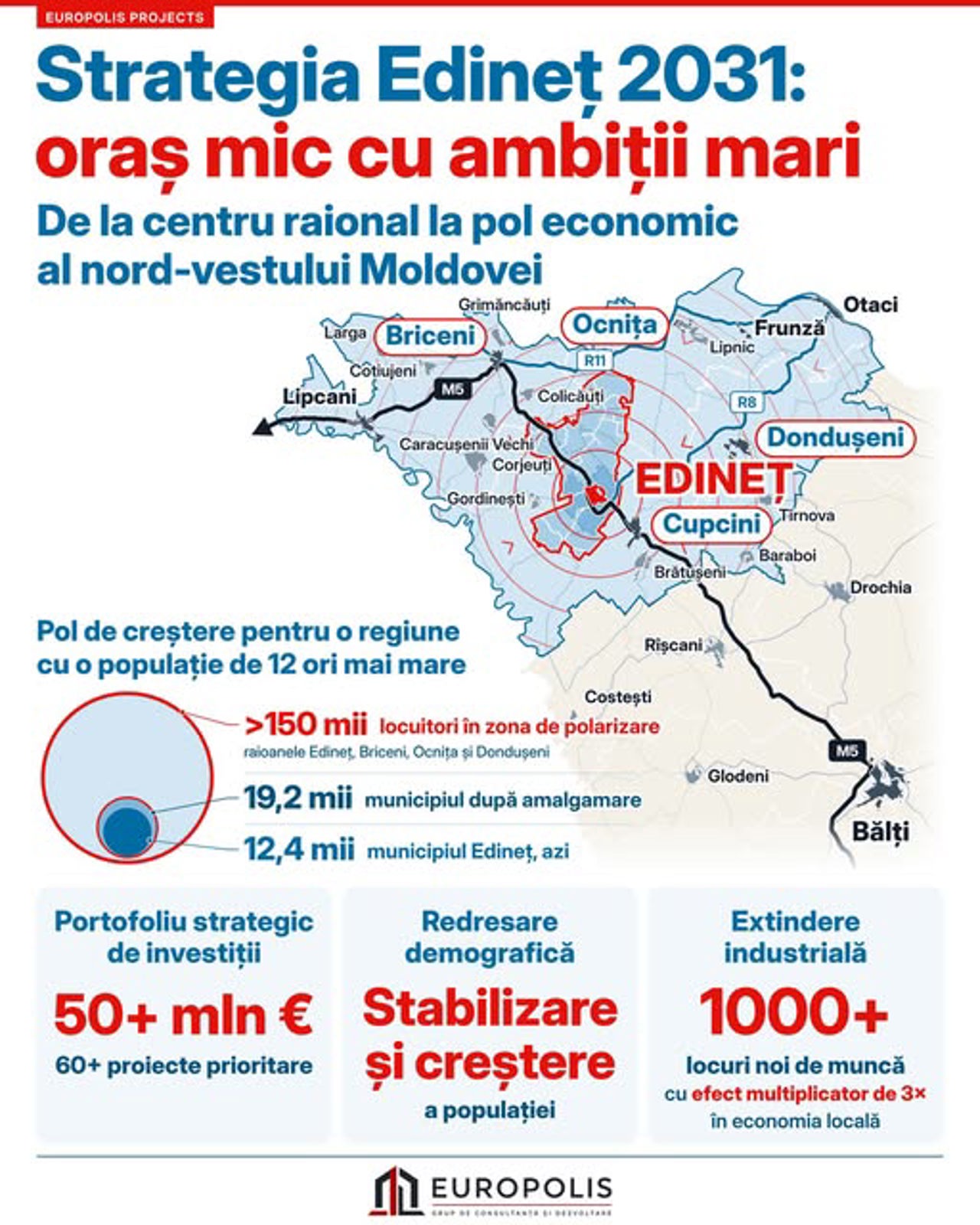
Before the merger, the municipality had a population of 12,400; after the administrative reform, it will reach 19,000.
Despite demographic challenges, the municipality has set out an ambitious plan to boost the economy.
The goal is for Edineț to eventually become the growth engine for a region of over 150,000 people—a region itself affected by migration and stagnation.
"It is an immense challenge," says economic expert Ghenadie Ivașcenco, emphasising that Edineț could become a strong economic hub, provided that two key priorities—industrialisation and the improvement of living conditions—are successfully leveraged.
First priority: Industrialization
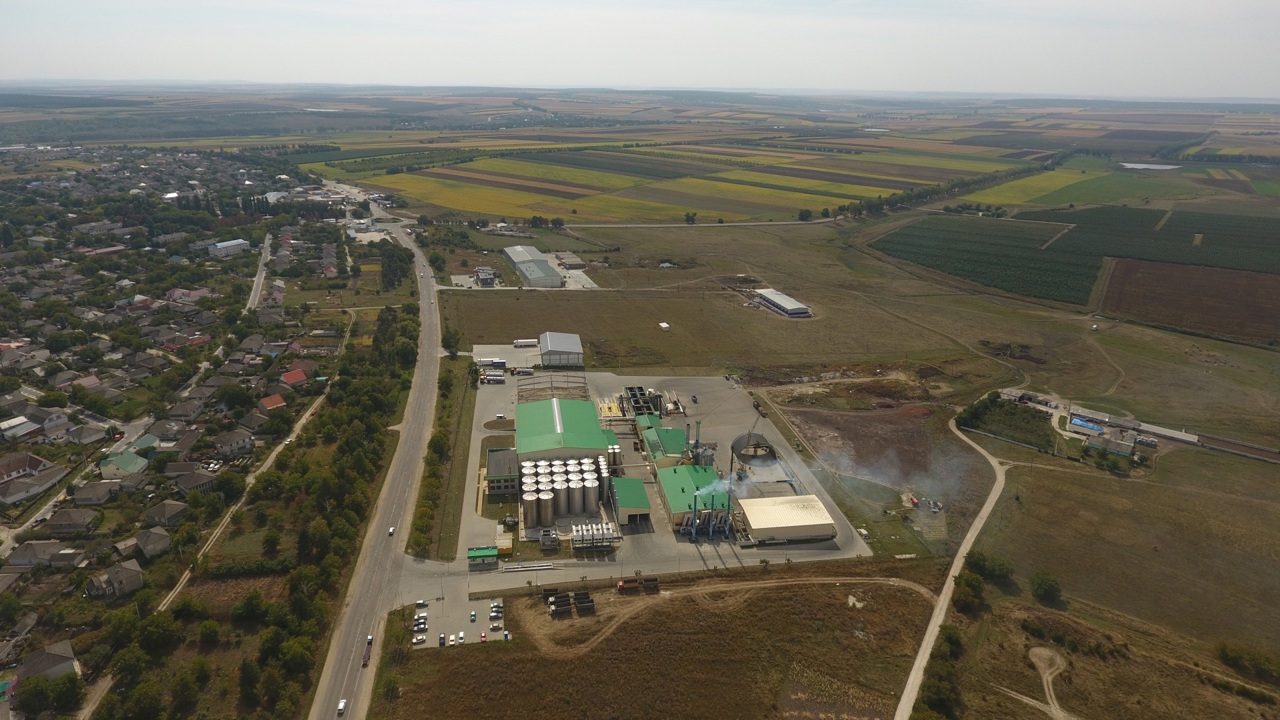
The Industrial Park has already attracted investments of approximately 20 million euros and created around 400 jobs. Furthermore, a British investor has decided to triple the capacity of their industrial wiring harness factory within the park over the coming years—a move that will generate several hundred additional, well-paid jobs.
The municipal strategy includes preparing and equipping 15 hectares of industrial land, constructing new industrial facilities, and expanding energy infrastructure.
"A few strategic investors can radically transform the municipality’s economy by bringing in better-paying jobs and generating orders for local businesses," the economist notes.
Second priority: Quality living conditions
To attract residents, the city must offer its citizens the best living conditions in the northwestern part of the country: well-maintained streets, reliable utility networks, convenient public transport, high-quality schools, and well-kept public spaces.
At the same time, the modernization of the city will boost the residential construction sector. The new General Urban Plan, combined with available land, provides the framework for residential projects aimed at local families, diaspora returnees, and regional professionals.
"All these measures should transform Edineț into a city where people choose to stay or settle—including those relocating from neighboring localities," commented Ghenadie Ivașcenco.
The goal of the strategy—published on the official website of the Edineț City Hall—is to build an economy where a significant portion of wages, consumer spending, and the workforce remains within the local area. For this reason, public support will be directed based on the number of jobs created and the level of salaries, rather than solely on companies' turnover.
Who will fund the strategy
Edineț is one of six municipalities designated as national growth poles, alongside Cahul, Comrat, Orhei, Soroca, and Ungheni.
This status grants it a regional role: to serve as a key hub for the northwestern part of the Republic of Moldova—specifically the Edineț, Briceni, Dondușeni, and Ocnița districts—which are home to over 150,000 people.
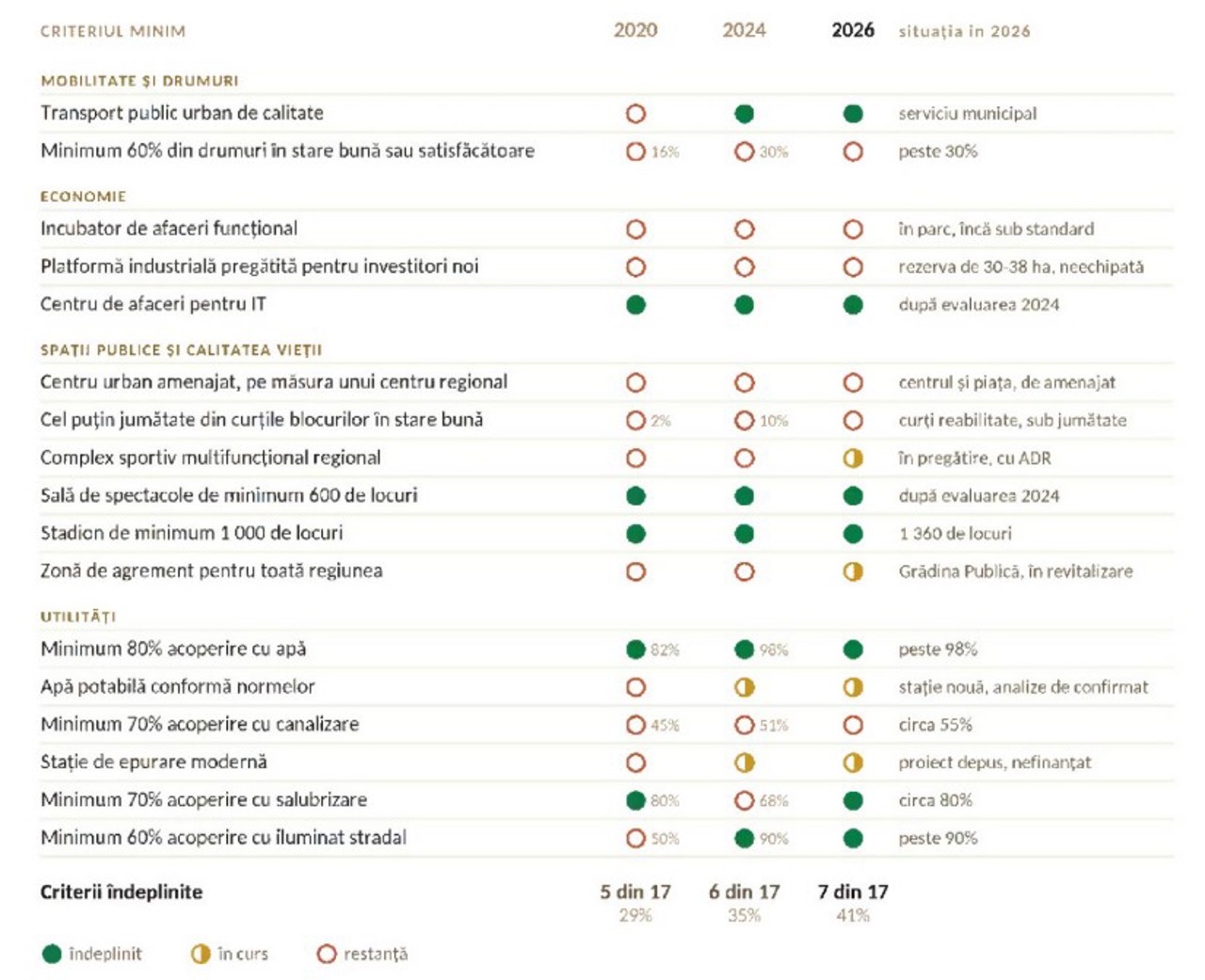
However, Edineț currently meets only seven of the 17 minimum criteria that define a growth pole.
In the 2024 interim assessment, the municipality met only six of the 17 criteria (35%)—the lowest figure among the six growth poles—compared to a national average of 52% or the 76% achieved by Orhei.
Tap water quality could become the eighth criterion met once the new treatment plant is commissioned and subsequent testing confirms the water is safe.
Areas where the city still needs to make progress include road quality, the business incubator, the industrial platform, the urban center, the improvement of residential courtyard spaces, and the sewage network.
The European Union’s future budget for the 2028–2034 period will open up significant pre-accession funding opportunities for the Republic of Moldova. This phase will represent a new test for Edineț.
Ivașcenco suggests that "preparing projects well in advance will play a decisive role." In fact, Edineț already possesses valuable experience in implementing projects supported by European funding.
At the same time, although the population will reach 19,200 inhabitants after the merger, a mere increase in numbers will not automatically translate into a stronger economy.
"Turning these ambitions into tangible results will require years of consistent effort. A sound strategy accounts for only 5% of success. The remaining 95% depends on the decisions made, the investments attracted, and the projects carried out, year after year," the economist concluded.
Four strategic challenges and five priorities
The development strategy for the municipality of Edineț for the 2027–2031 period outlines four strategic challenges and five clear priorities, each with its own allocated budget and implementation timeline.
The first challenge is to transform Edineț into a regional economic hub—one that supports over 3,600 jobs, attracts approximately 90 million lei in annual private investment, and provides 25 hectares of fully serviced industrial land.
The second challenge focuses on making the city an attractive place to live, through the construction of new residential buildings, the renovation of existing ones, and the expansion of services for families. The third challenge concerns municipal infrastructure, where the principle of “pipes first, asphalt second” will be applied. The goal is to connect 60% of households to the sewage network and bring 45% of roads into good condition.
The final challenge relates to decision-making transparency, which entails public reporting of expenditures and accurate asset inventory.
The aforementioned priorities focus on economic development and attractiveness; education, culture, sports, and community services; utilities; mobility and living conditions; the environment, energy, and climate resilience; efficient administration; and data and financing.