Moldova’s gender gap widens as enforcement lags
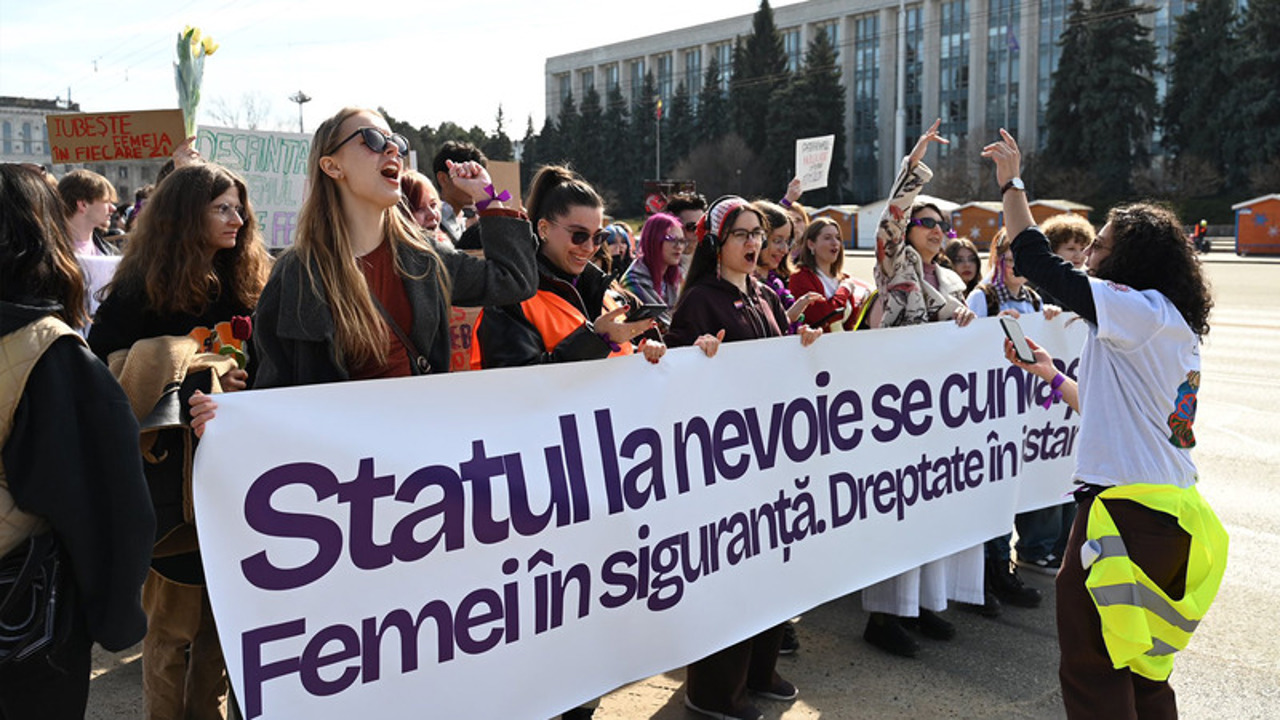
The Republic of Moldova has strengthened its gender equality laws, but weak enforcement continues to undermine progress on women’s rights, protection against violence and equal opportunities, Gender-Centru president Valentina Bodrug-Lungu said.
Legal progress, but implementation falls short
Gender equality is also relevant to Moldova’s European Union accession process, as it is addressed across all negotiation chapters.
“The Republic of Moldova has adopted a comprehensive legal framework on gender equality, the prevention and combating of domestic violence, and violence against women. This is recognised at all levels. In this respect, we are even ahead of many European countries. At the same time, significant problems remain with enforcement. Adopting laws does not automatically improve the situation. In this respect, we have lost ground,” Bodrug-Lungu said on Moldova 1’s Scaner programme.
She referred to the Global Gender Gap Index, published in September 2026, in which Moldova fell eight places, from seventh to 15th.
Support tailored to women’s needs
Bodrug-Lungu said gender equality requires more than legislation. It also depends on effective implementation, functioning mechanisms and accessible services, including for women in rural areas and vulnerable groups.
“We have a law on gender equality and a law on preventing and combating domestic violence and violence against women. We also have numerous strategies in health, education and the economy. The problem is implementation. In other words, on paper, everything looks good, but in practice, things leave much to be desired,” she said.
She also questioned the sustainability of initiatives aimed at supporting women, particularly those that depend on international partners and donor funding.
“We should remember that this ranking covers not only politics, but also health, education and the economy. In many of these areas, we do not meet the required criteria. We need to ask how sustainable this progress is if it depends exclusively on international support, external funding and donor assistance,” Bodrug-Lungu said.
In her view, support must reflect the different needs of women. Some need employment opportunities and professional development, while others require specialised services and social protection.
These include survivors of domestic violence, women with disabilities, Roma women and older women living in rural areas.
Women’s political representation faces challenges
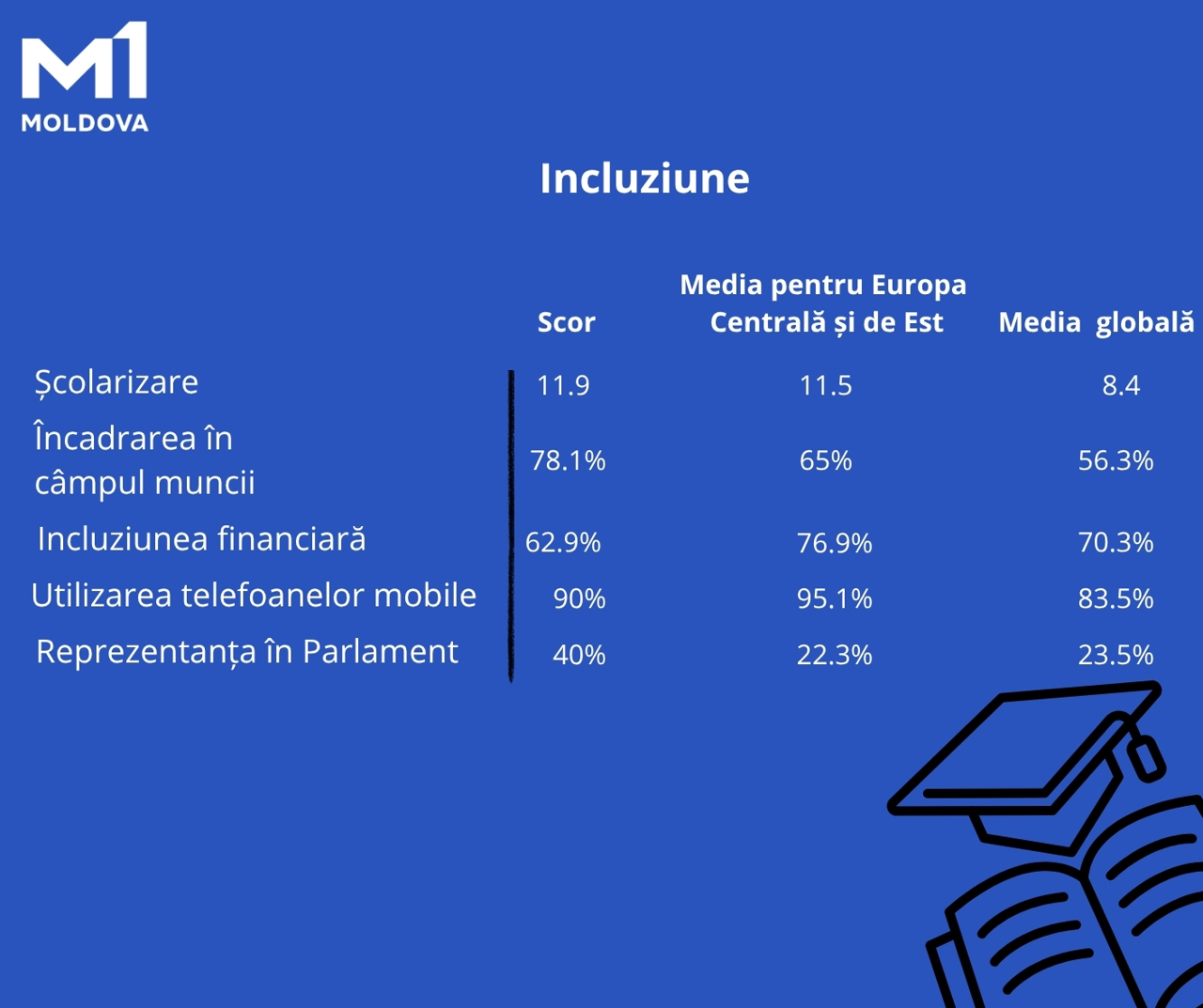
Bodrug-Lungu said the 40% representation quota introduced in 2021 had helped increase the number of women in Parliament. However, she expressed concern that public opposition to women in politics had grown.
“What shocked me is that, according to research, the share of people who believe women have no place in politics increased from 18% in 2021 to 26% in 2025. And this is happening despite the progress we have seen in women’s representation. According to the data, women account for 24% of mayors and 47% of local councillors,” she said.
She questioned whether the ongoing administrative-territorial reform would preserve sufficient representation of women in decision-making positions.
“This is another challenge we face: will we manage to maintain a sufficient number of women in decision-making positions as part of the administrative-territorial reform? This is a very important question we are putting to the Government today,” Bodrug-Lungu said.
She argued that changing the situation requires both education to challenge stereotypes and mechanisms that enable women to participate effectively in decision-making.
“We see what stereotypes mean: women do not belong in politics, women should return to the kitchen or stay at home. In this way, responsibility is once again shifted onto women. It is interesting how men in positions of power transfer responsibility to us, women. But perhaps the situation would be different if men’s attitudes changed and more women held leadership positions where they could genuinely influence public policy and promote concrete measures,” she said.
Institutional coordination remains essential
Bodrug-Lungu said members of the UN Committee on the Elimination of Discrimination against Women had recognised women’s political representation and reforms in justice and social protection during discussions with Moldovan representatives.
However, she said concerns had also been raised about the functioning of institutions responsible for promoting gender equality.
“I believe the Committee members will return to an important issue: despite the sound legal framework, the national institutional mechanism for promoting gender equality is not functioning well enough,” she said.
She stressed that the administrative reform must clarify how multidisciplinary teams will operate and cooperate.
“It is extremely important for local authorities, the police, social protection services, educational institutions and medical institutions to work together,” Bodrug-Lungu said.
Education reform raises safety and employment concerns
Bodrug-Lungu also highlighted the potential impact of education reform, particularly in communities where schools are being closed or reorganised.
She questioned how authorities would ensure the safety of girls who must travel to other localities to attend school and how they would mitigate the impact on teachers, most of whom are women.
“What will happen under education reform as many schools are being closed? Women, who make up the majority of teaching staff, are losing their jobs. How will we ensure the safety of girls who have to travel from a remote village to another locality or to a centre where their school has been relocated? These are practical problems. Everything is worded very nicely in official documents. Now, however, we need to focus on concrete action,” she said.
Moldova improves its global ranking, but gaps remain
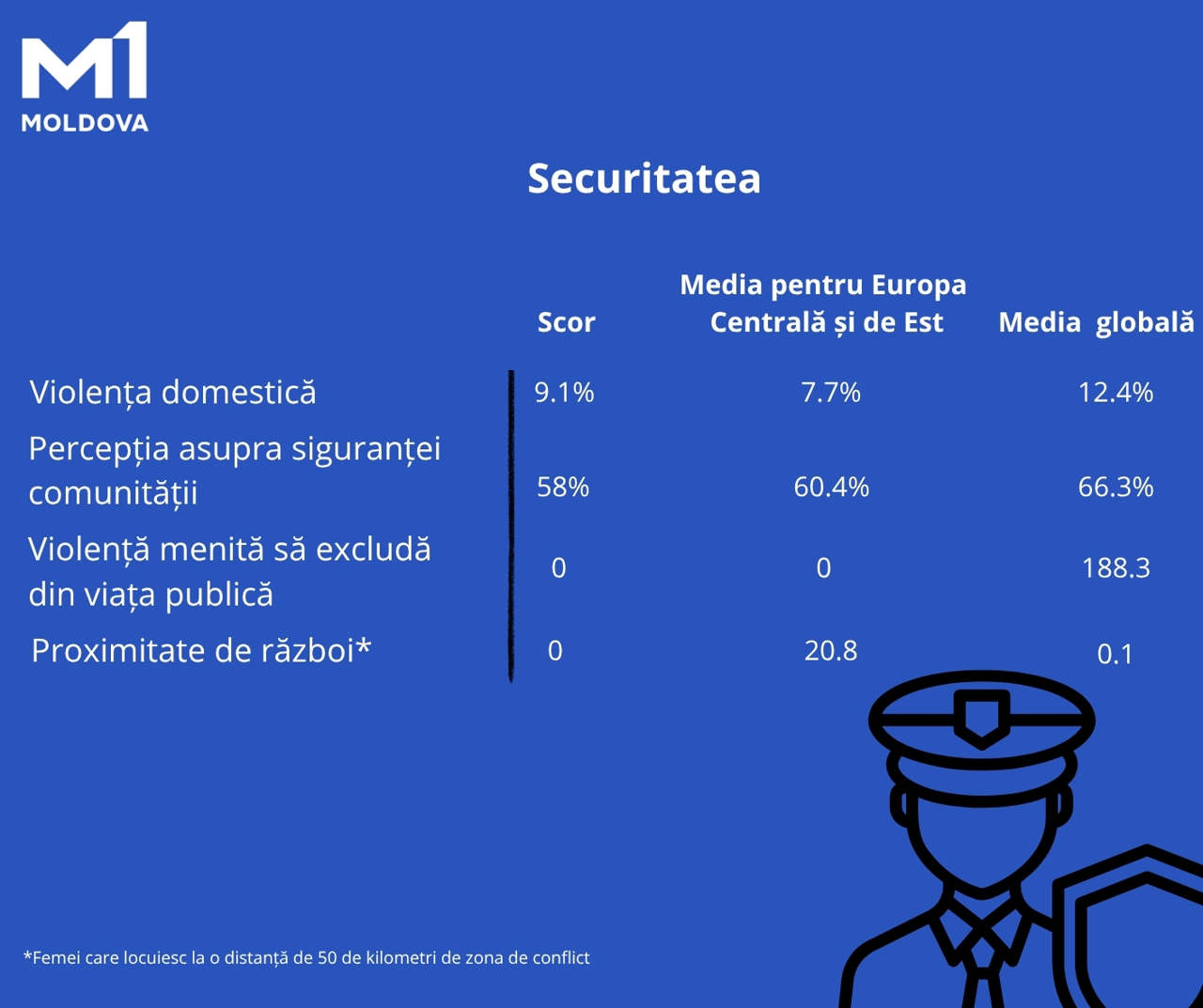
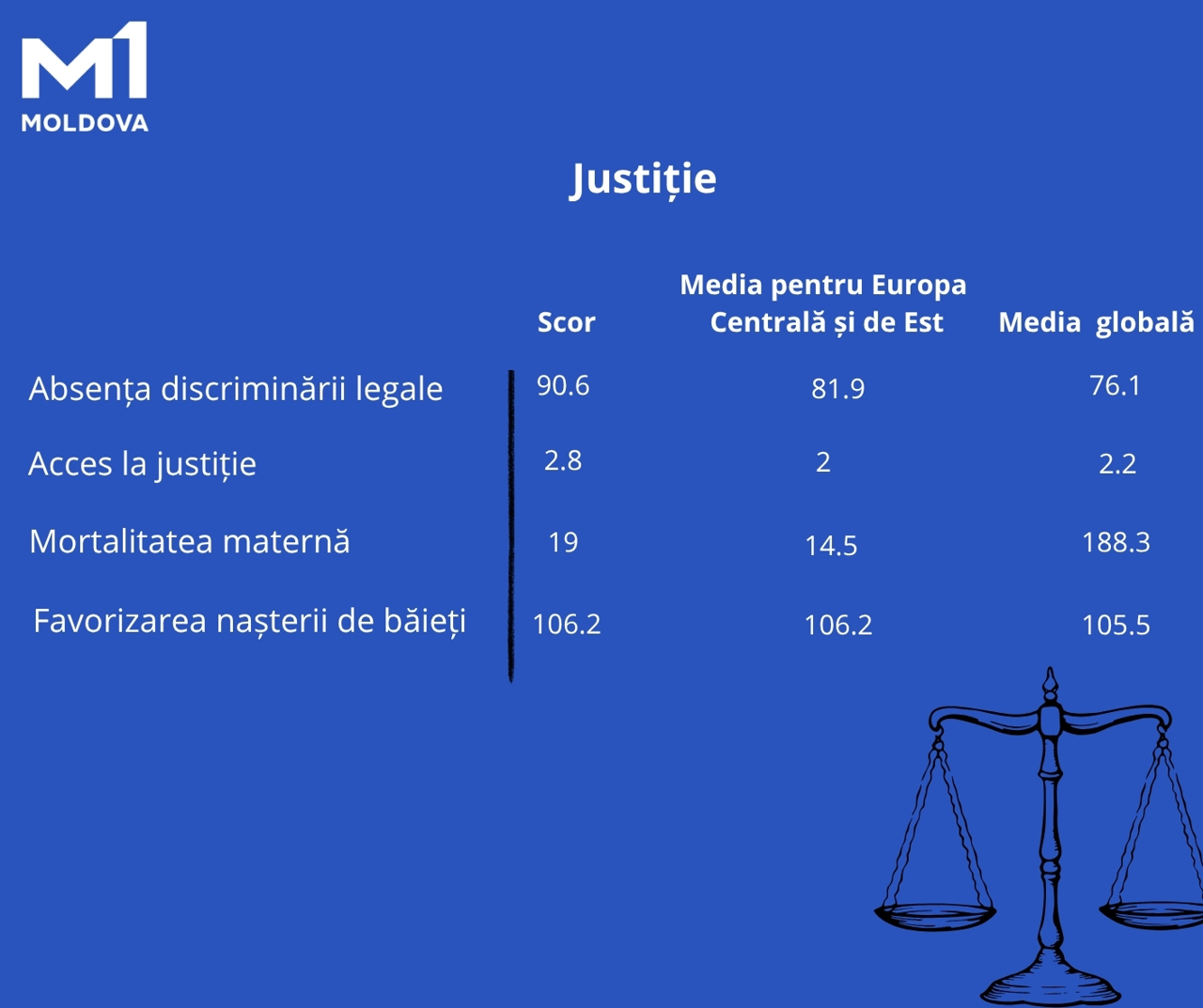
In the 2025/26 Women, Peace and Security Index published by Georgetown University’s Institute for Women, Peace and Security (GIWPS), Moldova ranked 36th in 2026, up from 53rd in 2024.
The country ranked ahead of Bulgaria, Italy and Romania. It performed relatively well in women’s education, employment and access to justice, but continued to face challenges involving financial inclusion, women’s representation in Parliament, domestic violence and perceptions of safety in the community.
Gender pay gap remains a concern
National Bureau of Statistics data show that women continued to earn less than men in 2025.
The unadjusted gender pay gap stood at 15.4%, with women earning an average gross monthly salary of 14,360 lei, compared with 16,975 lei for men.
The gap highlights the continuing economic inequalities that accompany the challenges of implementing gender equality policies.
Translation by Iurie Tataru
RELATED COVERAGE