Reusing waste could cut costs for Moldovan businesses
Moldovan authorities, business representatives and environmental experts met in Chisinau for the fourth National Circular Economy Conference to discuss cutting waste, reusing resources and improving business competitiveness.
Reuse and repair before recycling
Circular economy principles remain relatively unfamiliar to the general public in Moldova, although businesses could benefit from using resources more efficiently, reducing waste and lowering operating costs.
Roman Bahnaru, director of the E-Circular Training and Consulting Centre, said the concept goes beyond recycling. “The circular economy promotes the reuse of resources and products so that we generate as little waste as possible,” he said in an interview with Radio Moldova.
Repairing products and finding new uses for unwanted items are also essential parts of the model. “Before we talk about recycling, we promote reuse: when we no longer need a product, we can either donate it or find another use for it,” Bahnaru said.
Four sectors identified for development
Circular economy practices involve both individual consumers and businesses, Bahnaru said. Using a reusable coffee cup instead of disposable cups is one example of how consumers can reduce waste.
Businesses in Moldova are also beginning to adopt circular practices, although investment remains a challenge. “We can say that we are ready, but certain types of action require more money than we have compared with developed countries,” Bahnaru said.
Consultations involving government ministries and industry experts have identified four sectors with potential for circular economy development: winemaking, textiles, construction materials and plastics.
Moldova should develop regional waste management systems, separate collection facilities and recycling plants over the next five years, Bahnaru said. Industrial waste management must also become a priority.
Recycling creates new raw materials
Ion Zaiț, founder of a recycling plant in northern Moldova, said his business has expanded since it began operating in 2008. The facility now processes various types of plastic packaging, polyethylene, paper and cardboard.
“We have evolved from collection and partial mechanical processing using shredders to a plant that recycles virtually all types of plastic packaging, polyethylene, paper and cardboard waste,” Zaiț said.
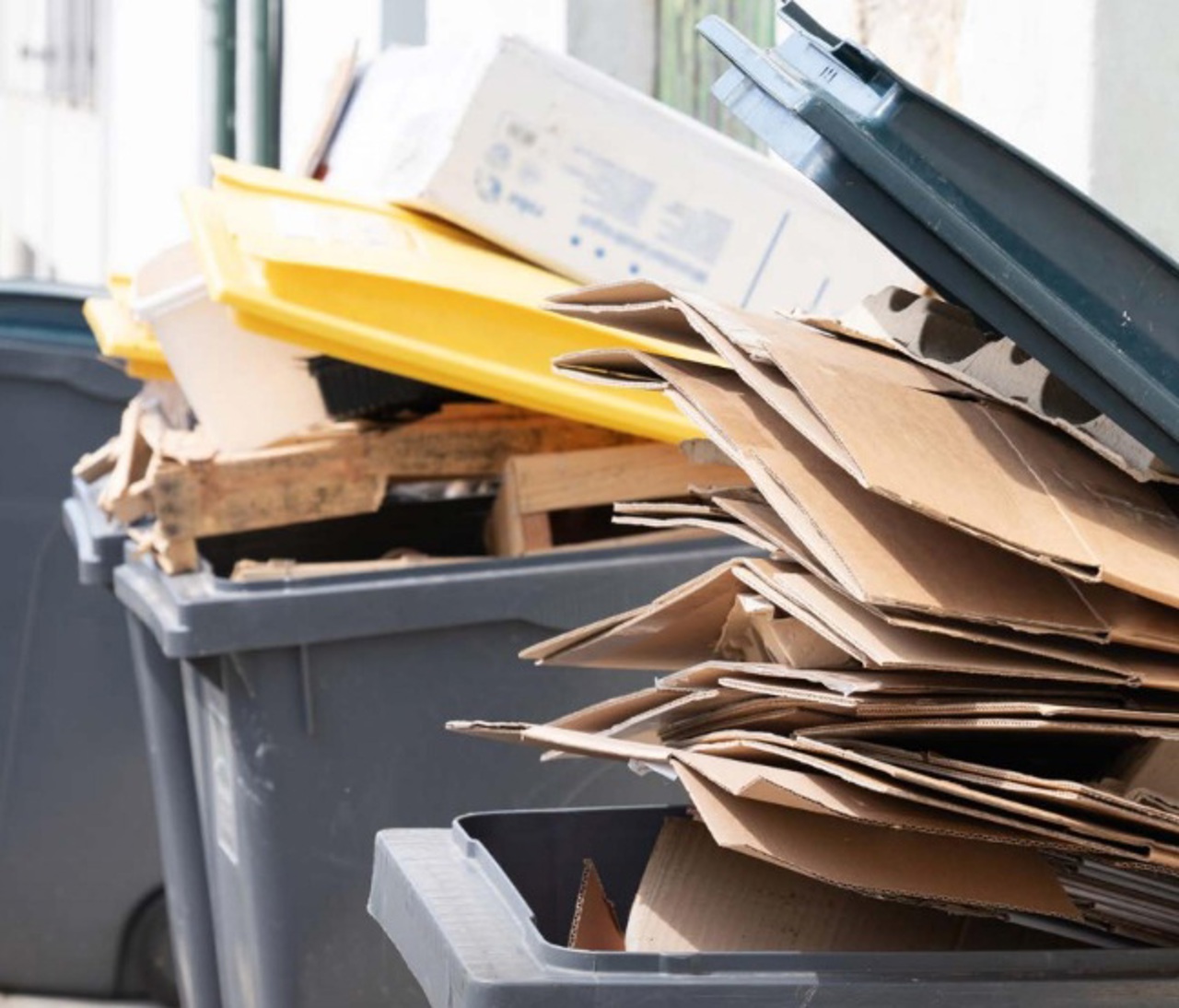
The company also exports sorted and compressed cardboard to European countries and Ukraine, he said. Water used to wash waste is filtered and reused in a closed-loop process, while the resulting recycled plastic granules serve as raw materials for manufacturing films, crates and containers.
Giving discarded materials a second life
Circular economy principles can also create new products from materials that would otherwise be thrown away. Maria-Eliza Pșeneac, who studied leather goods design and manufacturing at the Centre of Excellence in Light Industry, used discarded materials to make bags and footwear.
“I created leather goods and footwear from reused materials to prevent them from being thrown away and to protect the environment,” she said in an interview with journalist Natalia Mogîldea.
The materials came from her own wardrobe, including clothes that no longer fitted or had become worn. By turning them into new products, she explored how reuse could prevent waste and potentially create items suitable for sale.
Moldova's transition to a circular economy will depend on investment in waste management infrastructure, greater business participation and public awareness. Repairing, reusing and recycling products can help conserve resources while creating opportunities for new economic activity.
Translation by Iurie Tataru
RELATED COVERAGE
- How Moldova plans to recycle 90% of packaging waste
- Moldova's waste imports: Regulations, risks, and recycling
- Waste sorting is difficult due to poor infrastructure
- Moldova’s green transition: €1.8 million EU investment for modern recycling centers
- Moldova’s waste sector needs investment and a shift in mindset