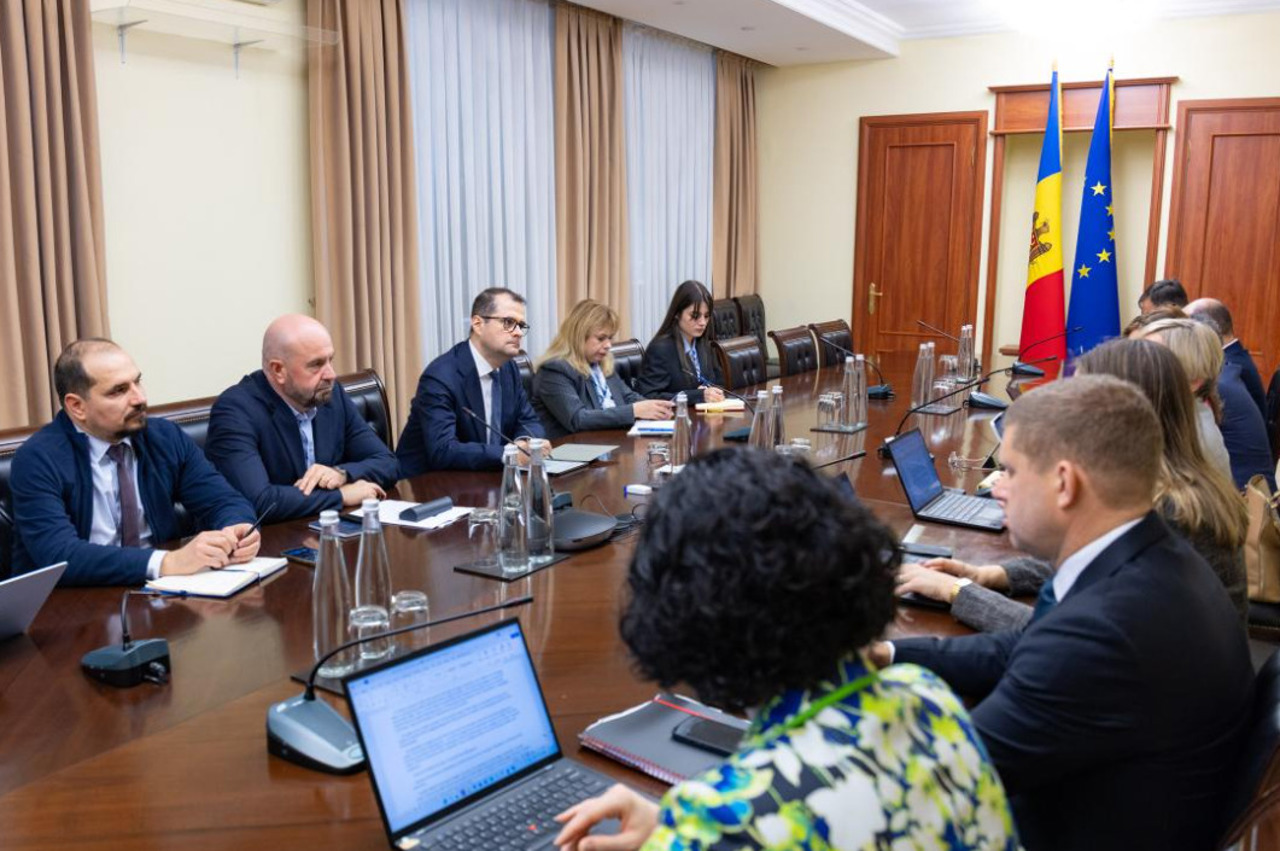
Claudiu Năsui on Radio Moldova: “Moldova faces constant cyberattacks. We must avoid past mistakes”
Government systems face constant cyberattacks, and the most recent incident—which resulted in the exfiltration of data belonging to over 750,000 citizens—has prompted authorities to urgently assess vulnerabilities within public networks. The Minister of Economic Development and Digitalization, Claudiu Năsui, announced on Radio Moldova that an investigation has been launched to identify the security breach while also providing assurances that the public's funds remain unaffected.
However, officials advise citizens to remain extremely vigilant.
According to Minister Claudiu Năsui, the data accessed so far does not indicate direct access to citizens' savings; nevertheless, the risk of fraud attempts remains high.
"Based on the information we have, no data has been compromised that could be used to withdraw funds from accounts or otherwise affect people's savings. Instead, the data could be used in attempts to contact citizens—via phone calls, text messages, or other means—by individuals posing as representatives of state authorities, banks, or other institutions, specifically to solicit confidential information. (...) The state will never call you to request confidential information over the phone. Therefore, if someone calls you—or creates a situation—asking for banking codes, account numbers, PINs, or similar details, hang up immediately; it is not an official representative," warned the Minister of Economic Development and Digitalization during the program "Zi de Zi" on Radio Moldova.
Regarding the information the attackers accessed, the official noted that the full extent of the compromised data is not yet known.
The risks may vary depending on the type of information compromised, and users should exercise greater caution in their digital interactions. "Personal data has been accessed. We do not yet know the full extent of the data involved. For instance, in some cases, only the date of birth of some of the 750,000 individuals was accessed. A date of birth is unlikely to be exploitable as easily as a phone number or other compromised data. The best preventive measure against such attacks remains digital literacy—which becomes increasingly vital as we undergo further digitalization—meaning we must know how to protect our own data. (...) The most effective security measure is for you, personally, to refuse to engage when someone calls attempting to extract information about your accounts or access credentials," stated Claudiu Năsui.
According to the minister, the Republic of Moldova is "subject to a constant cyberattack."
"Unfortunately, this is one of the attacks that succeeded. However, the authorities have previously withstood several similar waves. The first step is to precisely identify the exploited breach, determine what happened, and assess what could have been handled differently. While identifying those responsible is certainly necessary, the most critical objective is to avoid repeating the mistakes that led us to this point—specifically, by locating the exploited vulnerability and closing it. Achieving this requires a rigorous investigative process," concluded Claudiu Năsui.
We remind you that the personal data of approximately 750,000 citizens was exfiltrated without authorization following an attack on government systems between October 19 and 23. Preliminary investigations indicate the stolen information includes names and identification numbers, family-related data, pension records, driver’s license details, and certain financial data.
The organisation did not implement certain technical tools that could have prevented the incident in time. Consequently, the attackers exploited vulnerabilities in the IT systems—leveraging artificial intelligence in the process—and these incidents may be part of a broader campaign involving foreign state actors.
The data exfiltration was halted on October 23 at 11:30 AM, though attempts at unauthorized access continued in the days that followed. The E-Governance Agency ordered an audit of 82 digital services and temporarily suspended those found to be vulnerable. Authorities state that no unauthorized alterations to state registries have been detected and that bank card data remains unaffected.
During a government meeting on October 28, Prime Minister Vasile Tofan announced that the Director of the E-Governance Agency, Nicoleta Colomeeț, is stepping down from her position in the wake of the cyberattacks targeting state digital services.
Authorities have also announced plans to overhaul the management and protection of public digital services. Planned measures include improved coordination among responsible institutions, the establishment of a national cybersecurity center, and the implementation of additional protective solutions.