Moldova’s drone production law could be passed by December, Igor Grosu
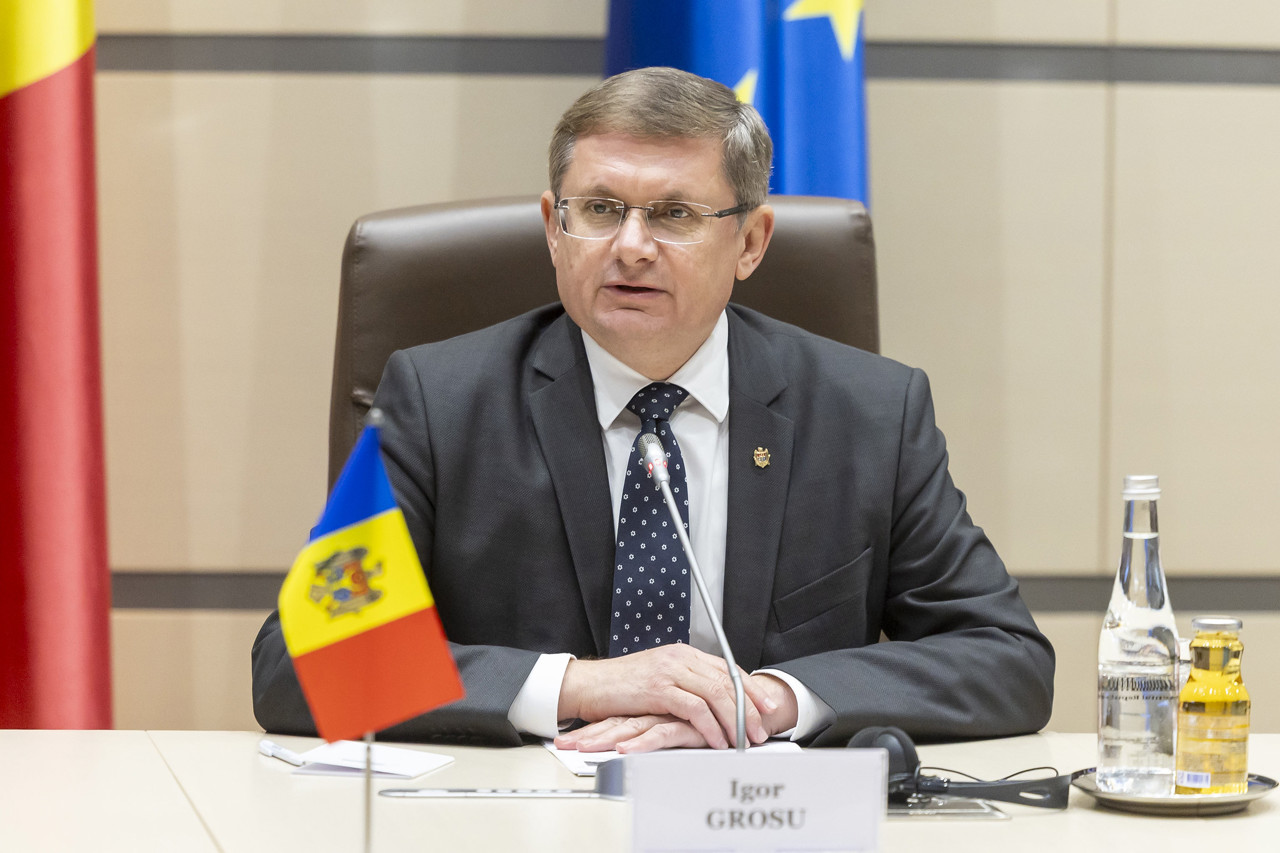
The Republic of Moldova is preparing its legal framework for the development of a domestic defense industry, including the production of drones, and Parliament could adopt the necessary legislation by the end of this year. The Speaker of Parliament, Igor Grosu, believes that some drone incursions into the country's airspace are deliberate, and he maintains that Ukraine's experience could help the Republic of Moldova strengthen its defense capabilities.
The draft law that will allow for the production of military and dual-use equipment is being developed by the Ministry of Economic Development and Digitalization and the Ministry of Defense. The document has not yet reached Parliament; however, Igor Grosu says that if the Government submits it in the first half of November, lawmakers could finish their review by the end of December.
"I can promise, on behalf of the Legislature—should it reach Parliament by, say, early or even mid-November—that we will fulfill our task by the end of December. That is my commitment," declared Igor Grosu during the "Pe Agendă" podcast by Radio Free Europe.
The Speaker of Parliament explained that the draft law must undergo all necessary consultation and review procedures, as it concerns a sensitive sector. According to him, the Republic of Moldova currently lacks a formal defense industry, although during the Soviet era, there were enterprises that manufactured components for the military sector. The new legislation is intended to enable the development of such activities under strictly regulated conditions.
Grosu: Some drone incursions are deliberate
The increasing number of aerial incidents serves as one of the arguments for strengthening the Republic of Moldova’s defense capabilities. Igor Grosu believes that some of the drones that traversed the country's airspace this year may have been directed intentionally, rather than merely veering off course by accident. "I believe that a significant portion—at least judging by the instances we’ve seen this year—are deliberate. Take the 'Wine Day' event, for example. I find it hard to believe that six drones could accidentally fly into our airspace within a 33-minute window. I simply don’t buy that," stated the Speaker of the Parliament.
Given this situation, the authorities aim to develop not only their airspace surveillance systems but also their drone-interception capabilities. According to Grosu, while the Republic of Moldova has improved its ability to identify aircraft crossing its territory, it requires additional equipment to effectively respond to potential threats.
The country’s geographical location also necessitates an expansion of its monitoring network. The Speaker explained that the Republic of Moldova exchanges information with Romania and Ukraine on drone movements, ensuring authorities are alerted whenever an aircraft approaches the border or changes course.
Cooperation with Ukraine could play a key role in developing capabilities for both drone production and interception. Igor Grosu welcomed the technical-military cooperation agreement recently signed between Chisinau and Kyiv, noting that the experience Ukraine has gained during the war could also prove valuable to the Republic of Moldova.
"I believe that, at present, Ukraine is the most advanced country in this field in all of Europe," the Speaker said.
The bilateral agreement is intended to facilitate the exchange of expertise and information within the defense sector. Grosu stated that he is not privy to all the details of the document that can be made public, but he believes this collaboration is necessary—not least in light of the risks posed by the war in the neighboring country.
The Republic of Moldova and Ukraine share a border of approximately 1,222 kilometers, and security challenges extend beyond the violation of airspace. Among the risks highlighted by the Speaker of the Parliament are illegal border crossings, as well as arms and human trafficking.
Grosu: Defense investments must not depend on Russia’s reaction
The development of the defense industry and the expansion of military cooperation with Ukraine have drawn criticism from the opposition. Former President Igor Dodon has argued that the agreement signed between Chisinau and Kyiv runs counter to the Republic of Moldova’s neutrality and the provisions of its Constitution.
Igor Grosu rejects these accusations, maintaining that neutrality does not entail abandoning the military or foregoing the investments required to protect the nation’s territory. He argues that authorities must base their decisions on threats to national security, without making such measures contingent on potential reactions from Moscow.
“We should focus more on our own security and less on what might irritate another state—after all, the Russian Federation is, by definition, an expansionist, aggressor state. If we constantly ask ourselves, ‘Might we be upsetting the Russian Federation in this instance?’, our policies will inevitably fail,” the Speaker of the Parliament declared.
We remind you that the Republic of Moldova has gradually increased its defense spending, in light of the security risks posed by the war in Ukraine. For 2026, the budget allocated to national defense stands at approximately 1.94 billion lei, compared to 641 million lei in 2020. Concurrently, the European Union has approved 317 million euros in support for the modernization of the National Army between 2021 and 2026, through the European Peace Facility. The Republic of Moldova is the second-largest beneficiary of this mechanism, after Ukraine.