Moldova parliament divided over Ukraine military cooperation deal
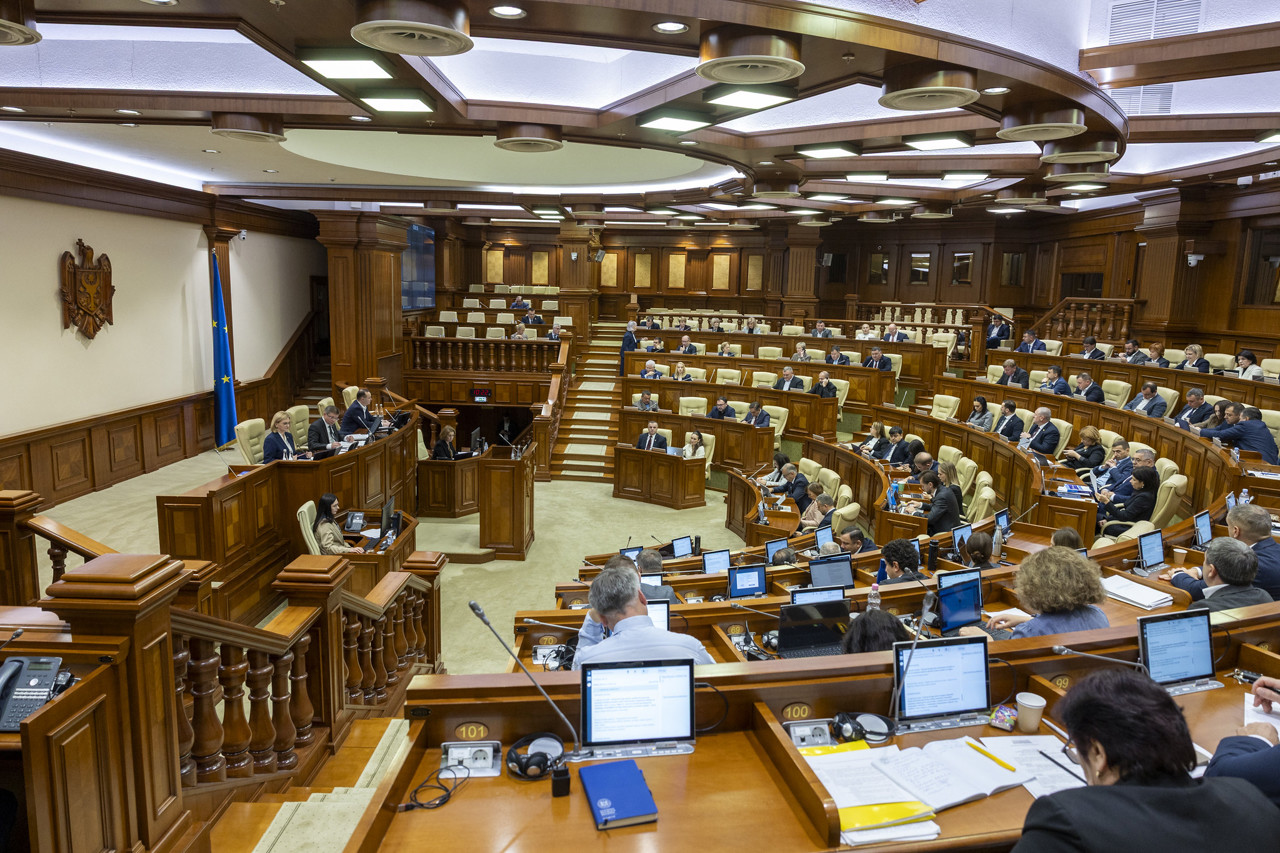
Moldova’s military cooperation agreement with Ukraine sparked a heated parliamentary debate on October 29, as opposition Socialists questioned its implications for constitutional neutrality and the governing majority defended stronger national defence capabilities.
Socialists’ request for parliamentary hearings rejected
The Party of Socialists of the Republic of Moldova (PSRM) called for the publication of the agreement and emergency hearings with Prime Minister Vasile Tofan and Defence Minister Anatolie Nosatîi. Socialist MP Bogdat Țîrdea questioned whether the deal could lead to joint arms production or military equipment deliveries to Ukraine, and whether such cooperation was compatible with Moldova’s permanent neutrality.
“What exactly does this agreement provide for? Will we produce drones and weapons together with Ukraine? Will we supply military equipment to a country at war?” Țîrdea asked, urging the government to explain the commitments, costs and national security risks.
Parliament Speaker Igor Grosu rejected the suggestion that the agreement represented a departure from Moldova’s security policy. He said the country had a long history of military cooperation with other states, including Russia.
“We have agreements of this kind with 180 countries, including one country with which I regret that we have an agreement — Russia. We have had one with Russia since 1997. We will publish it, you will see it, and you can report it to whoever you need to,” Grosu said.
The proposal to summon the prime minister and defence minister received 34 votes, falling short of the number required for approval.
Defence cooperation versus economic priorities
The agreement resurfaced during a debate on an opposition initiative concerning the government’s first 100 days in office. Socialists argued that the authorities should focus more on the economy, investment and the difficulties facing households.
Socialist MP and Deputy Parliament Speaker Vlad Batrîncea criticised the government for focusing on military cooperation with Ukraine rather than energy cooperation.
“The only agreement we can talk about with our neighbouring country today is not about natural gas, but about military cooperation,” Batrîncea said.
Deputy Parliament Speaker Doina Gherman, a member of the ruling Party of Action and Solidarity (PAS), said the government would present its first 100-day report on November 5. She also challenged the Socialists’ criticism of the defence agreement.
“You are very concerned about the cooperation agreement, Mr Batrîncea, but not about the Russian tanks stationed 100 kilometres from here,” Gherman said, adding that Moldova needed to strengthen its defence capabilities while civilians continued to die in Ukraine.
Batrîncea rejected the criticism, saying the government should also be held accountable for economic and social conditions. He accused the ruling party of using security concerns to deflect attention from its record in office.
“The citizens of the Republic of Moldova and the villages we visit are living in fear, and you have governed through that fear for five years,” Batrîncea said. He called on the government to report on economic growth and the prospects it had created.
Dispute over Russia’s role in the war
Gherman subsequently accused the Socialists of failing to condemn Russia’s invasion of Ukraine unequivocally. She referred to the deaths of children in Bucha and Mariupol and the deportation of Ukrainian children.
“You have never, never strongly condemned Russia’s war of aggression against Ukraine,” Gherman said, accusing the opposition of using various arguments to avoid such a condemnation.
Batrîncea responded that he had condemned the war in Ukraine but also criticised what he described as the government’s economic assault on Moldovan citizens.
“Yes, I told you that I condemn every war, including the war in Ukraine. But I also condemn the war you are waging against the citizens of the Republic of Moldova and everything you are doing to cultivate poverty,” the Socialist MP said.
Gherman pressed him to identify the aggressor in the war. Grosu then intervened, accusing the opposition of lacking the courage to identify Russia as the aggressor.
“You still do not have the courage to say that Russia is the aggressor, an aggressor state,” Grosu said.
The parliamentary confrontation took place three days after Moldova and Ukraine signed their technical-military cooperation agreement in Kyiv on October 26.
Grosu said the document would be published on the websites of the government and parliament after the required legal ratification procedures had been completed.
Translation by Iurie Tataru
RELATED COVERAGE