PM Tofan launches major infrastructure drive with EU funds

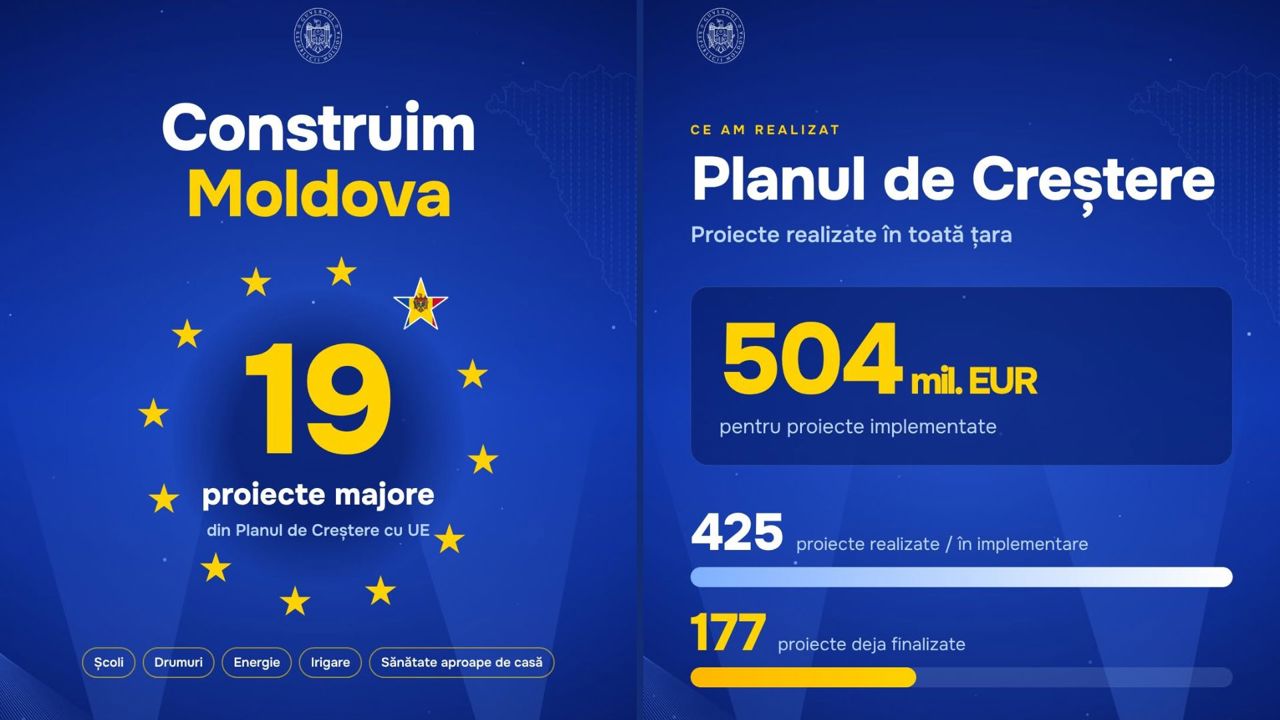
Moldova launched 19 strategic infrastructure projects on Thursday, tapping a €1.9 billion European Union Growth Plan to modernize energy grids, national highways, hospitals, and rural schools ahead of accession.
The sweeping investment drive, launched under the “Building Moldova” national banner, coincided with the Tofan government's first 100 days in office. Prime Minister Vasile Tofan said the authorities aim to close infrastructure gaps with EU members within years rather than decades.
“European integration does not just mean laws and negotiations; it also means concrete investments and projects that improve our lives,” said Tofan. “A European country is not merely proclaimed; a European country is built.”
Tofan noted that 425 local and national projects are already underway or completed across the country. Moldova has already drawn approximately €500 million from the EU facility, supplemented by a recent €157 million tranche announced in Brussels.
Energy security and regional interconnection
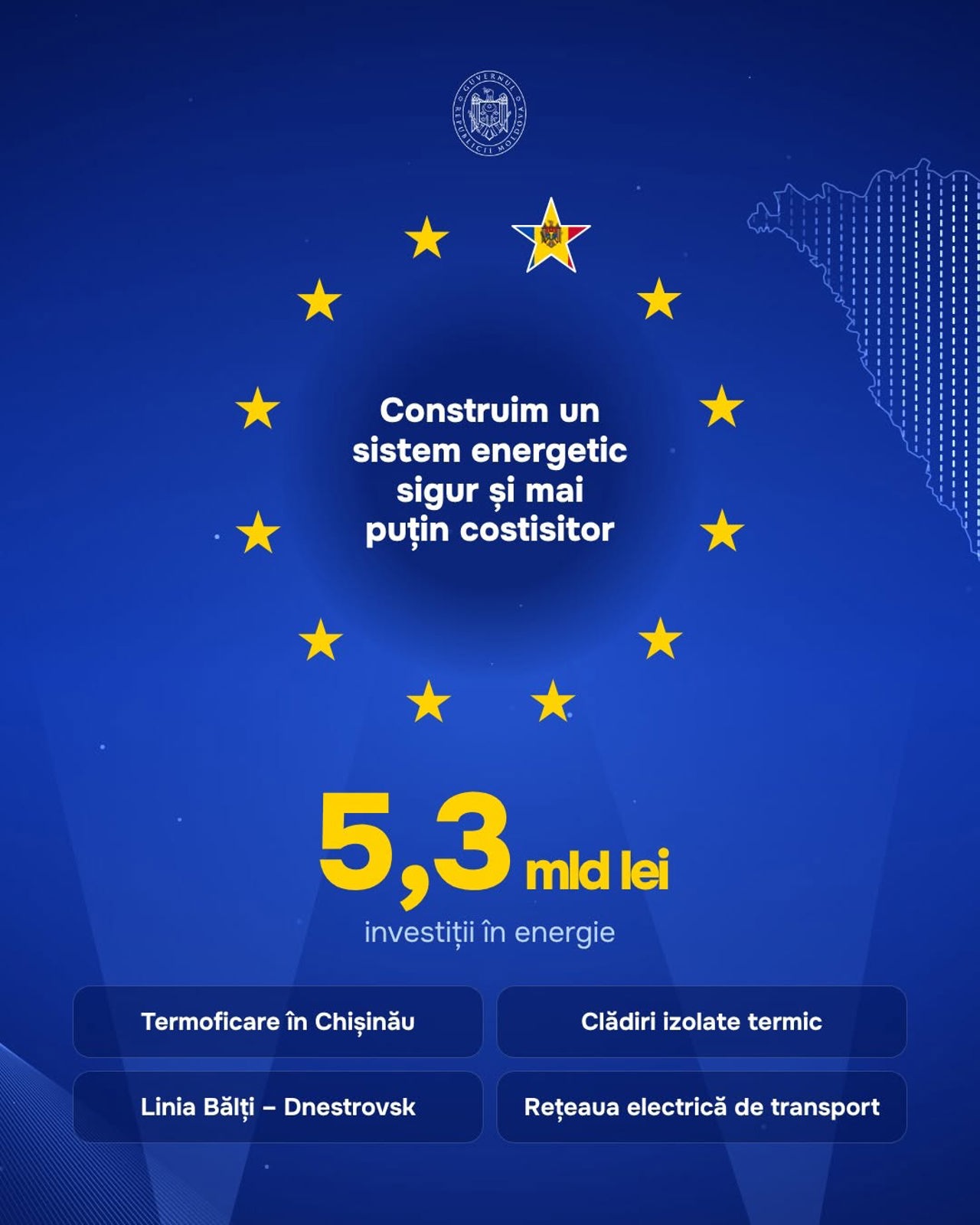
Four energy initiatives focus on curbing distribution losses and securing cross-border supplies as Energy Minister Dorin Junghietu conducts funding talks abroad. The plan includes replacing 24.3 kilometers of heating pipelines in Chișinău and installing 12 decentralized heat plants to save up to five million cubic meters of gas yearly.
“We cannot control international energy prices, but we can control the quality and efficiency of our infrastructure,” said Tofan. He added that outdated systems currently lose around 20% of thermal energy during distribution.
The energy package also provides thermal insulation for 1,400 residential homes and modernizes 15 high-voltage power transformers. Additionally, a new 90-kilometer, 330-kilovolt transmission line between Bălți and Dnestrovsk, located on the left bank of the Dniester River, will bolster two-way electricity trade with Ukraine.
Transport corridors and water networks
Deputy Prime Minister Vladimir Bolea, the minister of infrastructure and regional development, presented five priority projects valued at €4.11 billion (approx. 80 billion MDL). Bolea stressed that delivery depends directly on European partner funding.
The transport pillar features the €1.2 billion A8 motorway connecting Ungheni to Chișinău over 125 kilometers, with construction slated for 2028. The four-lane highway will directly integrate Moldova’s road network into Romania and the wider European transport corridor.
Authorities also plan to build a 47-kilometer bypass around Chișinău, rehabilitate 132 kilometers of national roads, and add a passenger terminal and runway at Eugen Doga International Airport. Furthermore, 697 kilometers of newly built regional water mains will deliver drinking water to 700,000 citizens.

Agribusiness modernization and irrigation
Agriculture Minister Eugeniu Osmochescu outlined three capital programs to build climate resilience and boost post-harvest processing. Officials aim to deploy digital tools and precision farming to lower operating risks.
“We are talking about agriculture that must be grounded in science and smart solutions to deliver predictable results,” said Osmochescu. He stressed that farmers require modernized irrigation networks to access competitive export markets.
A €63 million project supported by the European Bank for Reconstruction and Development will restore irrigation across 6,900 hectares in Căușeni and Puhăcenii de Sus. Smallholders will also tap the €150 million Livada Moldovei II credit facility and a $43 million program backed by the International Fund for Agricultural Development.
Educational infrastructure and tech hubs
Education and Research Minister Dan Perciun unveiled a €210 million investment program to upgrade national schools and stem youth migration. The package allocates €50 million to renovate 20 model secondary schools serving 40,000 students.
Higher education institutions will benefit from three €15 million initiatives, including an Agrotech Hub at the Technical University of Moldova and a joint bioengineering facility. The government is also establishing the 50-hectare Hi-Tech Park in Stăuceni to host microelectronics and medical technology firms.
An €80 million allocation, the largest for technical education since independence, will refurbish 24 study blocks and 23 student dormitories across vocational colleges. Technical design begins in 2027, with full rehabilitation starting in 2028.
Healthcare access and environmental protection
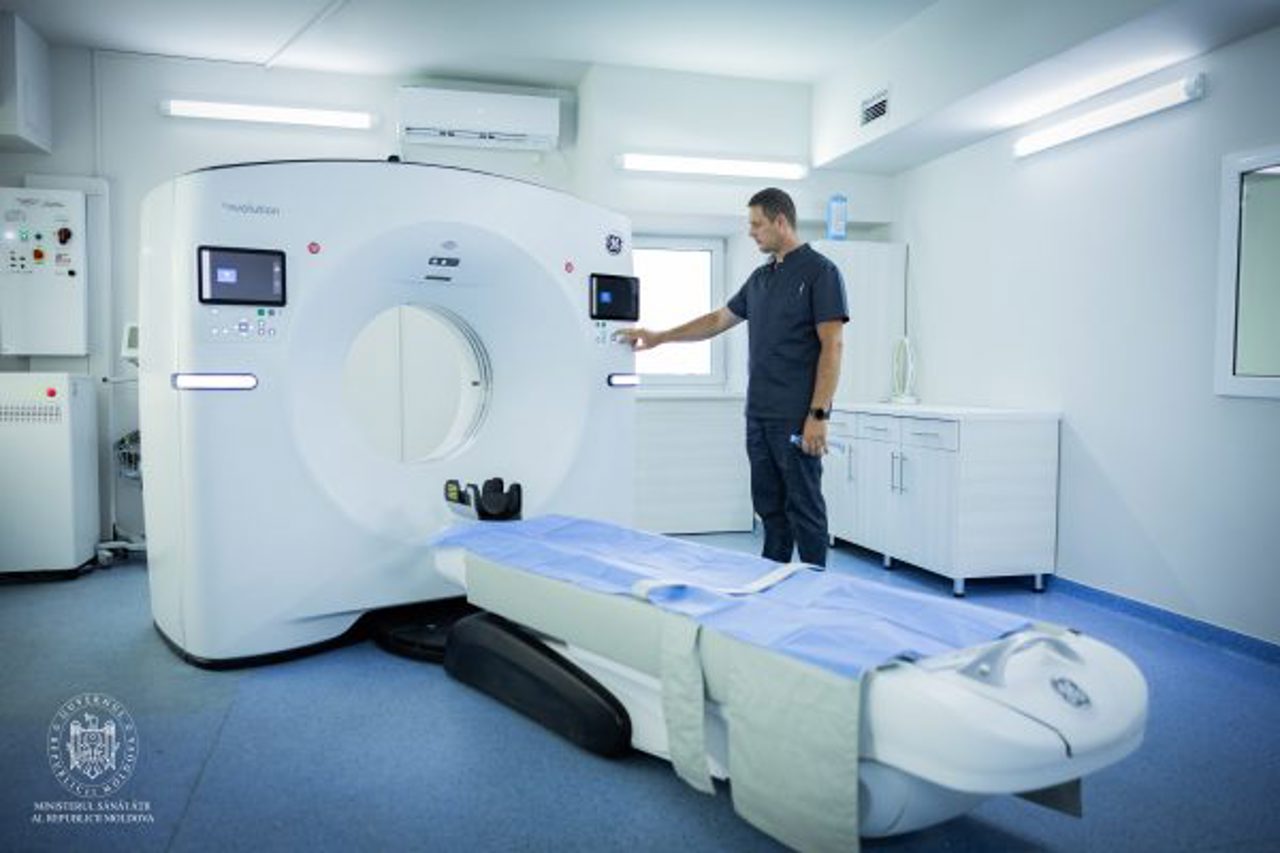
Health Minister Alexandru Gasnaș introduced three strategic initiatives to decentralize specialized healthcare and modernize primary prevention. Gasnaș noted that 10 rural health centers will receive advanced diagnostic imaging and computed tomography units to resolve up to 70% of medical problems locally.
A new regional hospital in Bălți is scheduled to enter public procurement and construction in 2028 with European backing. The complex will provide advanced neurosurgery, cardiology, and oncology care for northern districts.
The Ministry of Environment will separately develop a €58.3 million hazardous waste management center to process over 90,000 tonnes of industrial and electrical waste safely. Construction is set to begin in 2028.
Translation by Iurie Tataru
RELATED COVERAGE
- Moldova deepens energy integration with Romania and Ukraine
- Moldova Hi-Tech Park plans face housing, state aid scrutiny
- Deputy PM Vladimir Bolea announces eight new bridges will be built from scratch in 2026
- Strategic investments in green skills: 11 ecological labs launched across Moldova's VET system
- “Europe is Close” Program: 200 road projects completed in Moldova