New energy rules raise questions over land rights
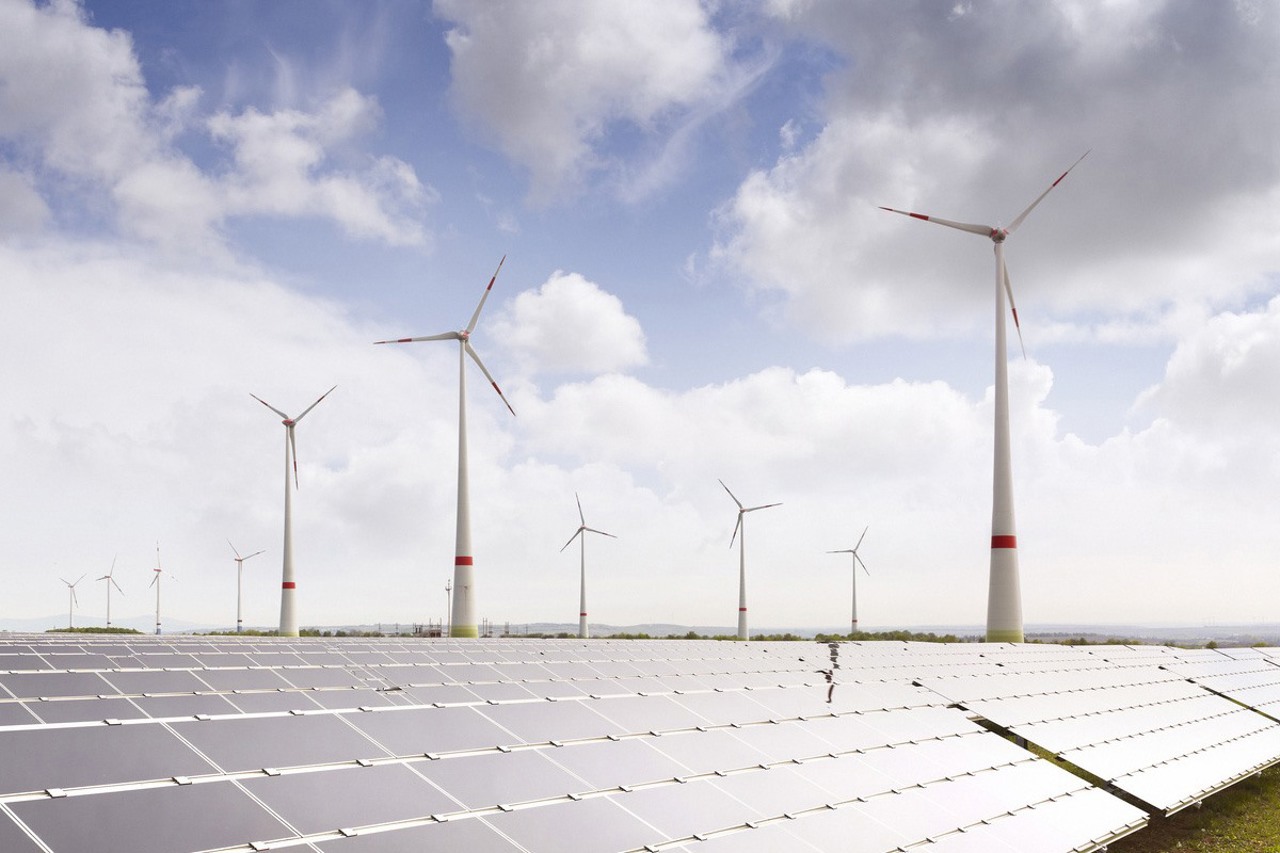
Moldova's parliament adopted legislation on October 29 to accelerate solar and wind power projects, but renewable energy industry representatives warn that new investment rules could undermine landowners' interests.
Faster approvals for renewable energy projects
The amendments to the Law on Renewable Energy introduce a unified digital permitting process through the government's EVO platform. Applicants will be able to submit documents online, while the authorities involved will coordinate the issuance of the necessary permits.
The legislation sets a maximum authorization period of 24 months for large projects and up to 12 months for projects in designated renewable energy acceleration areas. Certain photovoltaic installations of up to 100 kW intended primarily for self-consumption will be eligible for approval within one month.
Industry raises concerns over land ownership
Eugen Gîrlea, head of the Association of Wind and Solar Power Producers, supports the digitalization of permitting procedures but questions the arrangements governing renewable energy acceleration areas.
He warned that investors selected through auctions could receive extensive rights to use land required for their projects, potentially creating an imbalance between developers and private landowners.
“He will be able to buy the land in the immediate vicinity that he considers necessary for his project. If I am a farmer, or already have one or several wind turbines in an area that the state considers suitable and designates as a renewable energy acceleration area, the investor who wins the auction will receive public utility status. He can then come to me and say: I need your land. I will have no leverage and no way to defend myself against him,” Gîrlea told Radio Moldova.
Authorities outline safeguards for landowners
The Ministry of Energy says public land, particularly degraded or unused areas, will be prioritized when identifying suitable locations for renewable energy projects.
According to the ministry, land-use and easement rights granted to successful bidders will be temporary and limited to activities required for construction, repairs and maintenance. Developers will also be required to pay compensation and indemnities for any damage caused to landowners.
The ministry has stated that the adopted amendments do not establish an expropriation mechanism for investors winning these auctions. Permanent occupation of land required for a power plant must be addressed through the appropriate property rights arrangements.
The designation of acceleration areas will also involve strategic environmental assessments and public consultations. Protected areas and locations incompatible with renewable energy development will be excluded.
Fifteen-year electricity purchase arrangements
Under the applicable support schemes, successful eligible producers can benefit from guaranteed electricity purchase arrangements or fixed-price mechanisms for 15 years after their power plants become operational.
Gîrlea argues that combining these incentives with public utility status could give major developers an advantage over smaller renewable energy producers.
“What is the ministry doing through this law? It is giving an economic operator, who already receives large producer status and state aid for 15 years, public utility status as well. This is not a law that will create equal opportunities for everyone. It is a law that will give some players excessive leverage while silencing others,” the expert said.
Energy storage among priorities for smaller producers
Meanwhile, authorities are considering additional measures to support smaller renewable energy producers affected by falling electricity prices during periods of high solar generation.
One of the solutions under consideration is financial support for investments in electricity storage systems, which would allow producers to store surplus daytime generation and sell it when demand and prices are higher.
The amendments were adopted in the second reading on October 29, with 55 votes in favour and no support from the opposition.
The legislation also introduces provisions governing the use of private land for renewable energy infrastructure, grid connections and the production and sale of biofuels.
The new provisions are due to enter into force one month after publication in the Official Gazette.
Translation by Iurie Tataru
RELATED COVERAGE
- Moldova expands energy storage as grid bottlenecks slow renewables
- Moldova's installed renewable energy capacity has topped 1.06 GW
- Energy independence: Moldova deploys first utility-scale battery storage
- Largest electricity storage system launched in Strășeni: 60 MWh capacity
- Moldova targets 170 MW renewable energy landmark as foreign investment interest surges