Poland’s judicial standoff escalates after court chief is suspended
Polish President Karol Nawrocki has called emergency talks with parliamentary parties after a judge suspended the Constitutional Tribunal's leadership, triggering protests and a fresh institutional crisis in Warsaw.
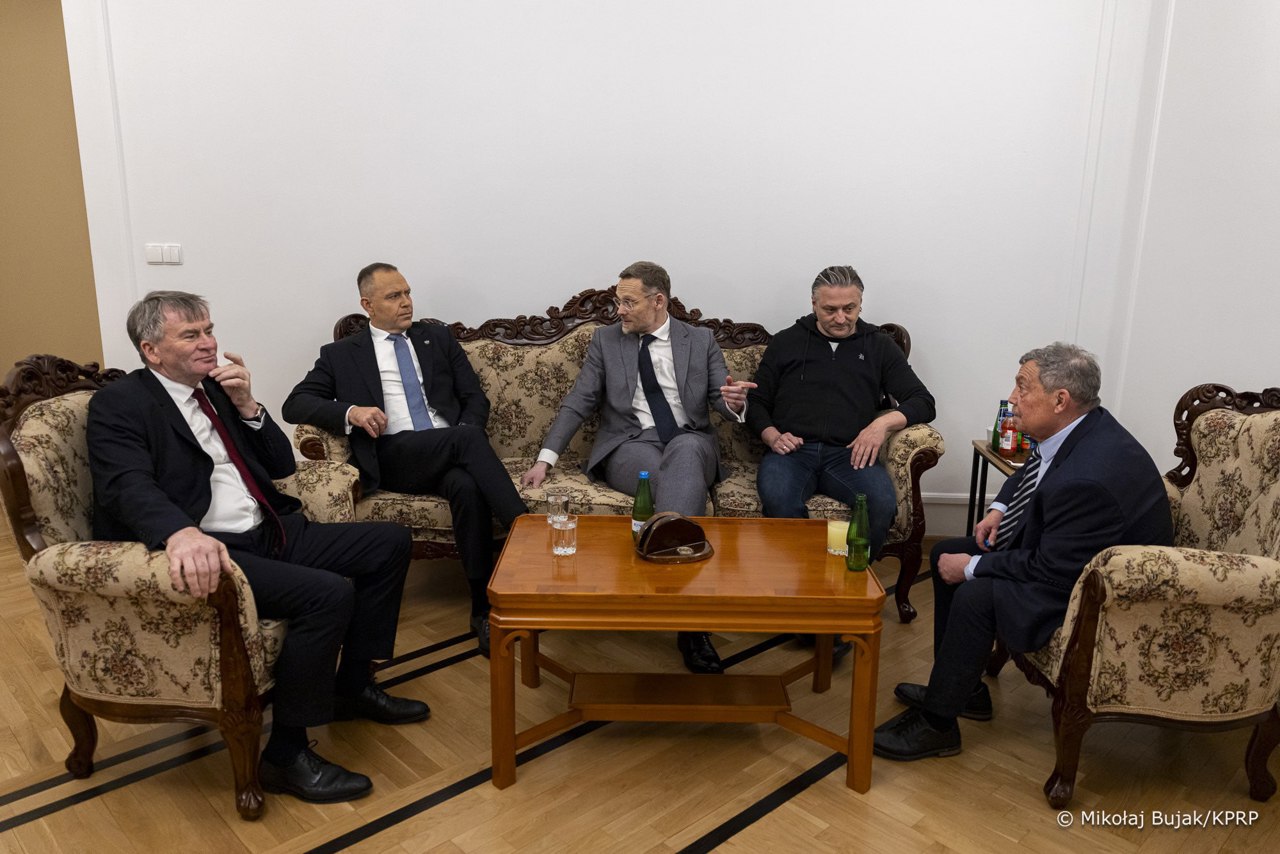
Nawrocki calls emergency consultations
Poland's President Karol Nawrocki has called emergency consultations with representatives of all parliamentary parties for Saturday, citing what he described as a threat to the country's internal security and constitutional order.
“In view of the threat to the internal security of the Republic of Poland, I am convening extraordinary consultations today, involving representatives of parliamentary forces, with a view to stabilising the political situation and restoring constitutional order,” the President's Chancellery said in a statement quoted by BBC News.
Nawrocki also thanked those gathered outside the Constitutional Tribunal, saying they were defending Poland's Constitution.
The President cut short his trip to Senegal, where he was due to attend the Summer Youth Olympic Games, and returned to Warsaw.
In a statement posted on social media on Saturday morning, he said that Poland's constitutional order had been violated overnight and that a constitutional state institution had been taken over by force.
Court leadership suspended amid protests
The crisis escalated late on Friday after Judge Anna Korwin-Piotrowska announced that she had suspended Constitutional Tribunal President Bogdan Święczkowski and Vice-President Bartłomiej Sochański from their duties for one month.
Korwin-Piotrowska, the longest-serving judge on the tribunal, said she had assumed responsibility for leading the institution.
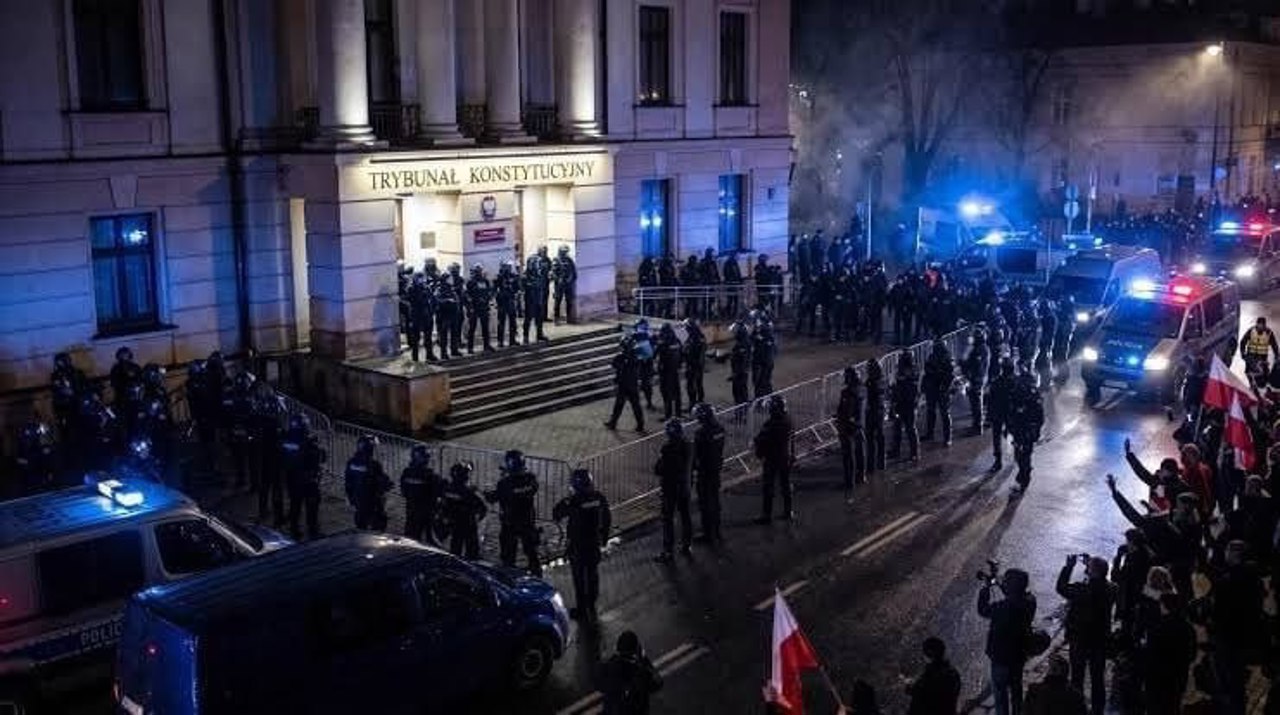
The decision triggered protests outside the tribunal's headquarters, where police special units were deployed to prevent demonstrators from entering the building.
Some protesters tried to breach police lines, AFP reported. Police said three people had been detained after attempting to enter the tribunal's premises.
The suspension came as Justice Minister and Prosecutor General Waldemar Żurek announced that he had requested the lifting of the judicial immunity of Święczkowski and Sochański, a move that could pave the way for criminal proceedings against them.
“This tribunal has become private property. We must restore its proper functioning,” Żurek said, according to AFP.
The two officials were appointed during the previous government led by the right-wing Law and Justice party (PiS).
What the two sides say
Prime Minister Donald Tusk's government has been seeking for several weeks to remove judges appointed under the previous PiS administration, which governed Poland between 2015 and 2023.
The Constitutional Tribunal maintains that the two officials targeted by the government remain legally entitled to hold their positions.
In a statement, the institution accused those involved in the suspension of committing a criminal offence.
“All those involved in these actions are committing a crime – a coup d'état,” the statement said.
Tusk, meanwhile, defended his government's efforts to restore judicial independence, saying that the process was necessary after years of what he described as lawlessness under PiS rule.
“Restoring the rule of law is our duty,” the Prime Minister wrote on social media.
“After years of lawlessness that prevailed under the Law and Justice government, this process is proving difficult, sometimes painful, and requires decisive action. There is no other way,” he added.
The dispute has also exposed divisions over the legality of the latest measures. Some supporters of Tusk have criticised him for failing to take stronger action to reverse the judicial reforms introduced under PiS.
How Poland's judicial crisis began
The roots of the confrontation go back to 2015, when the Law and Justice party came to power and appointed its own candidates to the Constitutional Tribunal, securing a majority within the institution.
The tribunal is responsible for determining whether legislation complies with the Constitution.
European courts subsequently ruled that PiS had unlawfully appointed three judges because the positions had already been legally filled by the previous parliamentary majority.
The European Court of Human Rights and the Court of Justice of the European Union also found that the Constitutional Tribunal no longer met the requirements of an independent and impartial judicial body.
Relying on these rulings, Tusk's government stopped publishing the tribunal's decisions.
After returning to power in 2023, Tusk pledged to depoliticise the judiciary but struggled to reverse the changes introduced under PiS.
One major obstacle has been presidential opposition. Both Nawrocki and his predecessor, Andrzej Duda, who was also backed by PiS, used their presidential veto powers to block government initiatives.
Nawrocki has also refused to administer the oath of office to several judges elected by parliament since March, citing alleged irregularities in the selection process.
Korwin-Piotrowska is among the judges whose appointments the President has challenged.
Earlier this month, the Venice Commission, the Council of Europe's advisory body on constitutional matters, recommended that Nawrocki administer the oath of office to the newly elected judges so they could begin their work at the tribunal.
Żurek has argued that criminal proceedings should be initiated against Święczkowski and his deputy because they have prevented judges from exercising their duties.
Legal questions and political consequences
The latest developments have also drawn criticism from legal experts who oppose PiS's judicial reforms but question the legality of the government's actions.
Constitutional law professor Marcin Matczak, a prominent critic of the previous administration's judicial policies, said the decision to suspend Święczkowski had no legal basis.
Matczak had previously described Święczkowski as the weakest president in the tribunal's history.
“In my opinion, today's actions against the Constitutional Tribunal mark the end of both the institution itself and the prospect of restoring the rule of law for the next two decades,” he wrote on social media.
“Images of armed police officers and legal interpretations suggesting that the Justice Minister can, by his own decision, suspend the president of the Constitutional Tribunal will have serious consequences, affecting the rule of law for many years to come,” he added.
The government has also faced criticism over its own appointments. In September, Tusk nominated Maciej Berek, a lawyer who had previously served as a minister in his government, for a position as a Constitutional Tribunal judge.
Meanwhile, parliamentary elections are scheduled to take place in Poland next year. Some observers believe the government's latest actions could also be aimed at boosting Tusk's popularity among voters.
The confrontation therefore extends beyond the immediate dispute over the tribunal's leadership, raising broader questions about judicial independence, constitutional authority and the limits of political power in Poland.
Translation by Iurie Tataru
RELATED COVERAGE