Childcare investment could lift Moldova's GDP per capita by 2.6%
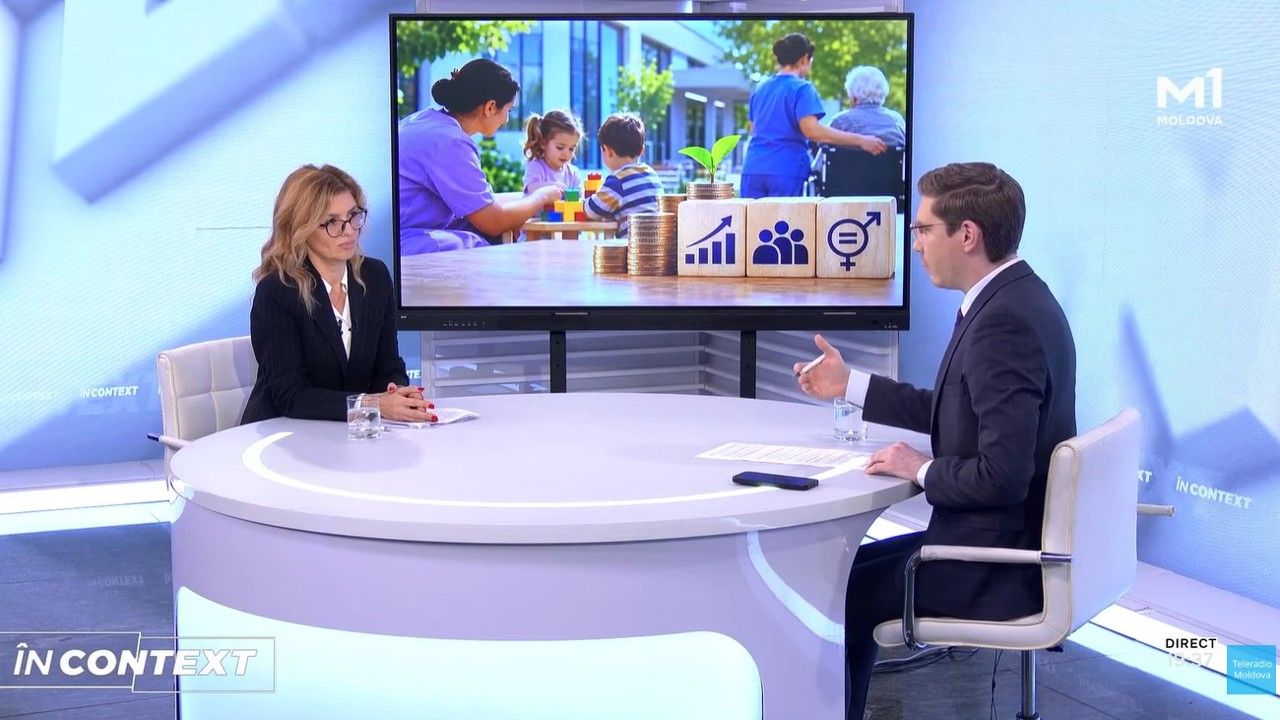
Moldova is considering an integrated care system that could help more than 80,000 women return to work, while expanding childcare services could increase GDP per capita by 2.6% by 2037, a study estimates.
Care services seen as an economic investment
More than 80,000 women in the Republic of Moldova remain outside the labour market because of unpaid responsibilities for caring for children and other family members. Limited access to childcare services is one of the barriers preventing women from taking up employment.
UN Women began examining Moldova's care economy in 2021, assessing the reasons behind women's low labour market participation and the potential economic benefits of expanding childcare services.
A 2023 study conducted by Cambridge Econometrics and commissioned by UN Women, UNICEF and UNFPA estimated that expanding institutionalised childcare services could increase Moldova's GDP per capita by 2.6% by 2037 compared with a baseline scenario.
The study also assessed the potential fiscal and employment benefits of investing in childcare infrastructure, including increased women's employment and additional tax revenue.
"The national added value at that time was substantial, reaching 90 million lei. The investment was worthwhile because it also meant a significant increase in women's employment, added value for the national budget and tax benefits. GDP could also grow by 2.6% over the medium and long term," said Tatiana Udrea, programme coordinator at UN Women Moldova, during an appearance on Moldova 1's "În Context" programme.
Udrea said unpaid care work represents an economic resource that remains largely unrecognised and underused.
"We must acknowledge that unpaid work exists in the Republic of Moldova. It is invisible, but it exists and comes at a cost to everyone. We need to reduce it and, at the very least, redistribute it," she said.
Government, businesses and civil society urged to cooperate
UN Women has brought together government institutions, private businesses, non-governmental organisations and development partners to discuss ways to expand care services.
The organisation has also helped establish a working group on women's economic empowerment, bringing together stakeholders to coordinate further action.
Moldova has meanwhile expanded childcare options beyond public nurseries. These include registered nannies, family-type childcare services and facilities operated by both public and private providers.
Udrea said alternative services became necessary because building and expanding public nurseries requires substantial funding and time.
"Investments in public nurseries require considerable time and substantial budgets. Alternative childcare services therefore became an important part of the solution," she said.
Women spend four and a half hours a day on unpaid care
Data collection is another priority in developing an effective care system. The National Bureau of Statistics is gathering information on unpaid work performed by women and men across households.
Women in Moldova spend an average of four hours and 30 minutes every day on care responsibilities and household chores, according to figures presented by Udrea.
She said these findings should guide the development of services for children, people with disabilities and older family members who need assistance.
Employment programmes need targeted adjustments
UN Women is also working with the National Employment Agency to adapt existing employment programmes to the needs of women with family care responsibilities.
The proposed adjustments would particularly target mothers on parental leave, women with disabilities and those caring for relatives with disabilities.
Udrea said the programmes already exist but need relatively small changes to reach these groups more effectively. The work is taking place alongside reforms promoted by the Ministry of Labour and Social Protection.
Moldova has also introduced measures allowing parents to better combine family responsibilities with professional activities. However, their implementation remains uneven, particularly at local and regional levels.

Integrated services require long-term funding
Despite progress in expanding care services, Moldova still lacks a coordinated national system, Udrea said.
She argued that an integrated approach must combine accessible services with long-term policies, predictable funding and cooperation among institutions responsible for social protection, the economy, education, finance and healthcare.
"We need an integrated system, not fragmented services. We need not only care services, but also policies and a long-term financial framework. This requires other partners as well, including civil society and research institutions," she said.
Development partners currently help finance several initiatives, but the long-term objective is for the state to gradually assume responsibility for funding them.
Udrea described the process as a gradual transition from joint financing by the government and development partners towards greater state responsibility.
The Republic of Moldova also plans to expand its nursery network and develop care services for older people and persons with disabilities. These measures could help more than 80,000 women return to the labour market by reducing the burden of unpaid care responsibilities.
The issue was discussed on November 2 at the launch of the Europe and Central Asia Care Action Agenda 2026–2030 in Chișinău. The high-level meeting brought together representatives from more than 15 countries and was held in the Republic of Moldova for the first time.
Translation by Iurie Tataru
RELATED COVERAGE
- Moldova time-use survey reveals deep systemic gender gaps
- Over 500,000 people in the Republic of Moldova are outside the workforce
- Safe and individualized care: Family-type nurseries in Moldova
- The Executive has positively endorsed the legislative initiative regarding alternative child care services
- In Moldova, about 15,000 seniors receive home care as children go abroad