Parliament’s Permanent Bureau rejects initiative to suspend Maia Sandu from office
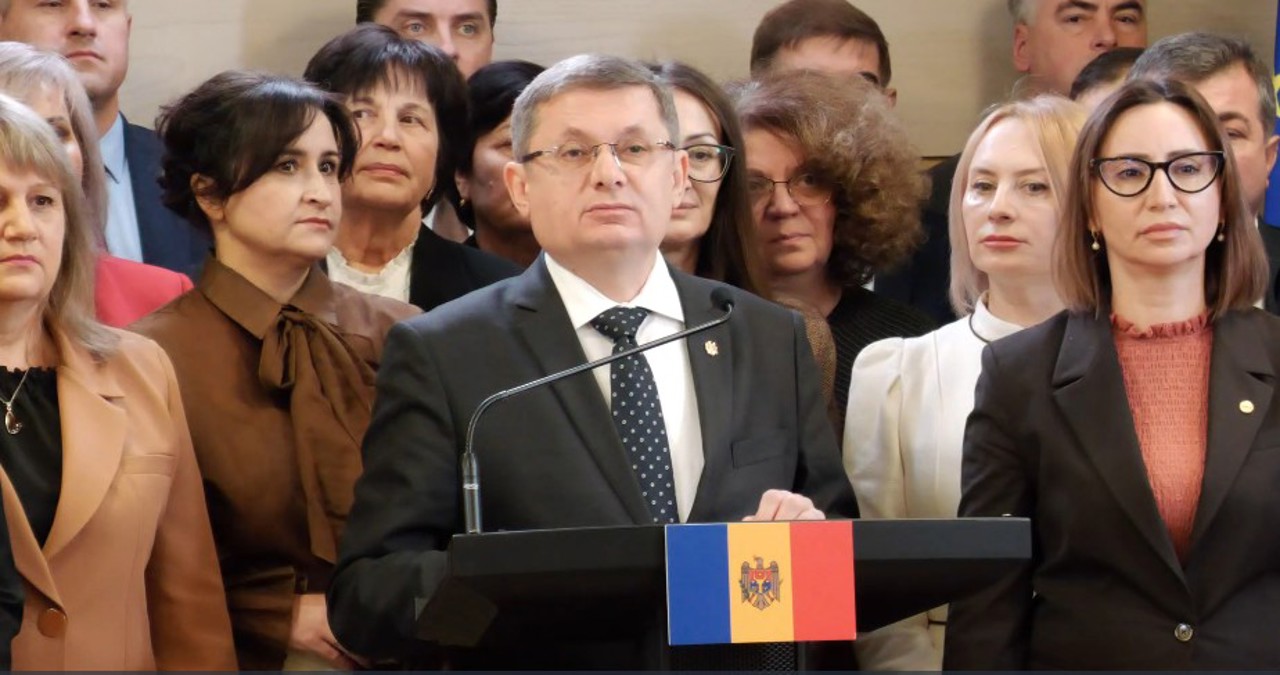
The opposition’s initiative to suspend President Maia Sandu from office will not be placed on Parliament’s agenda. The Parliament’s Standing Bureau rejected the proposal, arguing that the submitted document contained no evidence and was, in fact, intended to obstruct the Republic of Moldova’s European integration—a move described as an “order” coming “from Moscow.”
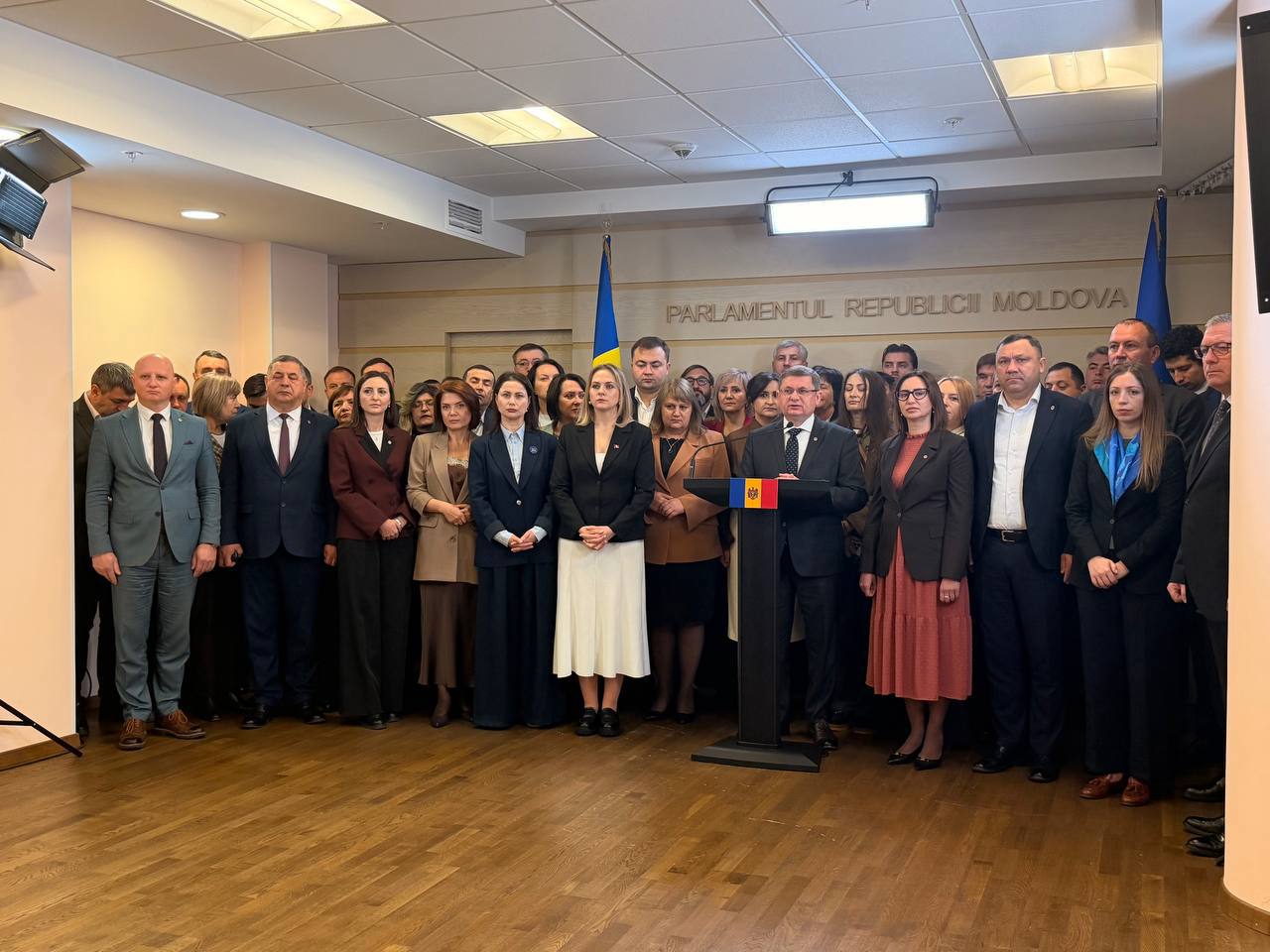
Parliament Speaker Igor Grosu made these statements on Thursday, November 5, during a press conference.
According to the Speaker, the opposition's initiative was allegedly coordinated from Moscow and represents an attempt to destabilize the Republic of Moldova.
"The Standing Bureau of the Parliament reviewed and rejected a proposal to include—on the agenda of the plenary session—a draft motion to initiate the suspension from office of the President of the Republic of Moldova, Maia Sandu. The intention to remove President Maia Sandu from office was directed by a single command center in Moscow, and the document was signed by all 46 opposition MPs. (...) They are all bound by the same master and by a hatred for the Republic of Moldova’s peaceful, European future. They live in a state where they have the freedom to say anything, to protest, and even to initiate the suspension of the country’s president—through a performative document filled with absurdities", stated Igor Grosu.
Addressing the accusations leveled in the opposition's document, the Speaker noted that they concern, among other things, the positions taken by the Head of State regarding the appointment of prime ministers, the organization of the national referendum on European integration, and actions taken within the justice sector.
Grosu maintains that all procedures for appointing heads of government adhered to the provisions of the Constitution, and that the outcome of the referendum reflected the choice of the majority of voters in favor of joining the European Union. Regarding justice reform, Igor Grosu stated that the opposition criticizes the external evaluation process for judges and prosecutors, even though it is necessary to address problems that have accumulated within the judicial system over the years.
The Speaker of Parliament noted that, over the last three to four years, more than 100 judges and prosecutors have left the system as a result of this evaluation process.
At the same time, the Parliament Speaker rejected the opposition's criticisms regarding the situation in the Transnistrian region.
"When they bring up the Transnistrian region, they become truly ridiculous. What did they do for reintegration while they were in power? How did they help our citizens on the left bank of the Nistru—and, mind you, how many times did they firmly and sincerely demand that Russia withdraw its army from our country's territory? The opposition's document contains many points, yet it offers no real evidence to support the accusations, nor any connection to reality. It is manipulation in the classic sense of propaganda: reality is being inverted," the official said.
Igor Grosu also dismissed the opposition's accusations about international awards received by Maia Sandu and the donations she has made as groundless. According to the Speaker of the Parliament, these distinctions were granted for the promotion of democracy, support for the European integration path, and efforts toward the country's modernization; the funds received were directed toward social, cultural, and community projects. "For them, international recognition constitutes a violation, and donations are labeled as bribes. The awards were granted for defending democracy, promoting the European path, and efforts toward the country’s modernization. Moldova is proud to have transformed from an isolated nation into one that is highly regarded. It is clear that, for these individuals, taking pride in one’s country does not come naturally. Even more baffling is the opposition’s further criticism regarding these awards: they accuse the President of donating the prize money—allocating funds to a church, an association that cares for children with disabilities, a library, a photovoltaic park in the village of Risipeni, and an initiative to preserve the musical heritage of Eugen Doga," noted Igor Grosu.
The Speaker of the Parliament emphasized that while the opposition has the right to initiate proceedings to suspend the Head of State, the Party of Action and Solidarity (PAS)—which he leads—cannot accept accusations that it deems entirely groundless.
"The opposition has the right to initiate this procedure, and we respect that right—precisely because the kind of democratic state we wish to build and preserve is one that upholds such rights. However, we cannot accept shameful, baseless accusations simply because they follow an order issued from Moscow to the signatories. The document has been carefully reviewed, including from a legal standpoint, and it will not be included on the Parliament’s agenda," stated the Speaker of the Legislature. In Igor Grosu’s view, the true objective of the opposition’s initiative is to block accession negotiations with the European Union and halt European funding.
"The opposition wants the path toward the European Union to be blocked, the cleanup of the justice system to be stopped, reforms aimed at modernizing the country to be interrupted, and the flow of European funds to cease—all so that we remain weak and helpless as a state. In fact, this is also what Russia wants", stated Igor Grosu.
The Speaker of the Parliament reaffirmed the PAS faction’s support for the Head of State’s work and for the goal of European integration. At the same time, Igor Grosu emphasized that Maia Sandu has contributed to strengthening the Republic of Moldova’s position and image on the international stage.
The parliamentary opposition initiated proceedings to suspend the President of the Republic of Moldova, Maia Sandu, from office with a draft resolution signed by 46 Members of Parliament. The Parliament Secretariat registered the document on September 29.
The Party of Action and Solidarity, which holds the parliamentary majority, reaffirmed its support for the head of state at the time and accused the opposition of carrying out "orders from Moscow" through this initiative.
Constitutional law experts have also argued that the opposition's move is doomed to fail.
Article 89 of the Constitution governs the procedure for suspending the President. At least one-third of the members of parliament may initiate a proposal, and it requires a two-thirds majority of elected members to pass. The President must be informed of the accusations and has the right to present explanations to Parliament. If Parliament approves the suspension proposal, a referendum on removing the head of state must be held within a maximum of 30 days, Nicolae Osmochescu, a constitutional law expert, explained.
"It is not Parliament that decides on the removal, but rather a referendum—given that the President was elected through a general, universal, and direct vote by the electorate, by the people. This is the procedure. There is no other procedure," Osmochescu previously stated to Teleradio-Moldova.