EU Accession: Justice reform remains key to concluding negotiations despite progres
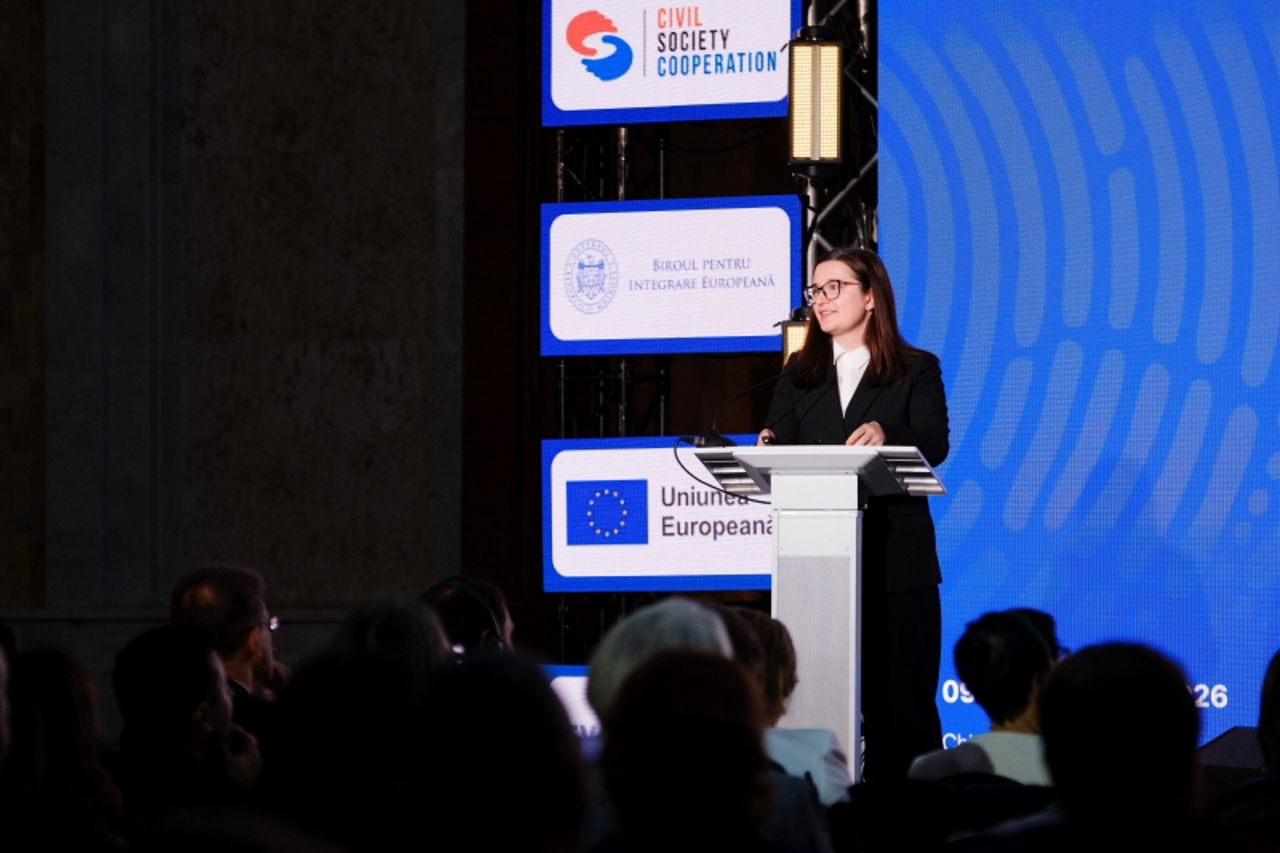
The Republic of Moldova has made progress in several areas of the European Union accession process; however, judicial reform remains an essential condition for concluding negotiations. The pace of advancement depends largely on the concrete results achieved in this sector, states Deputy Prime Minister for European Integration Cristina Gherasimov.
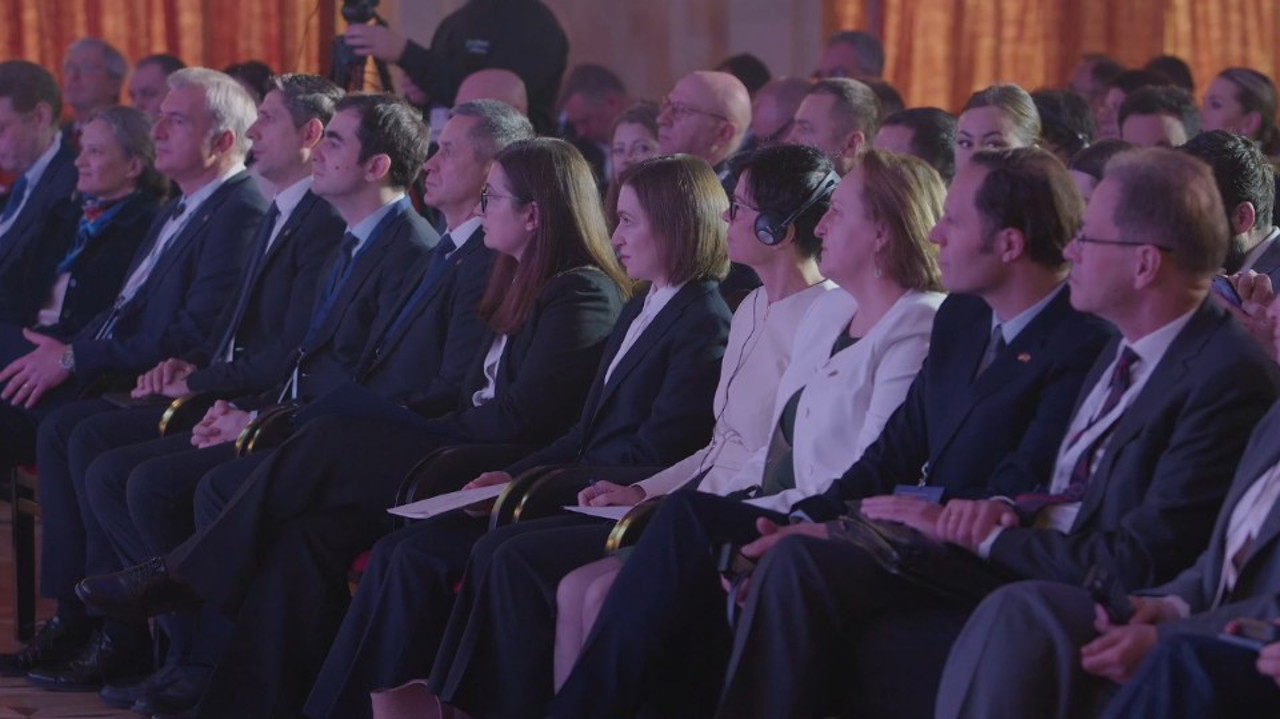
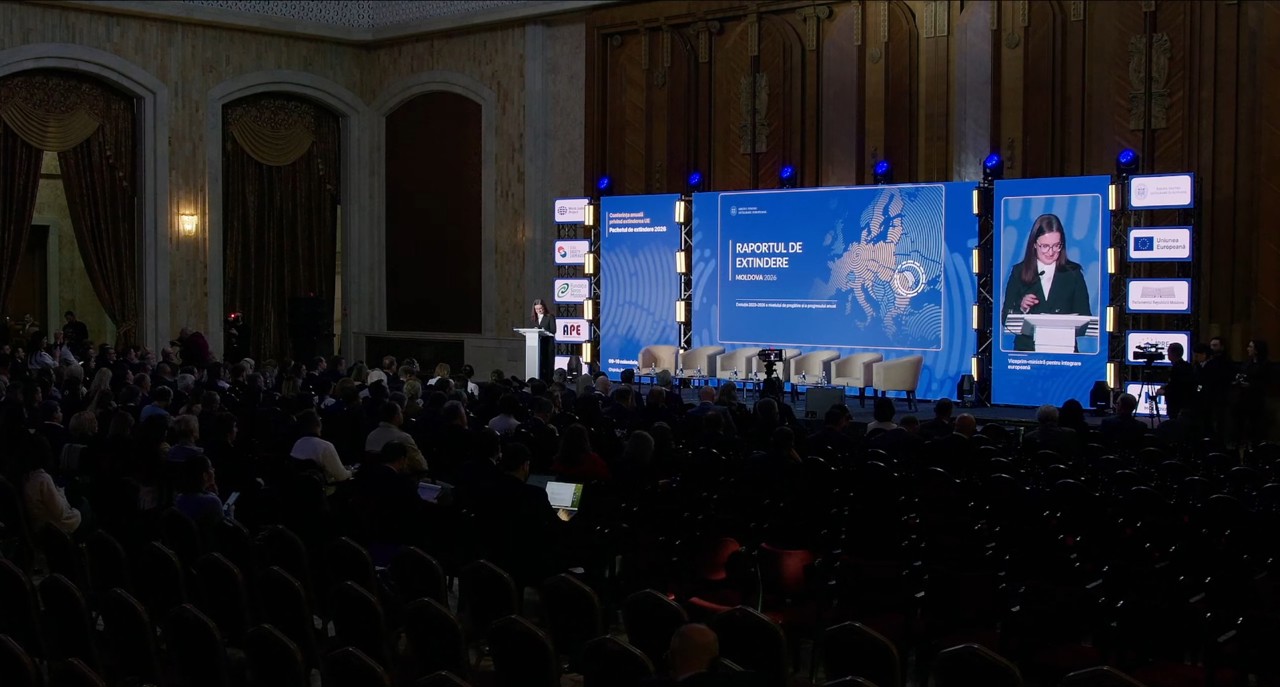
The statement was made on November 9 at the Annual Conference on EU Enlargement, held in Chisinau and attended by about 700 people, where the Deputy Prime Minister presented an overview of the country's progress over the past 12 months.
"The European Commission (EC) report confirms that the work done in recent years is yielding results. This year, we have made progress in every negotiation chapter, and our level of preparedness for accession has improved in 25 of the 33 chapters. These efforts translate into something very simple: a justice system we can all trust, institutions that protect us, and better conditions for working and developing our professional careers here, at home," stated Cristina Gherasimov at the conference, which is now in its second edition.
“We no longer have any chapters in the ‘early stage’ phase”
According to the Deputy Prime Minister for European Integration, the European Commission’s report—presented last week—assesses both the Republic of Moldova’s level of preparedness for EU accession and the progress made over the last 12 months.
Cristina Gherasimov emphasized that, over the past three years, the Republic of Moldova has made steady progress in the accession process, achieving an increasingly higher level of preparedness across several negotiating chapters.
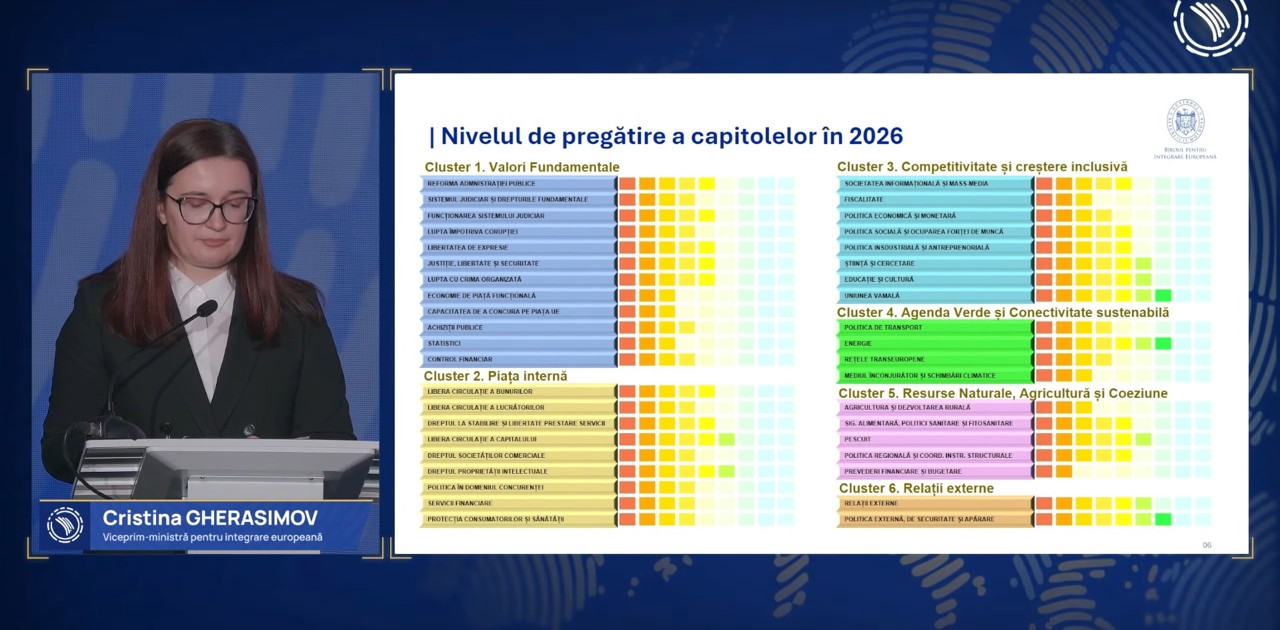
“Currently, 25 chapters show a higher level of preparedness than they did last year, and we no longer have any chapters in the ‘early stage’ phase. While in 2023 we had two chapters at a ‘moderate’ level of preparedness, in 2025 we have 12 chapters at this level. Overall, we now have 21 chapters that are at a ‘moderate’ level of preparedness or higher,” noted the Deputy Prime Minister for European Integration.
Furthermore, the Republic of Moldova has made progress across all six negotiating clusters, with the cluster known as “Fundamentals” undergoing the most rigorous assessment by the European Commission.
Compared to 2023 and 2024, the number of chapters with a high level of preparedness has increased in 2025—notably in the areas of the Customs Union, energy, and foreign, security, and defense policy. In 2026, the Republic of Moldova made the most significant progress in terms of its level of preparedness for accession in the following areas: public administration reform, the functioning of the judiciary, the right of establishment and the free provision of services, digital transformation and media, as well as industrial and enterprise policy.
Republic of Moldova narrows the gap with other candidate states
Although the European Commission’s report highlights substantial progress and offers grounds for optimism regarding the advancement of the accession process, Cristina Gherasimov points out that 19 chapters still fall below a moderate level of preparedness. Consequently, the responsible institutions will need to work harder over the coming year to implement the European Commission’s recommendations.
"Over the past 12 months, the relevant institutions have worked particularly hard to meet the interim benchmarks concerning the judiciary, the fight against corruption, fundamental rights, and security. Without these essential reforms—which involve all the responsible institutions—we cannot move forward, nor can we conclude accession negotiations. Therefore, the next phase demands results that must be consolidated over time. This entails not only the adoption of laws by Parliament but also their practical application, the presence of capable institutions, and evidence that these reforms are working in practice," Gherasimov explained.
The pace of reform has accelerated significantly compared to 2023, when the Republic of Moldova had made good progress in only six chapters. By 2026, the country had achieved positive results in 33 of the 40 areas assessed across the 33 negotiating chapters.
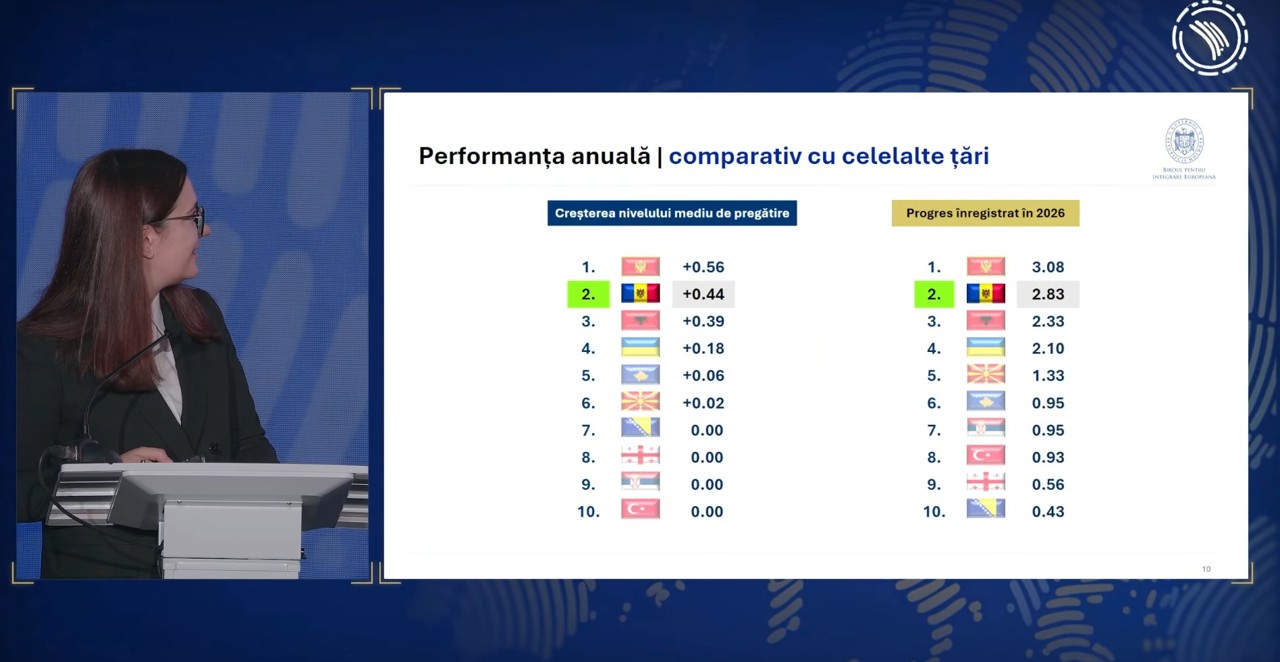
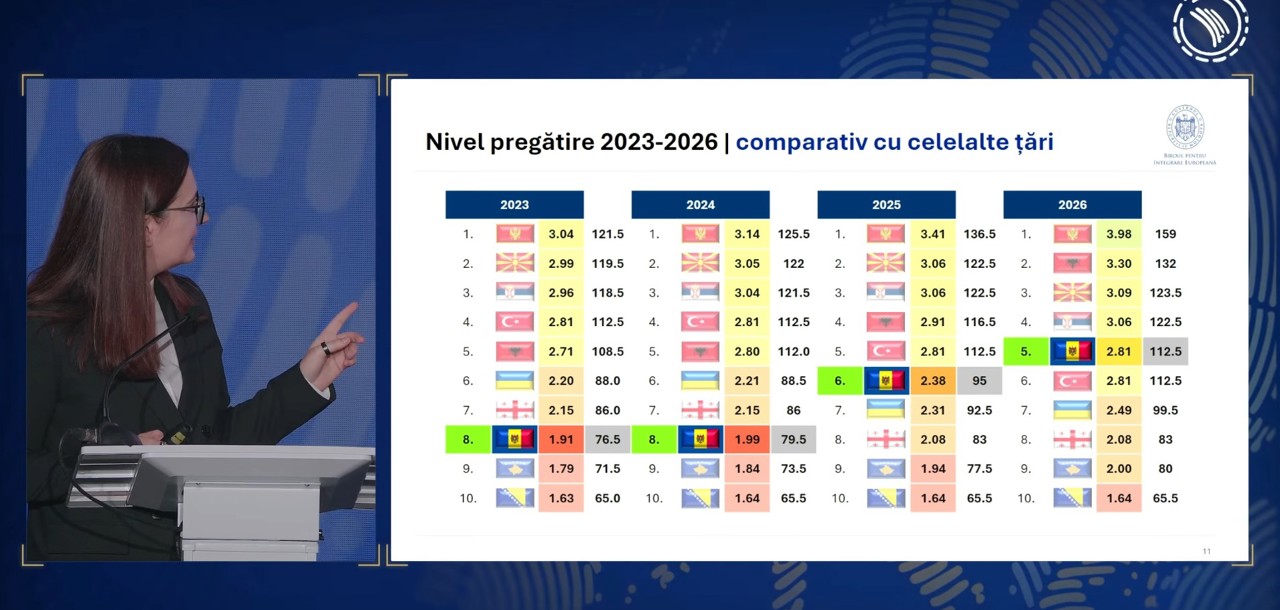
"Our intention is to maintain at least this same pace of reform and translate it into concrete results—results that citizens can feel firsthand—so that we may successfully conclude the negotiations," stated Cristina Gherasimov. The results are also reflected in the Republic of Moldova’s standing relative to other countries seeking accession to the European Union. According to the Deputy Prime Minister, the country has significantly closed the gaps that existed in 2023, when it ranked among the states with the lowest level of preparedness.
“While our counterparts in Montenegro have made the greatest overall progress, our country has demonstrated a remarkable pace of catch-up. Starting from a lower baseline in 2023, by 2026 we have reached 5th place—alongside Turkey—thereby closing gaps that other states had accumulated over decades,” Gherasimov noted.
The roadmap for EU accession
Following the progress made by the Republic of Moldova over the past year, the European Commission has presented a roadmap outlining the priorities and actions required to advance the accession process by 2027.
The document provides the authorities in Chișinău with a clear timeline for reforms and identifies the areas where efforts must be focused to fulfill the European Commission’s recommendations.
Accordingly, the following priorities have been set for the coming year:
In the first half of the year, the authorities are set to carry out the necessary actions for nine negotiating chapters, including the Customs Union, the free movement of capital, the digital sector, education and research, and external relations.
In the second half of the year, the focus shifts to another 16 chapters, which entail a more extensive set of reforms and implementation measures—covering areas such as the internal market, competition, transport, energy, food safety, and environmental protection.
“The timeline allows us to organize our work precisely: every institution knows exactly what results it needs to deliver and by when. Since October, our colleagues have been working on updating the National Accession Program, incorporating the Commission’s recommendations and benchmarks. In this sense, the roadmap creates an opportunity—not a guarantee—and it is our responsibility to make the most of it through sustainable reforms,” stated Cristina Gherasimov. Despite the challenges to be overcome in 2027, the Republic of Moldova’s objective remains unchanged: to complete preparations for concluding accession negotiations by early 2028.
"It is an ambitious, yet achievable, goal. I hope that next year we will be discussing chapters that have been provisionally closed, as well as reforms whose results are increasingly being felt in people's lives," concluded Cristina Gherasimov at the Annual Conference on EU Enlargement.
The event is taking place from November 9–10 at the Palace of the Republic in Chișinău, bringing together over 700 participants; it is organized by the Bureau for European Integration.
The conference—focused on the 2026 enlargement package and the reforms required for the Republic of Moldova’s accession to the EU—was opened by President Maia Sandu and European Commissioner for Enlargement Marta Kos.
Discussions will continue within the European Integration Forum, focusing on the role of Parliament, the rule of law, and the contributions of civil society and the media to the accession process.
The European Union accession process comprises 33 negotiating chapters, grouped into six clusters. Four have already been opened, covering 25 chapters.
The remaining two clusters—"Green Agenda and Sustainable Connectivity" and "Natural Resources, Agriculture, and Cohesion"—are yet to be opened.
Accession negotiations entail undertaking and fulfilling reform commitments, as well as aligning national legislation with the acquis communautaire (EU law).
The 2026 European Union Enlargement Report, published by the European Commission on November 4, confirms the progress Moldova has made across all 33 negotiating chapters. In 25 of these, Moldova's preparedness for accession has improved.
The document highlights achievements in areas such as the judiciary, anti-corruption efforts, public administration, and energy security, while also emphasizing the need to continue reforms and ensure the effective implementation of legislation.
The Government of the Republic of Moldova aims to conclude accession negotiations by 2028.