Moldova could raise Russian troop issue in Ukraine talks
Russia is seeking to broaden Ukraine peace talks to include Europe's security framework, a move that could give Moldova an opening to raise the presence of Russian troops on its territory, an expert says.
Russia seeks broader security concessions
Moscow is hardening its position ahead of a potential peace agreement, making discussions on a ceasefire conditional on establishing new security arrangements across Europe. This suggests Russia's demands extend beyond Ukrainian territory, according to Grigore Guzun, an international relations expert at WatchDog.
“I would like to draw attention to Lavrov's statement that, before discussing a ceasefire in Ukraine, we should first address the broad outlines of a new security architecture for Europe. What does this mean? Russia has effectively expanded its demands in these negotiations. Until now, Moscow had been talking about Ukraine ceding territory in Donbas and little else. Now its demands have grown to include Europe's security and the continent's overall security architecture,” Guzun said on Moldova 1's În Context programme.
A broader discussion on European security could also create a diplomatic opportunity for the Republic of Moldova. According to Guzun, Chișinău could seek to put the presence of Russian troops in the Transnistrian region on the negotiating agenda, although the issue is not currently part of the discussions.
“If Europe's future security architecture is discussed, I believe the Republic of Moldova has a fairly good opportunity to advance its own agenda, including by raising the issue of Russian troops illegally stationed on Moldovan territory. More broadly, I do not believe there are currently any discussions about these troops,” the expert said.
Guzun recalled that, before Russia launched its full-scale invasion of Ukraine in February 2022, Moscow had demanded restrictions on NATO's presence in Eastern Europe, including a return to the security arrangements in place in 1997.
Accepting such demands would directly affect Eastern European countries that joined the Alliance after that date. The expert believes NATO members, including the United States, would not accept such an arrangement.
What role could Europe play in a potential peace deal?
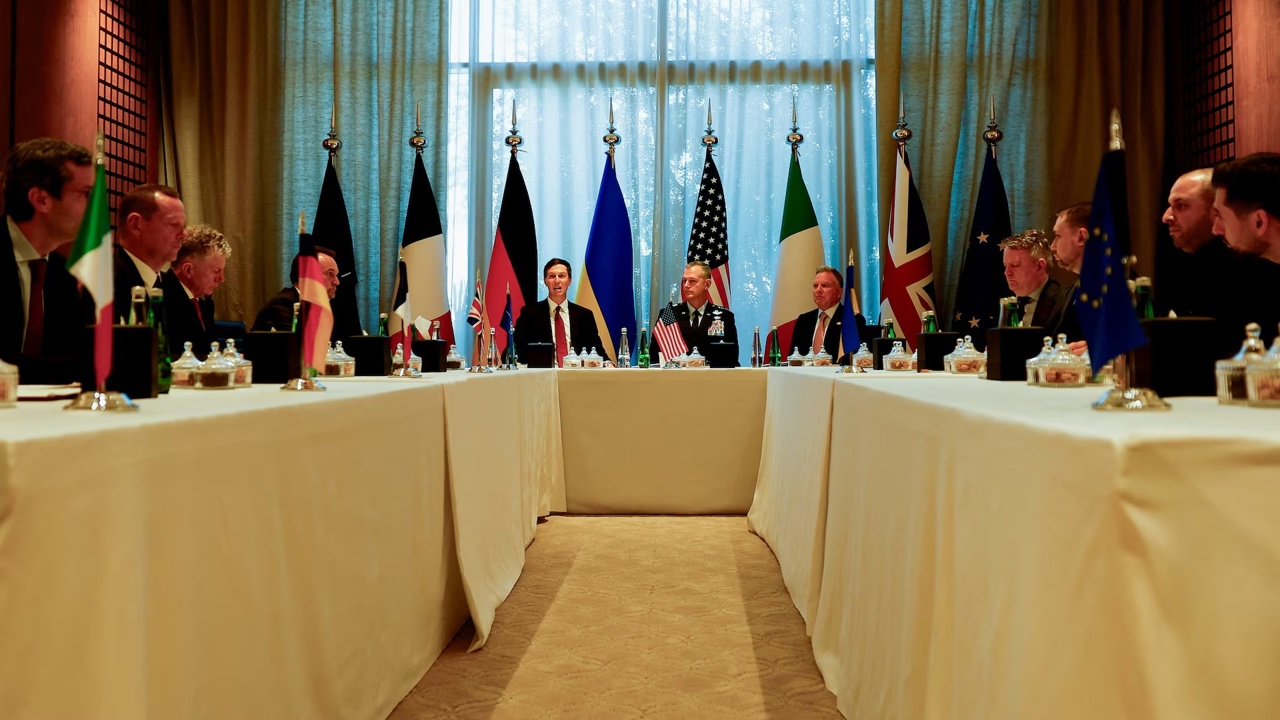
European countries' participation in the negotiations remains another unresolved issue. Representatives from France, Germany, Italy and the United Kingdom, alongside EU and NATO officials, attended separate coordination meetings in Abu Dhabi ahead of the trilateral discussions. They did not participate directly in the negotiations between the Ukrainian, Russian and US delegations.
Ukraine's future cannot be decided solely through an agreement between major powers, Guzun said. Kyiv must have the final say on the terms of any potential peace deal and the security guarantees needed to prevent another Russian attack.
“European leaders have always maintained that nothing about Ukraine should be decided without Ukraine. It should therefore be Ukraine that decides whether a potential peace agreement provides the security guarantees it needs. That is why NATO membership is not currently being discussed. However, if we are talking about security guarantees equivalent to the protection provided under NATO's Article 5, that could potentially give Ukraine a reason to scale back its NATO ambitions,” the expert explained.
The trilateral negotiations between Ukraine, Russia and the United States are taking place in Abu Dhabi, United Arab Emirates, on November 10–11. The talks are aimed at identifying possible ways to end the war.
Translation by Iurie Tataru
RELATED COVERAGE
- US to mediate Ukraine-Russia talks in Abu Dhabi
- Peace in Ukraine may enable Russian troop withdrawal from Transnistrian region, Chiveri
- US and Europe plan Ukraine security guarantees
- Von der Leyen insists on robust security guarantees for Ukraine from day one
- Rubio: US security guarantees for Ukraine only after peace deal